FAQ
Booking & Joining
What is the process from booking to departure?
First, please submit a booking request from the tour page. Next, arrange your own flights, and once your flights are booked, proceed to the confirmed booking. If you plan to arrive the night before, you can book your own hotel or have us arrange it, and it's fine to decide on the hotel after your booking is confirmed. Your final price is then fixed about 3 weeks before departure.
Can people who are not Japanese citizens join?
Yes. As long as you handle any necessary visa and entry procedures yourself, travelers of any nationality are welcome. Kyrgyzstan offers visa-free stays of up to 30 days to citizens of many countries, but requirements differ by nationality, so please check the official information for your country.
Is there a maximum group size? Can groups join?
It varies by tour, but we generally run tours for about 1–6 people. For groups of friends or family, we may be able to accommodate up to around 12 people. Depending on group size, a group surcharge may apply, so please contact us first and let us know how many people you'd like to bring.
What about altitude sickness?
It varies from person to person and with your physical condition, but some people feel unwell at high altitudes. When our Japanese staff first visited Kaindy and Kolsai, combined with the fatigue of the hilly roads, they felt dizzy even on a light hike.
If you're prone to motion sickness or are traveling with young children, it's a good idea to consult your doctor beforehand and get motion sickness or altitude sickness medication prescribed. On the tour we'll go at a comfortable pace, so don't worry.
Do you have child rates?
Yes, but discounts are offered on a case-by-case basis after you consult with us.
Our tour prices are calculated by dividing costs such as guide and transfer fees by the number of participants, so basically every tour has the same price for adults and children.
However, if a child can share a bed with a parent, for example, we may be able to discount the room charge, so please contact us.
Can I join with children?
Yes. However, for safety reasons, children under 5 cannot join horse riding tours.
When children aged 6 and over join a horse riding tour, the guide keeps an eye on the child's condition and how they get along with the horse, and keeps the pace comfortable for them.
Can I book a private tour?
Yes.
At ASHU TRAVEL, we want as many people as possible to enjoy great-value travel, so as a rule, after you apply we look for other travelers to share the tour with you.
If you'd like a private tour, please contact us and we'll discuss it with you individually.
Are tour departure dates fixed? Can I join on my preferred dates?
ASHU TRAVEL basically has no fixed tour dates; we run tours on the dates you choose. However, we also have a “shared tour” system where you join a tour another guest has already booked, and in that case we recruit participants for set dates.
Learn more here:
https://ashu-travel.com/en/news/travel-mate/
Can a woman traveling alone join safely?
Yes. With support in Japanese and a guide who speaks Japanese or English accompanying you, many female guests travel with us. Lots of our guests are women, and some join on their own and find fellow riders through our shared tour matching.
What is a shared tour?
https://ashu-travel.com/en/news/travel-mate/
What happens if a shared tour doesn’t get other participants?
The tour will run at the single-traveler price. You'll have the guide all to yourself, so enjoy it as a private tour. Date changes and cancellations follow our cancellation policy, so please contact us before any cancellation fees apply.
How is the price calculated for a shared tour?
The price changes depending on the final number of participants. The more people join, the cheaper it gets, and if someone cancels it may go up. The final price is fixed 3 weeks before departure. So that you can join with peace of mind, the price does not change even if the number of participants goes up or down within those 3 weeks.
For more details, see here:
What is a shared tour?
It's a way to travel at a better price: by sharing the vehicle and guide with other guests, the tour price per person goes down.
For more details, see here:
https://ashu-travel.com/en/news/travel-mate/
What is your cancellation policy?
Cancellation is free for a certain period after you apply, but cancellation fees apply as the departure date approaches.
From 18:01, 21 days before the tour start, to 18:00, 10 days before: 20% of the tour price
From 18:01, 10 days before the tour start, to 18:00, 3 days before: 30% of the tour price
From 18:01, 3 days before the tour start, until the start time on the day: 50% of the tour price
After the start time on the day of the tour: 100% of the tour price
Who are ASHU TRAVEL’s tours best suited for?
- People who love magnificent nature and animals
- People looking for real connections with local people and deep cultural experiences, not just sightseeing
- People who want to see Kyrgyzstan's spectacular scenery with their own eyes
- People who want to get away from everyday life and have an adventure
- People who want to leave the detailed arrangements to a guide and travel smoothly and worry-free
Can I ask questions before applying?
Of course. Our Japanese staff based in Kyrgyzstan will gladly answer your questions via LINE, email or WhatsApp (Meta's app).
If you'd like to talk by phone, please download WhatsApp and add +996 502 003 600 to your contacts.
(Our Japanese staff member Sugiura will take your call. Our staff are in Kyrgyzstan, so calling through the app means you only pay for mobile data.)
We may not always be able to answer right away, but if so, we will call you back later.
Can I apply on my own?
Yes. Solo travelers are very welcome. There is a single-traveler price, but if you'd like to travel for less, after you apply we will also look for other guests who want the same tour to join you on a shared tour.
Tour Details
Should I choose the Song-Kul Lake tour or the Issyk-Kul Lake tour?
Song-Kul Lake is a summer-only tour where you can fully experience nomadic life and horse riding on a high-altitude plateau. Issyk-Kul Lake can be enjoyed year-round depending on the location, and since it covers a large area, each place—such as Jeti-Oguz and Bokonbaevo—offers different experiences. Let us know how much riding you'd like and when you'd like to travel, and we'll suggest the best tour for you.
Can I drink the tap water? What should I do about drinking water?
In Bishkek, we recommend avoiding tap water and drinking bottled water instead. Mineral water is available at shops, supermarkets, and bazaars in the city.
However, the water at ASHU Guesthouse is clean spring water, so you can drink the water in your room.
On our tours, we provide one bottle of water per person per day.
Note that remote places like Song-Kul Lake have no shops, so we recommend buying a little extra before you travel there.
To stay healthy, it's also a good idea to be careful with ice and raw foods.
Is drinking water provided during the tour?
As a rule, we provide about one bottle of water per person per day (this may vary depending on the tour).
If you'd like to drink more, you can buy extra at the guesthouse or a nearby supermarket. ASHU Guesthouse accepts cards, but rural supermarkets are often cash only, so we recommend carrying a small amount of cash (a bottle of water generally costs $1 or less).
Can I add horse riding to the Ala-Archa day trip?
We're sorry, but this isn't possible on our tours because we can't confirm that it's safe.
We receive this request often, so we looked into whether we could make it work, but concluded that we could not ensure safety.
(The reasons include slow communication from the stables and the fact that serious falls from horses have actually occurred there.)
When we create a tour, our director Nuriya carries out a thorough on-site investigation, and we only build the tour once its safety has been confirmed.
If we judge that the risk is even slightly too high, we cannot offer it as a tour. Thank you for your understanding.
Can you arrange only transfers or only accommodation?
So that our guests can enjoy their trip safely and with peace of mind from start to finish, ASHU TRAVEL operates only all-inclusive package tours (plans that include transfers, accommodation, meals, and a guide).
For this reason, we're sorry, but we cannot arrange a vehicle without a guide or provide only part of a local tour on its own. Every part of the itinerary is offered as a guided package plan with safety as our top priority. Thank you for your understanding.
Do you offer tours to Altyn-Arashan?
We're sorry. We have currently suspended tours to Altyn-Arashan.
The main reason is the road into the valley. Once the pavement ends, it becomes a rough track of rocks and ruts, and you have to cross a river with no bridge to get there. Where you can cross also changes depending on the water level that day. There are sections our own vehicles physically cannot enter, so guests would have to transfer to a local vehicle partway. We cannot take responsibility for that vehicle or its driving.
In addition, the number of visitors has grown sharply recently, and the number of vehicles and the management of their operation have not kept up with the rising demand. Overtourism and environmental impact have also been raised as concerns, and more travel companies in Kyrgyzstan are reconsidering whether to offer this destination.
As long as we can't offer it in a way you can fully trust, we don't believe we can offer it under our name. We've written about the background in more detail in A tour we don't sell: why we currently don't offer Altyn-Arashan, so please take a look if you're interested.
We continue to monitor the situation on the ground, and we hope to resume tours once safety can be confirmed.
If you'd like to visit hot springs, how about Jeti-Oguz Valley, also near Karakol? You can drive all the way into the valley on paved roads and relax in the hot springs while gazing at the red rock formations. It's an area we can include in our tours.
If you'd still like to make the trip to Altyn-Arashan, we recommend looking for an English-language tour with a specialist local guide on sites such as Tripadvisor.
We hope you have a wonderful trip.
I’d like to go sightseeing in Almaty or Bishkek before or after my tour. What can I do?
You're welcome to arrive a few days before or stay after the tour and explore freely on your own.
In Almaty, for example, you can ride the city cable car, visit museums, or venture a bit farther to the stunning Charyn Canyon.
We can also suggest optional day trips or 2-day/1-night tours to suit your interests. If you have any questions, feel free to ask.
I’m worried about my stamina. I don’t exercise much—will I be OK?
You won't be riding the entire time during the tour; some sections are covered by private vehicle. If you get tired, you can also rest in the vehicle. If you do light physical activity in your daily life, you should be able to enjoy the tour without any problem.
What should I keep in mind to stay healthy while traveling in Central Asia?
Central Asian food is oilier than Japanese food, so avoid drinking cold water after eating meat dishes and drink plenty of hot tea instead.
The food in Tashkent, Uzbekistan, is especially oily.
Are there any rules to follow during the tour?
Here are the operational rules we ask you to follow during the tour.
No exchanging contact details with guides or drivers
To prevent problems during and after the tour, exchanging personal contact details with guides or drivers is not allowed. For any inquiries, please contact our director Nuriya or our Japanese staff member Sugi, whose details are in your email.
Drinking with staff: one beer at most
You're welcome to drink during the tour, but for your own health, please limit drinking with local staff to about one beer.
Return transfers
For early-morning transfers to Bishkek or the airport, there may be only a driver and no guide. Please confirm your drop-off location and time with your guide or staff by the day before.
I’m heading to another country. Can I leave partway through the last day and go to the airport early?
Yes, that's possible.
For example, if you leave on the morning of the last day, you can either get to the airport on your own using an app like Yandex, or we can arrange a private transfer for an additional fee (about $50).
Please note that because this is a package tour, we can't offer a discount if you skip part of the last day's tour (such as activities) for personal reasons.
This is because it would affect the price for other guests and make it difficult for us to run the tour reliably. Thank you for your understanding.
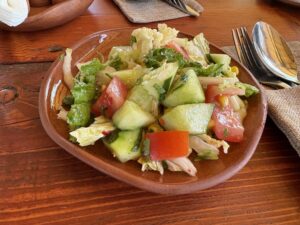
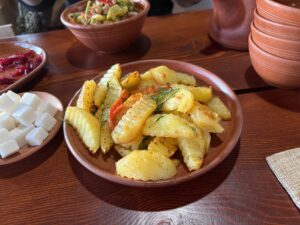
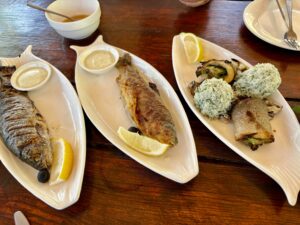
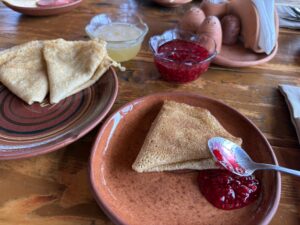
I can’t eat meat, but I can eat fish and dairy. Will the meals on the tour be OK?
When is the best time to visit Central Asia?
The best season varies greatly depending on the country you visit.
■ Kyrgyzstan & Kazakhstan
June to September is the most popular season. The cities are hot, but the mountains and lakes are lush and green, and at higher altitudes you can enjoy horse riding, escaping the heat in the highlands, stargazing and more.
Rural Kyrgyzstan in particular has many high-altitude areas, so it stays relatively comfortable even in summer.
In winter you can also enjoy horse trekking through snowy landscapes or skiing, and ASHU TRAVEL runs winter tours as well.
■ Uzbekistan
Spring (March to mid-June) and fall (September to October) are the best seasons.
The weather is mild during these periods, ideal for sightseeing in ancient cities such as Samarkand and Bukhara.
August, on the other hand, is extremely hot, and especially in the central and western regions, where deserts stretch out,
sightseeing can be difficult.
Can the itinerary change during the tour?
Changes may be unavoidable due to weather, road conditions or safety reasons.
What kind of food is served?
You can enjoy local home cooking and traditional dishes such as lagman (noodles), plov (rice pilaf) and shashlik (grilled skewers).
Do you run tours in winter too?
Yes. We have tours featuring frozen winter lakes, winter sports, and experiencing the unique way of life in winter.
Can I bring and fly a drone?
You must follow the latest regulations of each country and region. Please be sure to check them before your trip.
Can I join rafting if it’s my first time?
Yes. There are courses for beginners, and an instructor accompanies and guides you.
Does the tour price include accommodation and meals?
Yes. The basic plan includes accommodation, all meals, transportation and guide fees during the tour (except for meals marked as “on your own”).
Can meals during the tour accommodate allergies or a vegan diet?
Yes. If you let us know in advance, we will adjust as much as possible.
Is there any free time during the trip?
Yes. We include time in Bishkek and at the places you stay when you can relax at your own pace.
Can I try falconry in Kyrgyzstan?
Yes. We have plans where you can watch and try a traditional Kyrgyz falconry (hunting with birds of prey) demonstration.
Will a Japanese-speaking guide accompany us?
Yes. A professional guide fluent in Japanese accompanies you for the entire trip and supports you throughout.
Will I be in a group with other people on the tour?
If you choose a shared tour, you will travel with other guests. If you request a private tour, you will not be grouped with anyone else.
Will I get to interact with other participants during the tour?
On shared tours, sharing meals and travel time together often leads naturally to getting to know each other.
Can I customize the tour or extend my stay?
Yes. Because we operate locally ourselves, we can flexibly arrange things like extending your stay at a particular place or adding destinations.
What kinds of tours do you offer? Can I choose the length?
We offer a wide variety of plans, from short 4-day/3-night trips to grand tours of two weeks or more, featuring horse riding, spectacular scenery, cultural experiences and more.
Even if the itinerary you want isn't listed, we can customize a tour for you. Feel free to contact us.
When is the best season to travel?
The best season varies greatly depending on the country you visit.
■ Kyrgyzstan and Kazakhstan
June to September is the most popular season. The cities are hot, but the mountains and lakes are lush and green, and at high altitudes you can enjoy horse riding, escaping the summer heat in the highlands, stargazing and more.
Rural Kyrgyzstan in particular has many high-altitude areas, so it stays relatively comfortable even in summer.
In winter, you can also enjoy horse trekking through snowy landscapes and skiing, and ASHU TRAVEL runs winter tours as well.
■ Uzbekistan
Spring (March to mid-June) and autumn (September to October) are the best seasons.
The weather is mild at these times, ideal for visiting ancient cities such as Samarkand and Bukhara.
August, on the other hand, is extremely hot, and sightseeing can be difficult, especially in the central and western regions where deserts stretch out.
Is it OK if this is my first trip to Central Asia?
Of course. From airport transfers to support throughout the entire trip, everything is set up so that even first-time visitors can relax and enjoy themselves.
Before You Go
Should I get travel insurance?
Yes, please be sure to purchase travel insurance before departure. ASHU TRAVEL requires a plan with combined coverage of at least ¥30 million (30,000,000 yen) for medical expenses and rescue/evacuation expenses. If your policy lists "medical and rescue expenses" as a single amount, please check that figure.
Also note that coverage for injuries sustained while horse riding may vary by insurance company and plan, so if you're concerned, please check before you buy. We explain how to choose a policy and what to watch out for in detail in this article:
Travel insurance for horse riding trips in Central Asia
What is the voltage? Do I need a transformer for Japanese electronics?
The voltage in Kyrgyzstan and Kazakhstan is 220V (50Hz). Japan uses 100V, so the voltage is different.
Most smartphone and laptop chargers support "100–240V" (check the label on the device or AC adapter). In that case, you can use them without a transformer—you'll only need a plug adapter.
On the other hand, 100V-only appliances (such as some hair dryers and hair straighteners) may break or overheat if plugged in directly, so you'll need a transformer.
Type C and Type F plugs are standard, so please bring a plug adapter as well.
Can I drink the tap water? What should I do about drinking water?
In Bishkek, we recommend avoiding tap water and drinking bottled water instead. Mineral water is available at shops, supermarkets, and bazaars in the city.
However, the water at ASHU Guesthouse is clean spring water, so you can drink the water in your room.
On our tours, we provide one bottle of water per person per day.
Note that remote places like Song-Kul Lake have no shops, so we recommend buying a little extra before you travel there.
To stay healthy, it's also a good idea to be careful with ice and raw foods.
Is there a SIM provider that works in both Kazakhstan and Kyrgyzstan? Do you have any recommendations?
Is it safe in Kyrgyzstan, Kazakhstan and Uzbekistan?
Tourist areas in Kazakhstan, Kyrgyzstan and Uzbekistan are generally considered relatively safe within Central Asia these days.
In the main cities and tourist sites visited on ASHU TRAVEL tours, there are no major problems as long as you take normal precautions.
In fact, where our local staff live, the sun sets late in summer, and you can see neighborhood children playing outside until around 10 p.m.
In winter, the streets are sometimes lively until late at night with people enjoying the Christmas lights, and in everyday life there are few situations that feel overly tense.
That said, please be aware of the following:
• Some border areas: There have been incidents in the past in some border regions of Kyrgyzstan. ASHU TRAVEL avoids these areas and uses only routes confirmed to be safe.
• Bazaars and crowds: As in other cities around the world, pickpocketing and bag snatching can occur in crowded places such as bazaars. Please keep a close eye on your valuables.
ASHU TRAVEL shares information with local staff, guides and authorities,
adjusts itineraries to the situation at the time, and runs every tour with safety as our top priority.
■ Before you travel
For the latest safety information, please also check the official pages below (from the Ministry of Foreign Affairs of Japan and the Embassy of Japan in Kyrgyzstan; in Japanese).
• Ministry of Foreign Affairs of Japan, Overseas Safety Information | Kazakhstan
https://www.anzen.mofa.go.jp/info/pchazardspecificinfo_2025T020.html#ad-image-0
• Ministry of Foreign Affairs of Japan, Overseas Safety Information | Kyrgyzstan
https://www.anzen.mofa.go.jp/info/pcinfectionspothazardinfo_265.html#ad-image-0
• Ministry of Foreign Affairs of Japan, Overseas Safety Information | Uzbekistan
https://www.anzen.mofa.go.jp/info/pcinfectionspothazardinfo_183.html#ad-image-0
• Kyrgyzstan Safety Guide (Embassy of Japan)
https://www.kg.emb-japan.go.jp/information/anzen_tebiki.pdf
How many nights do I need for a trip to Central Asia?
We recommend at least 4 days/3 nights for one country, and 8 days/7 nights or more if you're touring several countries. In 4 days/3 nights you can see the main sights in Kyrgyzstan, such as the area around Bishkek and Issyk-Kul. With a week or more, you can take your time enjoying everything from Kazakhstan's spectacular nature to Uzbekistan's World Heritage sites with their beautiful blue tiles. Depending on your flight schedule, your time on the ground may be shorter, so it's important to choose a schedule with some leeway.
Can you book my flights as well?
We ask guests to book their own flights, but we're happy to advise on recommended flights and routes.
Do I need a visa to enter Kyrgyzstan or Kazakhstan?
Japanese nationals can enter visa-free for short tourist stays. Visa requirements depend on your nationality, so please check the rules for your passport.
What should I say if immigration asks where I’m staying?
Please give the name and address of your first accommodation, such as the ASHU Guesthouse.
What should I do if I get separated from my guide?
Please call the emergency contact number we share with you in advance, or stay where you are and wait.
The travel advisory is currently Level 1. Is it safe?
Level 1 in the Japanese Ministry of Foreign Affairs' travel advisories means “exercise caution.” Normal sightseeing is possible, and we always check the latest information and put safety first.
How safe is Central Asia?
It is generally safe, but watch out for pickpockets in bazaars and other crowded places. Please avoid going out alone at night.
I’m worried about crossing the border between Kyrgyzstan and Kazakhstan.
Don't worry — your guide will accompany you and walk you through the procedures.
Is there anything I should be careful about at immigration?
It's not particularly strict, but please check your passport's expiration date (remaining validity).
Transfers & Transport
I’m worried about car sickness. Any tips?
Roads to remote areas such as Song-Kul Lake include rough, unpaved sections where the vehicle can be bumpy. If you're prone to motion sickness, we recommend bringing a motion-sickness medicine you're used to.
On tours without dinner, should I bring snacks for the arrival day or long travel days? Can I get food along the way?
We can stop at the airport or along the way at places such as gas stations with attached supermarkets, where you can buy snacks and drinks.
Depending on your flight's arrival time, mealtimes may shift, so if you're concerned, bringing something light to snack on is a good idea.
How can I buy train tickets (Bishkek to Balykchy / Issyk-Kul Lake)?
Even if you can't access the ticketing website, don't worry—you can buy tickets directly at the station ticket counter on the day of travel.
- Location: Ticket office at Bishkek-2 Station (Вокзал Бишкек-2 / 1A Erkindik Boulevard)
- Season: Trains generally run daily during the summer tourist season (operating days vary by period)
- Departure: Around 8:00 a.m. (times change from year to year, so please check at the station or on the official website before your travel day)
- Fare: Inexpensive—around 150 som for a standard seat up to about 1,000 som for a VIP car. For the scenery, we recommend the VIP car with its large windows
- Payment: Cash is the safest option
Please note that because we operate package tours, we don't purchase individual tickets on behalf of travelers outside our tours. Please buy your ticket yourself at the counter on the day.
Can you arrange only transfers or only accommodation?
So that our guests can enjoy their trip safely and with peace of mind from start to finish, ASHU TRAVEL operates only all-inclusive package tours (plans that include transfers, accommodation, meals, and a guide).
For this reason, we're sorry, but we cannot arrange a vehicle without a guide or provide only part of a local tour on its own. Every part of the itinerary is offered as a guided package plan with safety as our top priority. Thank you for your understanding.
When transferring at Incheon Airport to Kyrgyzstan or Japan, will my checked baggage be transferred? Do I need to enter Korea?
Generally, you don't need to enter Korea and collect your baggage at Incheon Airport. Your checked baggage will be sent through to your final destination. If you have a layover of a few hours, you'll have plenty of time to make your connection without going through immigration.
However, flight rules can change, so please also check your airline's or the airport's official website and the notes on your ticket, just to be sure.
Although you don't need to enter the country, after leaving the plane you'll pass through a "transfer-only security checkpoint." Your carry-on baggage will be screened again here, so please note that any liquids (such as bottled drinks) bought on board or in the restricted area of your departure airport may be confiscated.
Is there anything to watch out for when using the Yandex Go app?
There are three things.
First, you need a phone number to register for Yandex. Please buy a SIM card that comes with a phone number—you can't register with a data-only SIM.
Second, when entering your destination, it's best to copy and paste the place name in Russian. Once, we typed a destination in English, chose one of the suggested results, and called a taxi—only to be taken somewhere completely different.
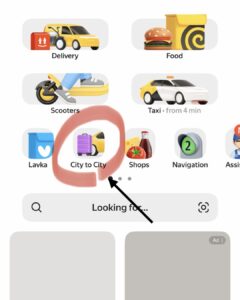
Finally, when traveling to another city, book through "City to city" rather than the usual "Where to go." For example, Almaty and Korday (at the border) are different cities, so if you're heading to Almaty, the ride may not be available unless you use "City to city."
Is English understood in shared taxis in Central Asia?
In Kazakhstan and Uzbekistan, some English may be understood, but in Kyrgyzstan it's often difficult (younger people may understand).
Write down your destination in Cyrillic or use a translation app.
On ASHU TRAVEL tours, you travel in a private vehicle, so you don't need to worry about the language at all.
What should I keep in mind when crossing the land border between Kazakhstan and Kyrgyzstan?
① Don't photograph the border buildings
Photography is prohibited in the border area and you may be fined, so keep your camera and phone put away.
*The photos used in this column were taken well before reaching the border.
② Stay close to the person in front of you in line
Many people cross the border for business and carry lots of goods, and if there's a gap in the line, people may keep cutting in.
It's fine to let elderly people or families with children go ahead, but they inevitably take time, and people keep cutting in with large loads of luggage.
It's different from what you might be used to at home, so don't leave gaps—stay close to the person in front of you while you wait.
③ Plan ahead around Kyrgyz and Kazakh holidays
From around May 1 to May 10, Kyrgyzstan has a long holiday period, similar to Golden Week in Japan.
There have even been reports of border crossings taking over 2 hours during this time. When holidays or long weekends fall during your trip, allow plenty of extra time.
I’ve booked an ASHU TRAVEL tour covering Kyrgyzstan and Kazakhstan. How does the border crossing work?
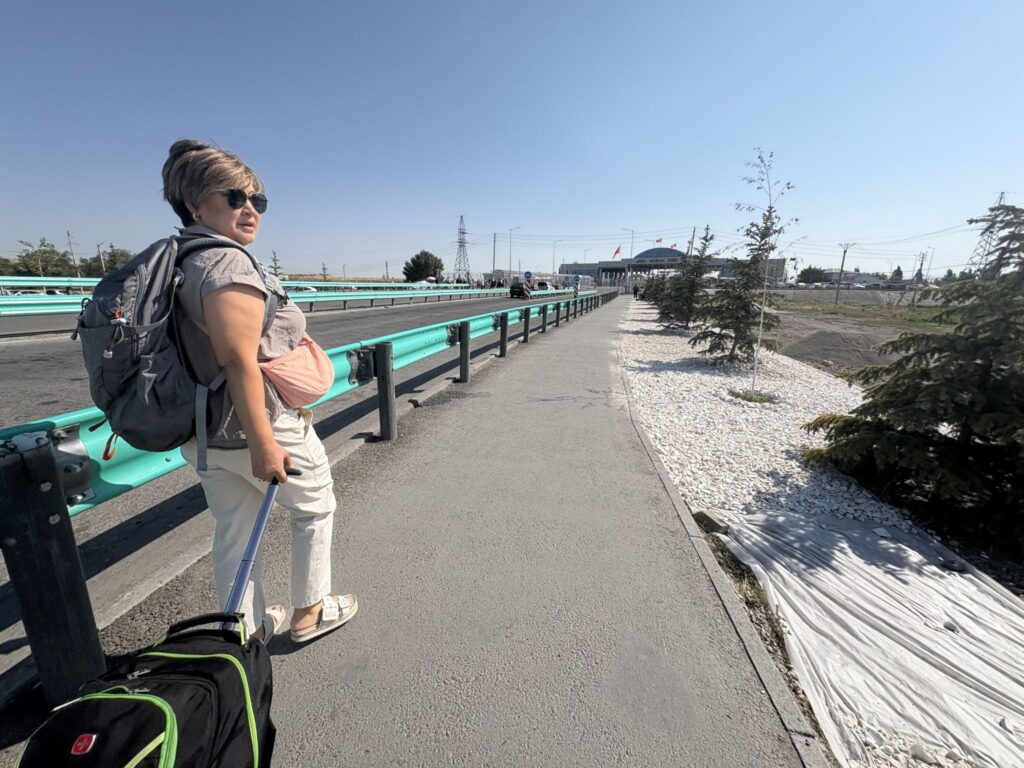
It depends on whether the same guide accompanies you in both countries or the guide changes between the two. Either way, we'll support you through the border crossing, so there's nothing to worry about.
If the same guide accompanies you
Your guide will accompany you all the way: Kyrgyzstan → Ak-Zhol → border crossing → Korday → Almaty. No need to worry about the language at all.
If the guide changes partway
On some tours, the guide changes between Kyrgyzstan and Kazakhstan.
On the Kyrgyz side, our private vehicle will take you to the Kyrgyz border post at Ak-Zhol. Once you've crossed, a Kazakh driver will meet you at the Kazakh border post at Korday and take you to Almaty.
You'll walk through the border crossing itself on your own, but with private vehicles on both sides, it goes smoothly!
How do I get to Central Asia?
From Japan you can fly direct or with a connection, and the route depends on your destination.
Here are the typical options:
• Uzbekistan: direct flights between Narita and Tashkent (the easiest to reach)
• Kazakhstan: usually via Korea, China or Uzbekistan *Direct flights are planned on some routes
• Kyrgyzstan: no direct flights; most travelers connect via Korea, China, Kazakhstan or Uzbekistan
See our blog post for more details.
I’ve booked a combined Kyrgyzstan and Kazakhstan tour. If the guide changes between Kazakhstan and Kyrgyzstan during the tour, where do I meet the driver?
A. From Kyrgyzstan to Kazakhstan
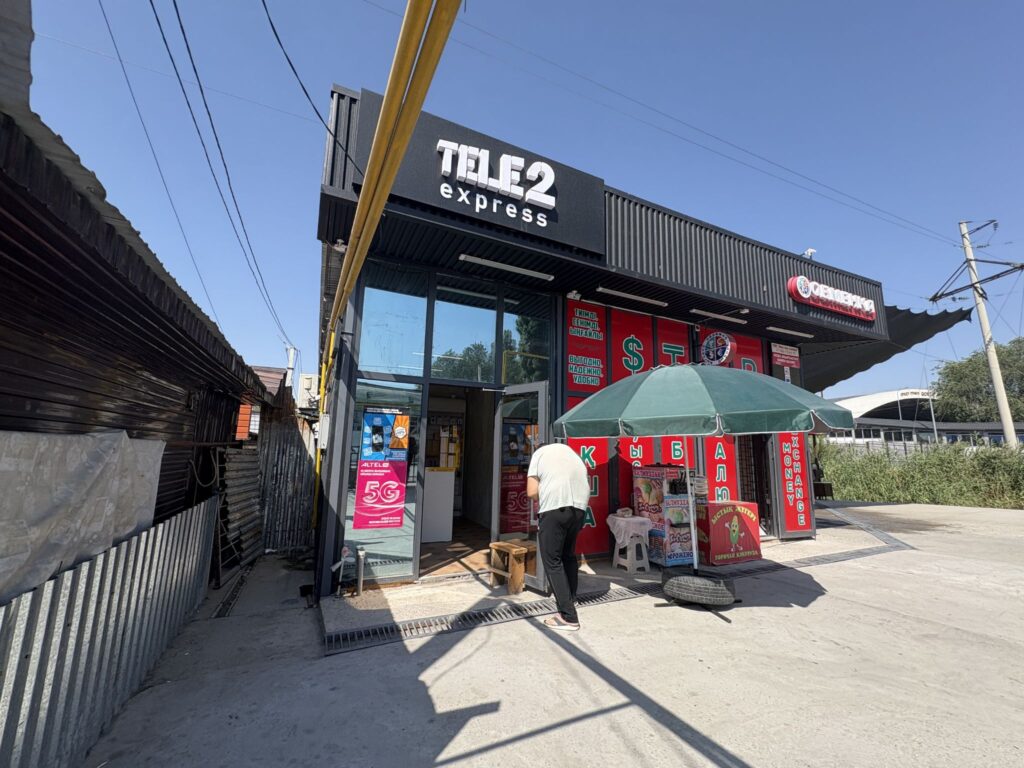
Right after crossing the border, turn right and you'll find a waiting area with currency exchange and SIM card sellers. Please wait there.
From Kazakhstan to Kyrgyzstan
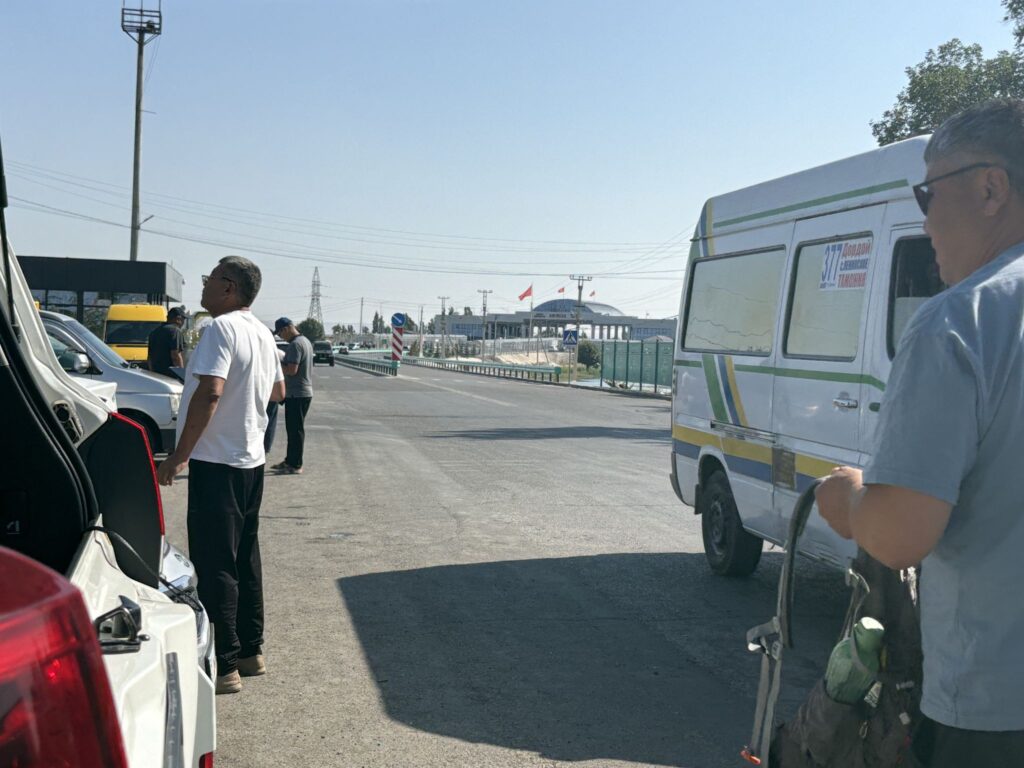
We'll be waiting for you in the parking-lot-like area just past the border.
In either case, we inform the driver or guide about you in advance, and just in case, we'll also give you the driver's or guide's vehicle number and WhatsApp number.
Is there anything I should watch out for with taxis in Central Asia?
Yes, there are a few things to keep in mind.
First, at airports in every country, quite a few people will persistently approach you offering a taxi. If you don't intend to take one, it's best not to engage.
There have also been reports of touts at Manas Airport in Kyrgyzstan falsely claiming to be “Yandex,” and of drivers around Bukhara Station in Uzbekistan charging very high fares after you get in. Our Japanese staff have experienced this themselves, and guests traveling independently have reported the same.
Also, Yandex Go requires a SIM with a phone number; you can't register with a data-only SIM. When using Yandex Go locally, always book through the app and be sure to check the license plate before getting in.
If you use shared taxis, generally only the local language is spoken. We recommend having a translation app ready in advance.
Can I use Yandex Go in Uzbekistan too?
Yes, you can. You can book rides with Yandex Go not only around town but also for intercity trips, such as from Tashkent to Samarkand.
Trains and shared taxis are also common for intercity travel. The train offers beautiful views from the window and is a great choice if you want to travel at a relaxed pace. Choose whatever suits you best.
I’m nervous about taking local buses or taxis.
During the tour you'll travel in a private vehicle, so there's no need to use public transportation on your own.
Can you pick me up from a hotel I booked myself, instead of the airport?
Yes. We'll pick you up wherever you specify.
Is it OK to bring large luggage such as a suitcase?
Yes. It fits in the car. However, a smaller bag is handy for getting around during riding.
How long does it take from Manas Airport to my accommodation?
It takes about 45 minutes to 1 hour by car to central Bishkek.
If a delay shortens my trip, can the schedule be shifted?
We'll check the local situation and adjust as much as possible, but in some cases the itinerary may need to be shortened.
Can you accommodate changes in my flight arrival or departure time?
Yes. We're flexible, so please let us know as soon as you find out.
Do you provide airport transfers?
It depends on the plan, but most tours include transfers by private vehicle timed to your arrival and departure.
For plans with hotel transfers, we can also arrange airport transfers as an option if you stay an extra night before or after the tour.
What happens with my pickup if my flight is delayed?
We track your flight information, so we will wait for you according to the delay.
Can you provide transfers for late-night or early-morning flights?
Yes. We pick you up and drop you off 24 hours a day to match your flight.
Can I choose which airport the transfer uses?
Yes. In addition to Manas airport in Kyrgyzstan, we also offer transfers to and from Almaty airport and others.
Money, Exchange & Payment
Besides the tour price, how much cash should I bring?
As a guide, about $50 is enough if you plan to buy a few souvenirs and snacks, and about $100 if you enjoy shopping (for food and drinks, tips, and souvenirs). Cards are accepted in the city and at hotels, but bazaars, small shops in rural areas, and supermarkets are cash only, so please bring US dollars in cash.
Is drinking water provided during the tour?
As a rule, we provide about one bottle of water per person per day (this may vary depending on the tour).
If you'd like to drink more, you can buy extra at the guesthouse or a nearby supermarket. ASHU Guesthouse accepts cards, but rural supermarkets are often cash only, so we recommend carrying a small amount of cash (a bottle of water generally costs $1 or less).
Where can I exchange money?
You can exchange money in Almaty and Bishkek.
You can exchange it yourself at the airport or during your stay, or we can stop at an exchange office while traveling.
Please note that since you'll be traveling with other guests on the tour, we can't take individual guests to exchange offices with the best rates.
When I travel abroad, I usually withdraw local currency from ATMs. Can I rely on ATMs?
I’d like to buy a SIM when I arrive in Kyrgyzstan. Do I need to pay in cash, or can I use a card?
At the airport or in Bishkek, you can generally buy a SIM card with a credit card.
If you arrive at night and no SIM shops are open in Bishkek, you'll need to buy one somewhere else, and in rural areas you'll need cash. In that case, don't worry—we'll take you to a currency exchange office in Bishkek beforehand.
[Where you can buy a SIM]
Depending on your tour itinerary, the only place to buy a Kyrgyz SIM may be one spot near the border (for example, Song-Kul Lake tours starting and ending in Almaty).
In this case, you'll buy it at an outdoor booth rather than at a store counter. This is a common way of selling SIMs in Kyrgyzstan, and it's handled by vendors authorized by the mobile carrier. Several sellers may gather when foreign customers arrive, but this is also perfectly normal.
[What you need to buy a SIM]
A law that took effect in Kyrgyzstan in April 2024 requires SIM cards to be registered in the buyer's own name. Wherever you buy one, the following steps are required:
- A photo of the front and back of your (physical) passport
- A photo of your face while holding your passport
- An on-the-spot registration application to the mobile carrier
The procedure is carried out by authorized vendors using designated devices and a dedicated app. This is the method set by the government.
[What we do and don't handle]
We will take you to a place where you can buy a SIM. Whether or not to buy one is entirely up to you. If you feel uneasy about having your passport or face photographed, you're welcome not to buy one.
⚠️Because the procedure is done outdoors, occasionally the photos can't be taken properly and the SIM can't be issued. This is especially likely after dark, when the app has a harder time reading your passport and face. Please keep this in mind if your itinerary crosses the border at night.
If you have concerns about the photo data, please ask the vendor on the spot. If you'd rather not ask yourself, just tell your guide and we'll ask for you.
If you'd prefer not to have your passport photographed, another option is to arrange a rental pocket Wi-Fi before you leave home (eSIMs sold online do connect in Kyrgyzstan, but they're far too slow to be practical).
Is there anything to keep in mind when bringing US dollars?
Please bring US dollar bills that are crisp and clean, with no wrinkles or stains!
Light folds are fine, but badly wrinkled or dirty bills may be refused for exchange locally (how strict they are varies a lot from shop to shop). We appreciate your cooperation.
What is the total budget for a trip to Central Asia?
For a 4-day/3-night trip to Central Asia, budget tours including flights can cost as little as around ¥150,000 (150,000 yen) per person. At ASHU TRAVEL, we offer a Kyrgyz nomad homestay tour as a land-only plan (flights not included) starting from about $850 per person for 4 days/3 nights. Our Kazakhstan retreat horse riding tour is also available from $800 per person for 4 days/3 nights. You may be able to keep airfare down by using connecting flights via South Korea or China. Prices vary depending on the season and number of travelers. See our blog post for more details.
Can I exchange Japanese yen near the border?
Unfortunately, exchange offices near the Kazakhstan and Kyrgyzstan borders generally don't exchange Japanese yen.
It's difficult not only near the border but in town as well…. Once, when I forgot to bring dollars from Japan, I managed to exchange yen after a lot of pleading, but the rate was so bad that I lost quite a bit.
When you come to Central Asia, be sure to bring US dollars! You can exchange Kyrgyz som and Kazakh tenge at exchange offices near the border too.
Should I exchange some money into local currency?
Some bazaars and rural supermarkets accept cash only, so we recommend bringing about $50 to exchange. You can exchange it yourself, or your guide can help you exchange what you need at the airport or in town.
Can I use credit cards?
Credit cards can't be used to pay the tour price, but you can use them for shopping locally. However, many bazaars and rural supermarkets accept cash only. We recommend bringing about $50 in cash for souvenirs and water (we'll help you exchange it into local currency).
How do I pay for the tour?
ASHU TRAVEL tour prices are generally paid in US dollars cash locally.
Please pay the tour price to your guide in US dollars cash at the hotel on Day 1 or at breakfast on Day 2. We currently don't accept credit card payments (so that you don't have to bear the card fees).
If you'd like to pay in advance by international bank transfer or Wise
You can also pay by international transfer to our bank account. However, please note the following:
- Fees: The withdrawal fee on the Kyrgyz side ($30) and the transfer fees are paid by the customer
- Time: Transfers take 2–3 weeks to complete. Please send the payment within 1–2 days of receiving our email 3 weeks before departure
- Risk: On rare occasions a transfer is canceled, and the refund takes about 3 weeks. If we can't confirm receipt of the payment, you'll need to pay in cash locally (refunded later), which may temporarily mean paying twice
- If you're worried: You can also transfer only the minimum amount and pay the rest in cash locally. Feel free to ask us
Do I need to tip?
Tipping isn't mandatory in Central Asia, but there is a culture of tipping as a token of appreciation.
Restaurants & cafes : More and more places now include a service charge, and prices are rising. If you receive excellent service, about 5–10% of the total is a good guideline. Some cafes have a jar for leaving coins. Even just leaving some coins on the table is appreciated.
In Uzbekistan, service charges are often not included at lunch but may already be included at dinner. We recommend checking the receipt when you pay. A translation app comes in handy.
Meals are generally included on ASHU TRAVEL tours, so you don't need to worry about this individually.
Hotels : For a porter carrying your luggage or for room service, about $1–2 is a good guideline.
Guides & drivers : Many guests give a tip at the end of the tour as thanks. About $10 per day is a guideline, but the thought counts more than the amount.
Taxis : With Yandex Go, you can choose a tip in the app right before getting out (10 som, 20 som, etc.). Tipping isn't customary in shared taxis.
Can I use a credit card for shopping, such as for souvenirs?
Cards are generally accepted in cities, but some places in rural areas and bazaars are cash only. We recommend bringing about $50. Your guide will help you exchange money.
Accommodation
If rooms are shared, can I room with the friend or companion I’m booking with?
Yes, absolutely. On days with shared rooms, such as yurt stays, we'll arrange for you to share a room with the friend or companion you booked with.
If you'd like this, please let us know when you book or in advance. We're also happy to discuss requests for a private (single) room at hotels or guesthouses.
Should I bring my own towel and shampoo for tourist yurt stays?
We recommend bringing your own.
Some yurt camps provide shampoo in the showers, but during the busy high season it can run out. Bringing your own travel set (towel, shampoo, etc.) is the safest option.
Can I use a hair dryer?
Some places allow it, but you may not be able to use one if there isn't enough power. It's best to assume that you "may not be able to use one."
Some accommodations have hair dryers and some don't.
Hotels in Bishkek usually have them, but yurts may or may not.
I snore, so I’m not sure whether sharing a room will be OK.
If you're concerned about snoring, one option is to bring anti-snoring products such as nasal strips.
We also recommend saying a quick word to your roommates in advance when you enter the room.
How many people stay in one yurt?
Each yurt is shared by 3–4 people.
Are rooms shared? Can I have a private room?
- Hotels (in the city): Single (private) rooms are available at no extra charge.
- Guesthouses: Private rooms can be arranged for an additional fee (per day; the fee varies by tour).
- Yurts (nomad tents): Because the number of yurts is limited, they are generally shared by 3–4 people of the same gender. Private yurts are not available.
Is there a toilet in the yurt?
There isn't one inside the yurt, but shared toilets are within walking distance. The type varies: at Song-Kul there are flush toilets or pit toilets (a dug pit with a simple enclosure), while nomad families use pit toilets.
What is the temperature like at Song-Kul Lake in June, and what should I wear?
Bishkek can reach nearly 30°C (86°F) during the day, but Song-Kul sits at a high altitude, and even in June nights can drop close to freezing. Warm clothing is a must.
What type of power plug is used?
Type C (two round pins). Please bring a plug adapter.
Is Wi-Fi available?
Wi-Fi is available at the ASHU Guesthouse and at hotels in the cities, but not when camping in tents or staying in yurts in the mountains.
At the tourist yurt camps at Song-Kul, Wi-Fi may be available in the shared restaurant, but some camps have it and some don't.
What about toilets when camping in tents?
Toilets are basically “nature” toilets outdoors. When a group includes both women and men, we make sure everyone can go a fair distance apart for privacy.
What are the shower and toilet facilities like at the ASHU Guesthouse?
Every private room has its own flush toilet and hot shower.
There is also a pool in a separate building, which has showers as well. In winter it becomes a heated pool.
At busy times the water can get lukewarm. Showering a little earlier or later usually solves this, so if it bothers you, just let your guide know.
Can I stay in a yurt instead of a room at the ASHU Guesthouse?
Yes. You can switch to a yurt on the guesthouse grounds ($200 per group; advance reservation required). You can also enjoy the experience of putting up the yurt yourself. A yurt sleeps about 3 people.
What facilities do the yurts have?
It depends on the location.
[Tourist yurt camps at Song-Kul, Issyk-Kul, etc.]
Inside, there are basically just beds, but shared hot showers, toilets and a restaurant are usually set up outside. In colder places such as Jeti-Oguz, yurts sometimes have a stove.
In most cases the toilets are about a one-minute walk from the yurt.
In all cases the showers are simple ones. During peak season there are many travelers, so when lots of people shower, the water pressure can be weak and the water lukewarm.
Also, on days when we arrive late because of traffic or vehicle trouble, the hot water in the tank may have run out and the showers may be unavailable. The hot water sometimes comes back after a while, so please don't hesitate to ask your guide. Bringing body wipes is a good idea, just in case.
[Nomad yurts]
In yurts that nomads actually live in, there is often no shower outside, and the toilet is usually a “nature” toilet or a pit toilet.
Yurts are covered with sheep's wool felt, so they are well insulated.
Think of a yurt as a much more luxurious version of a camping tent. The real charm of staying in one is experiencing local life just as it is.
Do we stay in hotels?
Accommodation varies: hotels and guesthouses in the cities, and the ASHU Guesthouse, yurts or tents in the countryside. Please see each tour page for details.
Horse Riding
Can I borrow half chaps (riding leg covers)?
Yes, we lend half chaps free of charge.
Can a companion who won’t ride horses join the tour?
Yes. Non-riders can travel along in the vehicle or relax at the accommodation and enjoy the views. For sections that can only be reached on horseback, they will wait at the accommodation. Please note that because this is a package tour, the price is the same whether or not you ride. *If the whole group will not be riding at all and the tour is arranged that way from the start, we can adjust the price and itinerary.
Do I need tights under my pants even in summer? Is it OK to ride in jeans?
Cities like Bishkek are hot, but high-altitude areas such as Song-Kul Lake get cold even in summer. We recommend being able to layer tights or leggings under your trekking pants.
Jeans aren't prohibited, but the stiff, bulky fabric can make it harder to move comfortably on horseback. We recommend slightly thicker pants that are easy to move in, such as trekking pants.
Can I add horse riding to the Ala-Archa day trip?
We're sorry, but this isn't possible on our tours because we can't confirm that it's safe.
We receive this request often, so we looked into whether we could make it work, but concluded that we could not ensure safety.
(The reasons include slow communication from the stables and the fact that serious falls from horses have actually occurred there.)
When we create a tour, our director Nuriya carries out a thorough on-site investigation, and we only build the tour once its safety has been confirmed.
If we judge that the risk is even slightly too high, we cannot offer it as a tour. Thank you for your understanding.
I’m worried about my stamina. I don’t exercise much—will I be OK?
You won't be riding the entire time during the tour; some sections are covered by private vehicle. If you get tired, you can also rest in the vehicle. If you do light physical activity in your daily life, you should be able to enjoy the tour without any problem.
Has anyone fallen off a horse and been injured?
Because horse riding involves working with living animals, we can't say that no one ever falls.
Fortunately, however, no guest on our tours has ever been seriously injured.
Even after a fall, guests have continued riding once the guide confirmed they were safe, and returned home in good spirits.
All guests are required to have travel insurance when booking a tour.
Is horse riding OK for older travelers?
Many of our guests are in their 60s and 70s. Rides are generally about 2 hours at a time at a relaxed pace, with safety as our top priority.
How do I choose the right riding level?
Tours marked as open to riders with no experience can be booked by anyone, from complete beginners to advanced riders.
Do you rent out riding protectors (air vests)?
We don't rent out protectors.
We once considered offering them, but we heard of cases with other companies in other countries where the sound of a protector inflating panicked the surrounding horses and actually created a dangerous situation, so we decided against it for safety reasons.
You're welcome to bring your own if you're used to one. However, please be careful, as it may startle nearby horses if it goes off.
Is it OK if I’m a beginner rider?
Yes, some of our tours are open to beginners and people with no riding experience.
If you're not confident, our staff will lead your horse by the reins or ride alongside to support you, so even first-timers can relax and enjoy the ride.
Experienced riders are also welcome on tours for beginners and above.
Every tour starts with a riding lesson. Riding in Kyrgyzstan differs in some ways from the Japanese style, so we especially recommend that experienced riders not get complacent and pay close attention to this first lesson.
Can I bring my belongings with me while riding?
You can bring a small camera, water, valuables and so on in a small shoulder bag or backpack.
However, heavy bags make riding harder, so we recommend leaving anything you don't need in the car or at the guesthouse.
If you're unsure, just ask your guide on the spot.
Do I need riding experience?
It depends on the tour. Some tours are open to beginners and people with no experience, while others are for experienced riders. Please check the required level on each tour page.
Shared tours are also advertised with the required level clearly stated.
Every tour starts with a riding lesson for all participants. Riding in Kyrgyzstan differs in some ways from the Japanese style, so experienced riders are required to take it too.
If you're a beginner and not confident, our staff will lead your horse by the reins or ride alongside to support you, so you can join with peace of mind.
I’d like to ride for longer. Can the tour be customized?
Yes. We can change the itinerary to focus on riding. Feel free to ask us.
Will someone accompany me while riding?
In addition to a Japanese-speaking or English-speaking guide, a local riding instructor (a horse handler or horse owner) always accompanies you to ensure your safety.
Can I canter?
It depends on the tour and the location. Cantering is possible in open areas.
On beginner tours, you'll first get used to riding slowly, and once you're comfortable, you can choose to try a canter while we keep an eye on everyone. The speed is roughly 20–30 km/h.
However, even on tours where cantering is allowed, we may skip it or stop partway depending on the horses' condition, the weather, or how well you and your horse get along. We always put safety first, so thank you for your understanding.
Clothing & Packing
Do you rent out warm outerwear (jackets)?
As a rule, we don't rent out warm outerwear such as down jackets or heavy coats. Sizes vary so much from person to person that we can't guarantee something that will fit you properly. We lend half chaps and helmets free of charge, but we recommend bringing your own warm jacket.
Do I need tights under my pants even in summer? Is it OK to ride in jeans?
Cities like Bishkek are hot, but high-altitude areas such as Song-Kul Lake get cold even in summer. We recommend being able to layer tights or leggings under your trekking pants.
Jeans aren't prohibited, but the stiff, bulky fabric can make it harder to move comfortably on horseback. We recommend slightly thicker pants that are easy to move in, such as trekking pants.
What kinds of insects is the insect repellent on the packing list for?
In summer (mainly July–August), there can be mosquitoes (though not as many as in Japan). There are also flies, so bringing an insect repellent spray you're used to will make your trip more comfortable.
Should I bring my own towel and shampoo for tourist yurt stays?
We recommend bringing your own.
Some yurt camps provide shampoo in the showers, but during the busy high season it can run out. Bringing your own travel set (towel, shampoo, etc.) is the safest option.
Can I do laundry during the tour?
What’s the weather like in Kyrgyzstan in May? What should I wear?
In May, temperatures in Kyrgyzstan vary a lot depending on where you are.
Around Bishkek (about 800 m above sea level), daytime temperatures reach around 20℃, with pleasant spring weather. But once you get to areas above 1,600 m, such as Issyk-Kul, the air changes completely: even if days are warm, it's not unusual for mornings and evenings to drop below 10℃. Mornings can even be as cold as 2–4℃.
Start with what you'd wear in spring in Japan, and bring something you can quickly throw on in the mornings and evenings, such as a fleece, a light down jacket or a windbreaker. We recommend layering so you can adjust to the temperature.
What should I wear for horse riding?
Please bring comfortable long pants and shoes that won't easily catch in the stirrups. Sneakers are fine. In winter, snow boots with smooth soles are recommended. Please avoid shoes with high heels or hiking boots, as they can catch in the stirrups and are dangerous.
Please also bring gloves. Work gloves are fine.
Half chaps (leg covers for riding) and helmets are available to rent. You're also welcome to bring your own.
Is it cold in Kyrgyzstan?
It varies greatly by location and altitude.
Summers in Bishkek (about 800 m above sea level) are dry, and last year temperatures rose to nearly 40℃. There's little of the muggy humidity you get in Japan, so even when it's hot it's relatively comfortable.
On the other hand, Song-Kul Lake, at over 3,000 m, gets quite cold even in summer. Here's a guide for August:
- Daytime: around 16–18℃
- Mornings and evenings: below 10℃ (sometimes dropping close to freezing)
For reference, on April 10, when Bishkek's high was 19℃, it was only 1℃ at Song-Kul Lake.
When our staff visited last July, a single thin down jacket wasn't enough against the morning and evening cold. We recommend gear you can layer, such as a light outdoor down jacket, a fleece and an inner down layer.
Is there anything I should keep in mind when preparing for the trip?
The air is very dry and the sun is strong, so we recommend bringing moisturizer, lip balm, sunglasses and a hat.
It's also a good idea to prepare the following:
- Altitude sickness / motion sickness medication: The tour passes through high-altitude areas, so if you have any health concerns, please consult your doctor in advance
- Power bank: There are few places to charge in highland areas such as Song-Kul Lake. Please bring one that can be taken in carry-on luggage
- Translation app: In shared taxis or when exploring on your own, sometimes only the local language is spoken
- Personal medications: Pain-relief patches and painkillers also help with sore muscles after riding
- Insect repellent: July and August are the buggiest months
- Cash (US dollars): Tour prices are generally paid in US dollars cash locally. You can exchange money at the airports and in town in Almaty and Bishkek
- Check your passport's remaining validity: At least 6 months of validity is required for entry
What are the basic things to pack and wear?
Basic packing checklist
- Warm clothes: Mornings and evenings get cold in the highlands
- Rain gear: A poncho, a folding umbrella, etc.
- Sun protection: Sunglasses, sunscreen, lip balm
- Riding gear: Long pants, sneakers, gloves
- Personal medications: Altitude sickness medication, motion sickness medication, pain-relief patches, etc.
- Power bank (carry-on recommended)
- Insect repellent (July–August)
- Body wipes: Handy because the shower water may be lukewarm or unavailable at busy times or on days when you arrive late
- Swimsuit: You can use the pool at ASHU Guesthouse for free. You'll also need one if your stay includes hot springs.
*The sauna equipment is currently being repaired, so it may not be available during your stay. Thank you for your understanding
What to wear
It depends on when and where you go, but layering is the key. Temperatures differ greatly between the highlands and lowlands, so be ready to adjust by adding or removing layers.
Spring T-shirt + an outer layer such as a hoodie; in the highlands, add a light down jacket or fleece
Summer T-shirt + an outer layer such as a hoodie; in the highlands, add a light down jacket or fleece
Fall Long-sleeve shirt + an outer layer such as a hoodie; in the highlands, add a down jacket or fleece
Winter Long-sleeve shirt + thermal underwear + a sweater or jacket + a down jacket or equivalent outerwear
Bottoms Long pants for riding or hiking; in winter, thick hiking pants with thermal underwear underneath
Footwear Sneakers are generally fine. In winter, snow boots with smooth soles are recommended. Please avoid shoes with high heels or hiking boots, as they can catch in the stirrups and are dangerous
*A thick down jacket can make it hard to move while riding. If so, we can keep it in the car for you
Other
Is there a local emergency contact?
Nuriya, our local representative, is available on WhatsApp and can assist you in Japanese (we'll share her contact details after you book). We recommend setting up WhatsApp before you leave.
Can I buy heated tobacco products (such as Ploom) in Kazakhstan?
Yes, heated tobacco products such as Ploom TECH and IQOS are widely sold in Kazakhstan. In cities like Almaty, you should be able to find your usual brand easily in shopping malls and supermarkets.
They are also sold in some shopping malls and supermarkets in Kyrgyzstan, but fewer stores carry them than in Kazakhstan. If you use a specific type of stick (tobacco refill), we recommend stocking up a little extra in Kazakhstan.
Which SIM or eSIM do you recommend for Kyrgyzstan?
Below is what our staff have researched and actually tested.
Mega👉 Well-balanced. Good coverage in both cities and rural areas. There are spots with signal even at Song-Kul. ⚠️ It is officially said to have coverage in Kel-Suu in Naryn Region, but some Instagram comments say they couldn't get a signal there.
Beeline👉 Best for cities. Coverage is weak in rural areas.
O!👉 Good coverage in rural areas. It also works fine in the city, but with more users recently, the connection can sometimes be poor (similar to docomo in Tokyo).
All of them can be bought at the airport.
Can I do laundry during the tour?
I’d like to buy a SIM when I arrive in Kyrgyzstan. Do I need to pay in cash, or can I use a card?
At the airport or in Bishkek, you can generally buy a SIM card with a credit card.
If you arrive at night and no SIM shops are open in Bishkek, you'll need to buy one somewhere else, and in rural areas you'll need cash. In that case, don't worry—we'll take you to a currency exchange office in Bishkek beforehand.
[Where you can buy a SIM]
Depending on your tour itinerary, the only place to buy a Kyrgyz SIM may be one spot near the border (for example, Song-Kul Lake tours starting and ending in Almaty).
In this case, you'll buy it at an outdoor booth rather than at a store counter. This is a common way of selling SIMs in Kyrgyzstan, and it's handled by vendors authorized by the mobile carrier. Several sellers may gather when foreign customers arrive, but this is also perfectly normal.
[What you need to buy a SIM]
A law that took effect in Kyrgyzstan in April 2024 requires SIM cards to be registered in the buyer's own name. Wherever you buy one, the following steps are required:
- A photo of the front and back of your (physical) passport
- A photo of your face while holding your passport
- An on-the-spot registration application to the mobile carrier
The procedure is carried out by authorized vendors using designated devices and a dedicated app. This is the method set by the government.
[What we do and don't handle]
We will take you to a place where you can buy a SIM. Whether or not to buy one is entirely up to you. If you feel uneasy about having your passport or face photographed, you're welcome not to buy one.
⚠️Because the procedure is done outdoors, occasionally the photos can't be taken properly and the SIM can't be issued. This is especially likely after dark, when the app has a harder time reading your passport and face. Please keep this in mind if your itinerary crosses the border at night.
If you have concerns about the photo data, please ask the vendor on the spot. If you'd rather not ask yourself, just tell your guide and we'll ask for you.
If you'd prefer not to have your passport photographed, another option is to arrange a rental pocket Wi-Fi before you leave home (eSIMs sold online do connect in Kyrgyzstan, but they're far too slow to be practical).
Is there Wi-Fi at the airports?
Yes, at Manas Airport, Tashkent Airport, Almaty Airport and others.
However, the connection can be unstable.
Also, in Kazakhstan you need a local phone number to connect to Wi-Fi, whether at the airport or in cafes.
Do many people buy a SIM card?
It depends on the tour.
On tours to remote areas (such as Kol-Ukok Lake), there is often no signal in the mountains even with a local SIM, and once you come down you can use the Wi-Fi at guesthouses and hotels, so many guests don't buy one.
On tours to Song-Kul Lake, a local Kyrgyz SIM usually gets a signal even around the lake, so more guests tend to buy one.
You can buy a local SIM at the airports or shops in Bishkek and Almaty. You'll need your passport, and setup takes about 15 minutes.
If you have any questions, feel free to ask us.
Can I buy a SIM or eSIM at the airport?
Yes. In Kyrgyzstan, Kazakhstan and Uzbekistan alike, there are mobile carrier counters right after immigration.
They're marked “SIM,” so they're easy to spot.
Many staff speak basic English and will set it up for you. You'll need your passport, and setup takes about 15 minutes.
Can I buy a SIM card or eSIM locally?
Yes, you can buy one at the airport or at SIM shops in town.
At the airport, every country has SIM booths right after immigration, and the staff will set it up on the spot, so you can use the internet as soon as you leave the airport. Prices are around $10–20 depending on the plan. At the airport in Kyrgyzstan, staff will approach you in English.
In town, you'll find shops such as “O!”, “MEGA” and “Beeline” in shopping malls and department stores. They can be a little cheaper than at the airport.
Wherever you buy, you'll need your passport, and the process takes about 15 minutes.
On independent trips or private tours, your guide can help. However, on tours with several guests, if many people want to buy a SIM it can squeeze the itinerary, so we recommend buying one yourself at the airport.
Note that if you plan to use Yandex Go, you can't register with a data-only SIM. Please buy a SIM that comes with a phone number.
Do people take off their shoes when entering a home in Central Asia?
Yes. In many homes and guesthouses, it's customary to take off your shoes before entering, just like in Japan.
I’m a small eater. Is it OK to leave food if I can’t finish it?
Yes. There's no need to force yourself to finish. Simply saying “I'm full” is not considered rude.
Is English spoken in Uzbekistan?
English is increasingly understood at tourist sites, but in everyday places Uzbek and Russian are the main languages.
Will a SIM bought online in Japan work? Or is it better to buy one locally?
It works in some countries, but if you want a reliable connection, we recommend buying a local SIM.
Here's what we've found based on our staff's actual experience (updated May 2026).
[Kazakhstan & Uzbekistan]
In cities such as Almaty and Tashkent, major eSIMs bought online in Japan worked.
In rural mountain areas and on some stretches between Almaty and the border, there is simply no signal in places.
[Kyrgyzstan]
We've tried eSIMs bought in Japan (such as povo and Holafly) in many places, and many times, even when the phone showed a connection, the speed was so slow that pages wouldn't load.
A local SIM connects without problems, although there are places in rural mountain areas with no signal at all.
Song-Kul has had mobile coverage since 2025, and you can now connect there with a local SIM.
[Things to note when buying a SIM]
• eSIMs differ by country, so if you're touring several countries over a long period, you'll need to buy one in each country. Alternatively, you can buy a global eSIM for Kazakhstan and Uzbekistan and buy a local SIM in Kyrgyzstan.
• Yandex Go requires a SIM with a phone number; you can't register with a data-only SIM.
What languages are spoken in Uzbekistan?
Uzbek and Russian.
Is English spoken in Kazakhstan?
In cities (such as Almaty) you can often get by in English, but Russian is the main language.
What languages are spoken in Kazakhstan?
Kazakh and Russian.
Is English spoken in Kyrgyzstan?
Not much, except at hotels in the cities. During the tour, your guide will interpret for you.
What languages are spoken in Kyrgyzstan?
Kyrgyz and Russian.
Do I need to wear a hijab?
Tourists are not required to wear one. However, please dress modestly when visiting mosques and similar places.
Is there anything I should know about using the toilets?
In many places you can't flush toilet paper (please put it in the bin provided), so please be careful.
Where can I buy souvenirs?
You can buy them at TSUM department store and Osh Bazaar in Bishkek, and at workshops in various regions.
Can I buy souvenirs at ASHU Guesthouse?
Yes. We sell local favorites such as felt products and honey.
Is it safe to walk around Bishkek at night?
The main streets are well lit, but many side streets are dark. We don't recommend walking alone at night.