




Salam! This is Sugi from ASHU TRAVEL, your guide to Central Asia’s breathtaking landscapes.
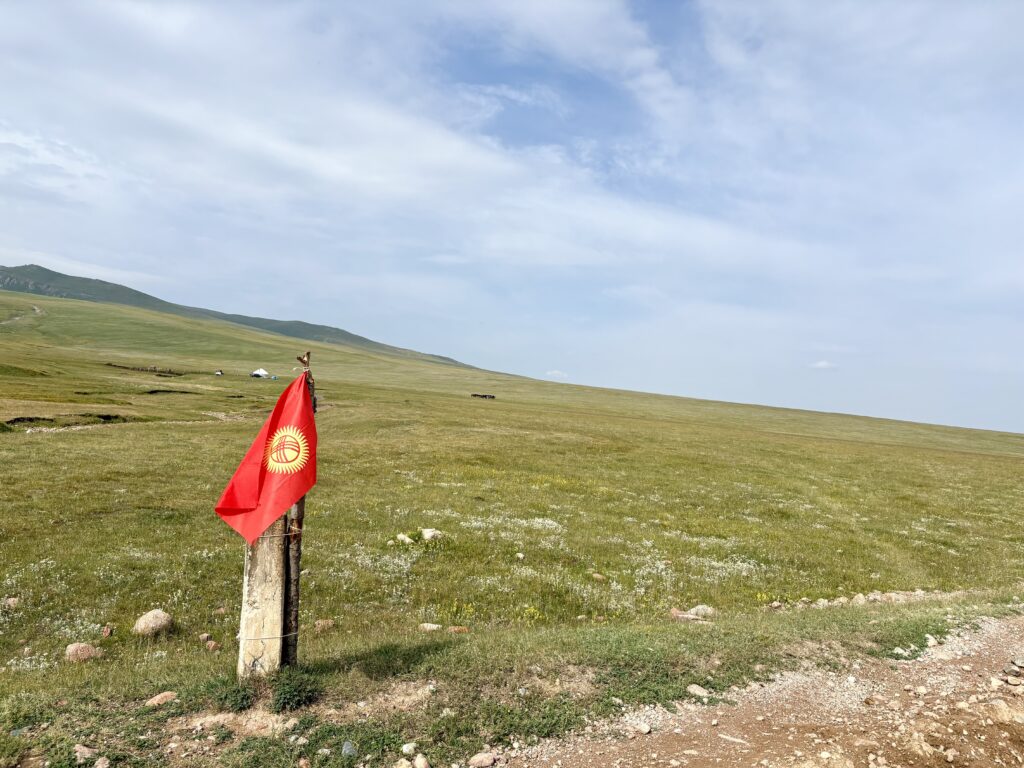
There’s a yellow emblem in the middle of the Kyrgyz flag — do you know what it means?
In fact, that central design captures the very heart of nomadic life and worldview.
This time, we’ll introduce the meaning behind the Kyrgyz flag! Once you’ve read this, you’ll be able to enjoy your trip to Kyrgyzstan on a much deeper level!
At the Center of the Flag Is the “Tunduk”
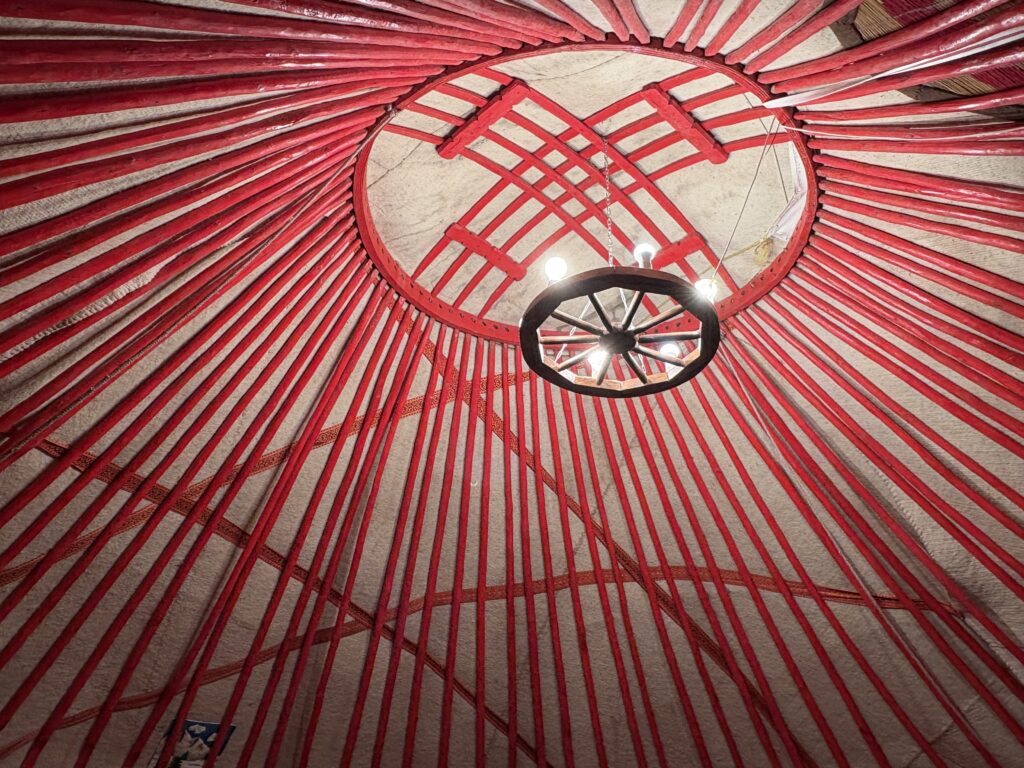
The round design in the center of the Kyrgyz flag is the “tunduk,” the crown at the top of the yurt (the nomads’ portable home).
When you step into a yurt, you’ll see a round wooden lattice overhead.
It supports the roof, lets in light and lets out smoke, and is the “heart of the home” that wraps around the family.
Since ancient times in Kyrgyzstan, it has been seen as a symbol of:
- family
- beginnings
- connection
It is regarded as something truly precious.
In other words, the tunduk is “the heart of the home.”
Placing it at the center of the national flag reflects the Kyrgyz belief that family and bonds matter more than anything.
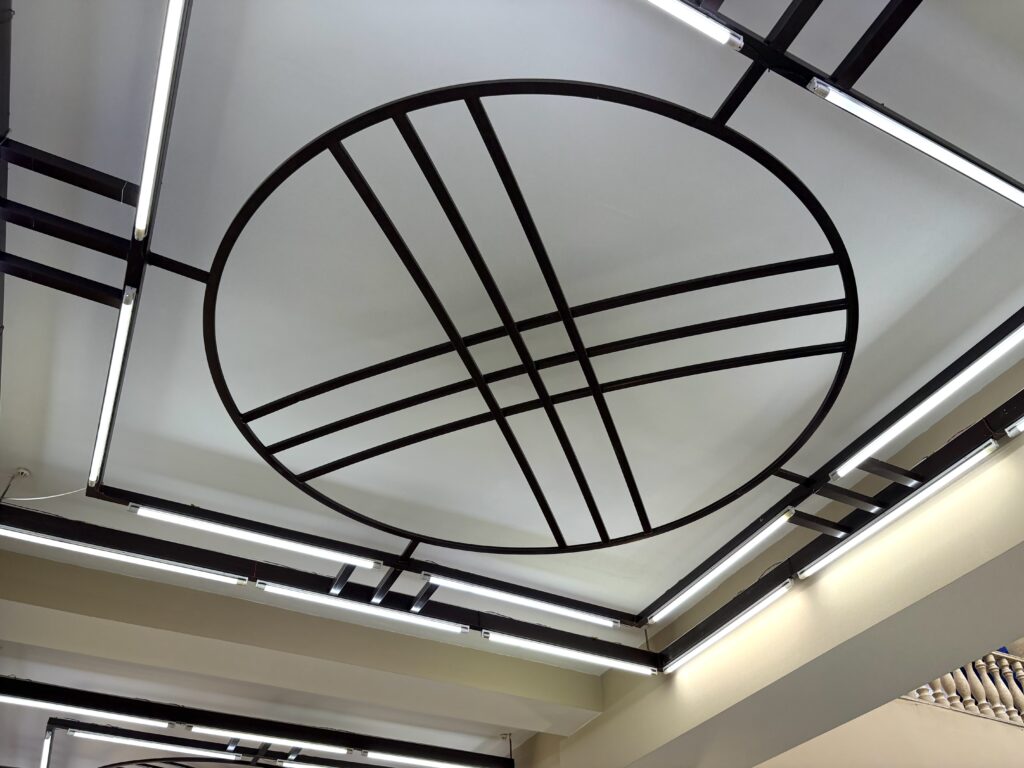
Look around the city and you’ll see the tunduk motif used widely in building and park decorations; even today, it’s a design that symbolizes “Kyrgyz identity.”
Even the lighting in the GUM department store in central Bishkek was a tunduk ⇩
The Yurt: The Origin of Kyrgyz Culture
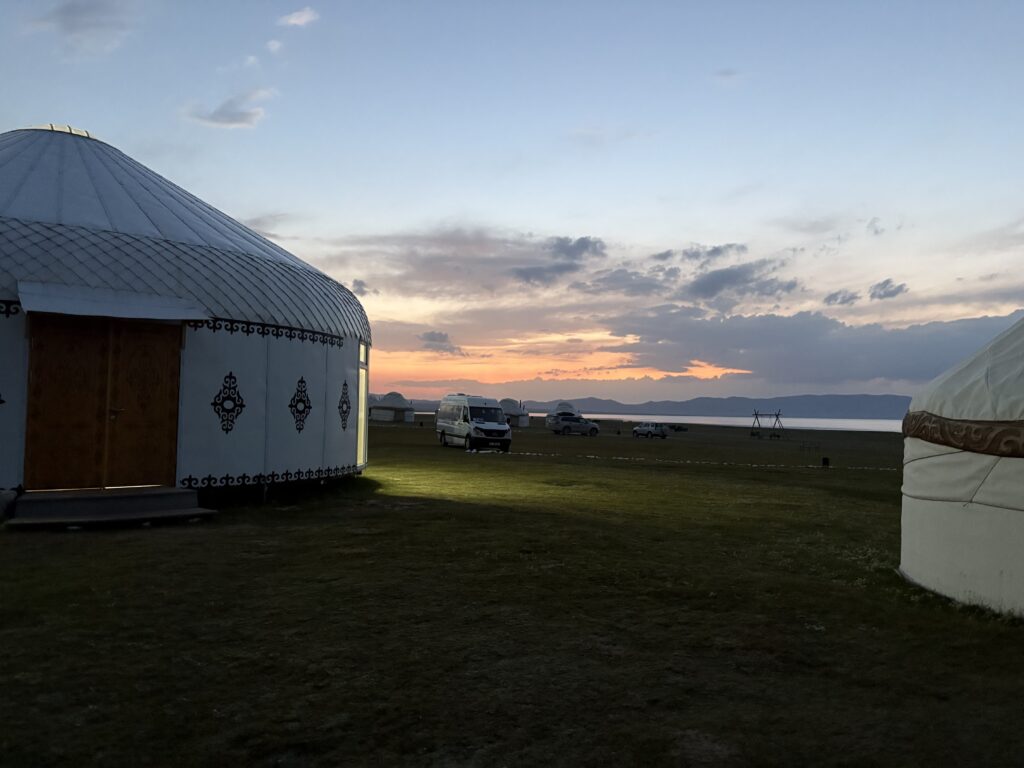
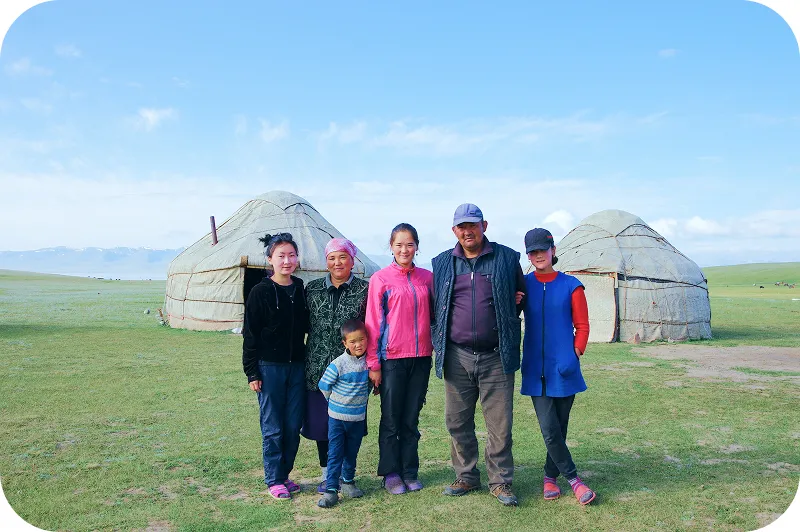
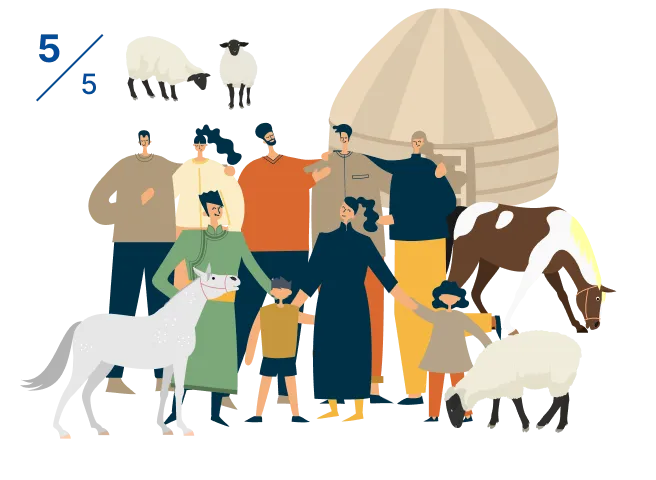
In the past, nomads moved with their yurts, assembling and dismantling their homes to suit each season’s way of life.
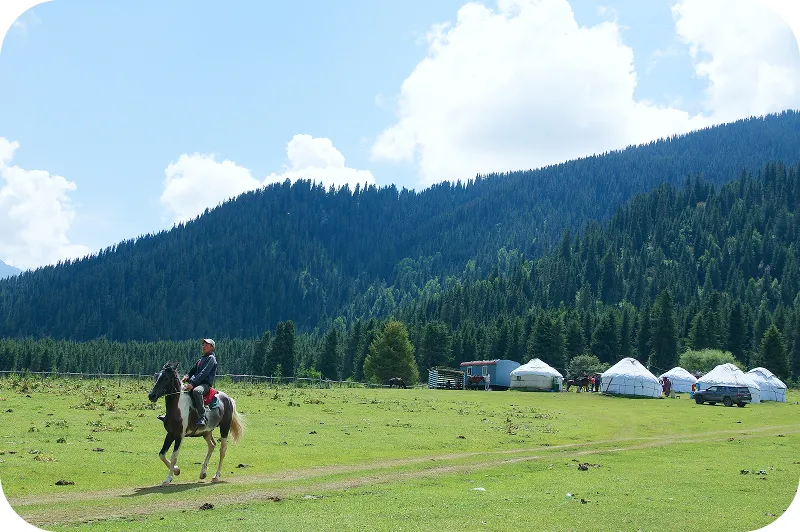
Even today, yurts are cherished as cultural symbols and used for festivals, tourism, guesthouses, and more.
How Is It Different from a Mongolian Ger?
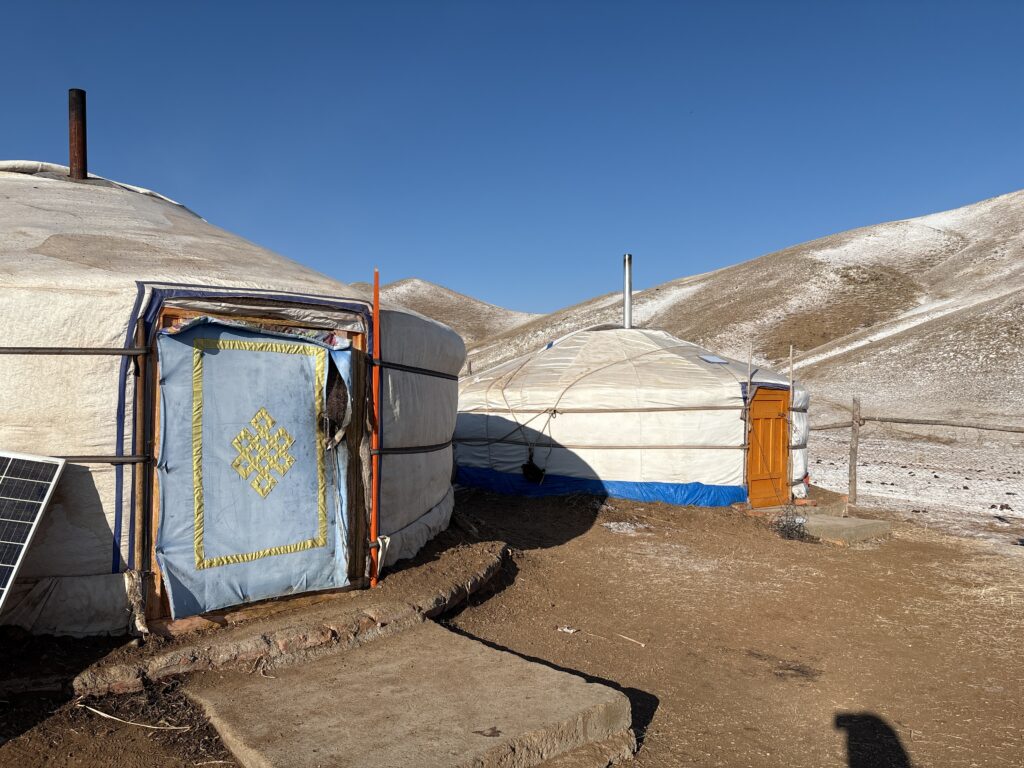
The Kyrgyz yurt is similar to the Mongolian ger, but there are some differences. If you look closely there are many, but this time we’ll introduce two major ones.
Difference ①: Kyrgyz yurts tend to be taller
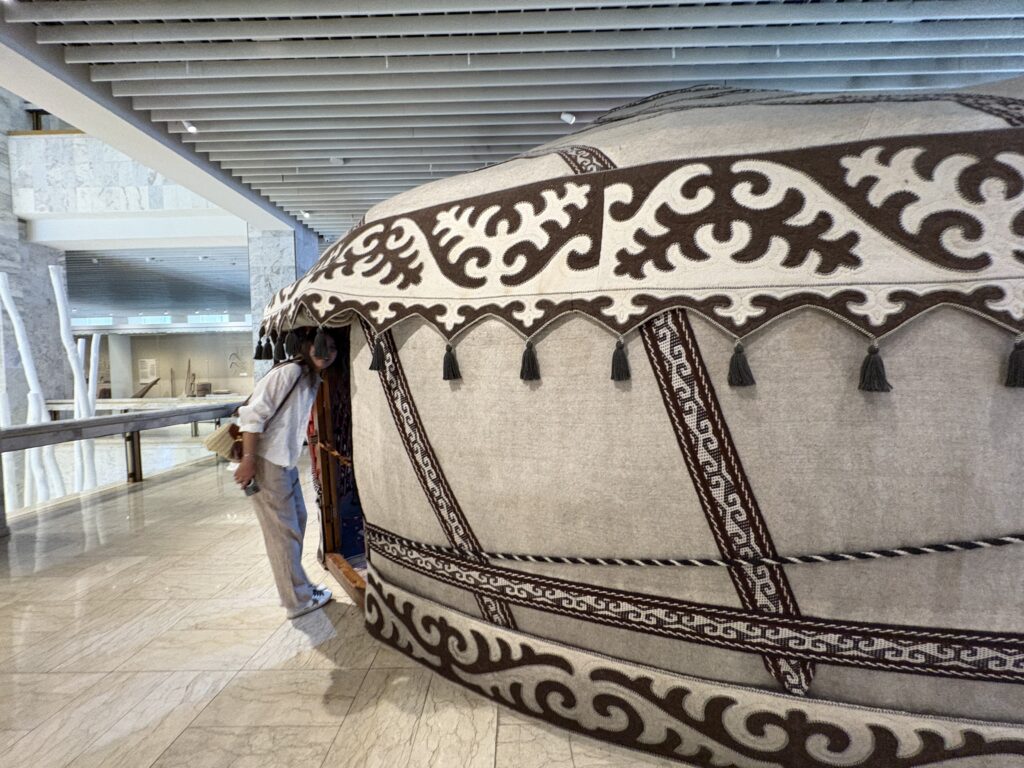
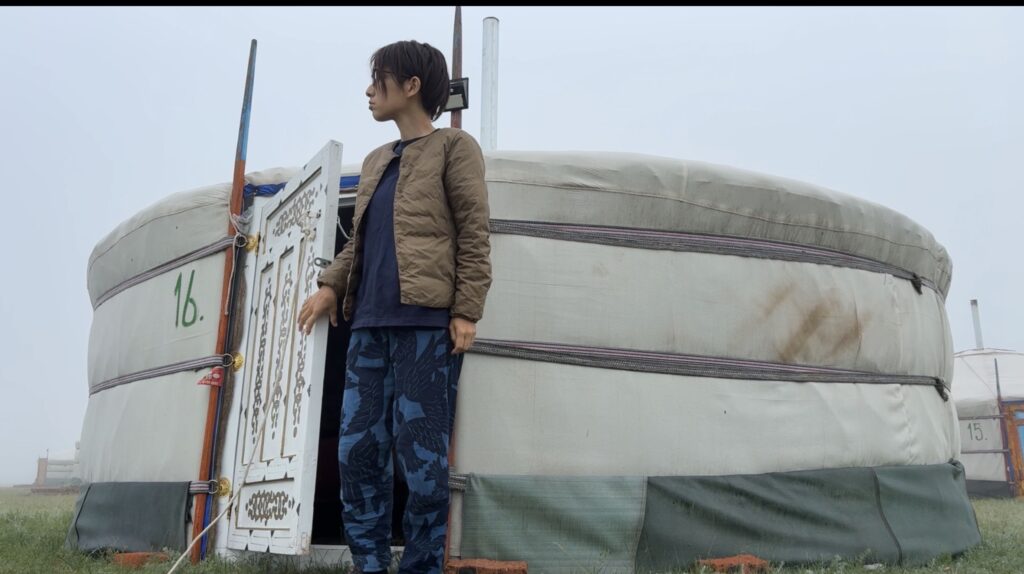
Both gers and yurts come in many sizes, but Kyrgyz yurts tend to be somewhat taller.
I once asked a Mongolian nomad why, and they said, “On the Mongolian steppe, strong winds blow, so if it’s tall, we worry it’ll get blown away.” That made sense.
As a camping lover, it reminded me that I used to bring a low tent when camping somewhere windy.
Difference ②: Whether there are pillars
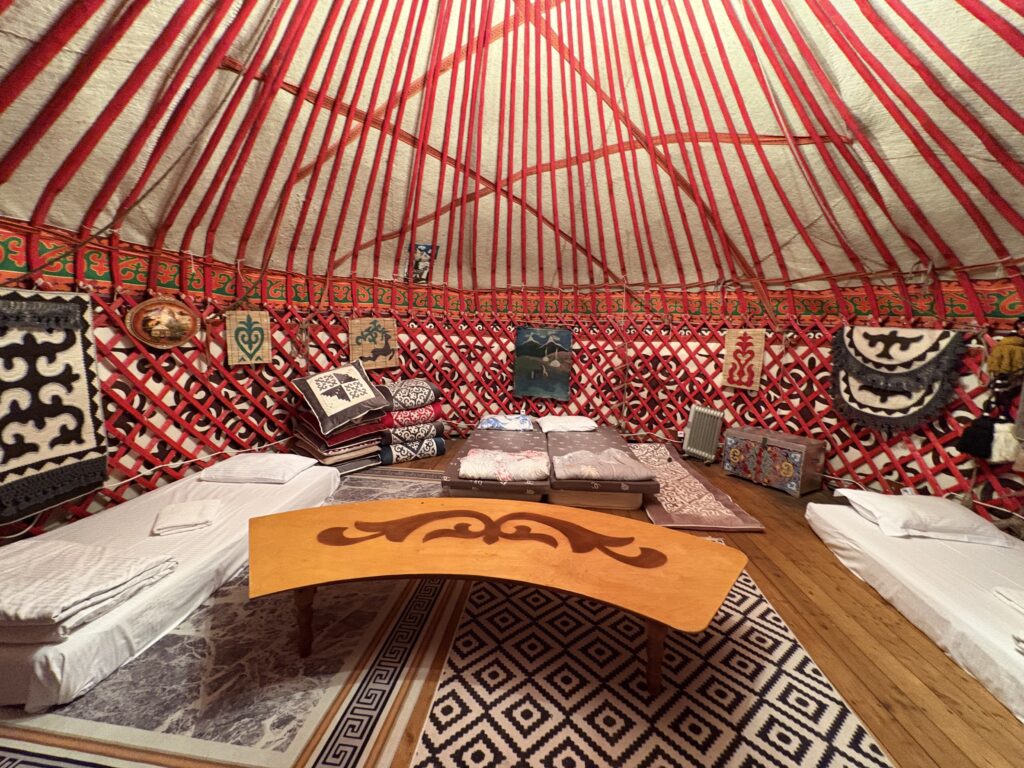
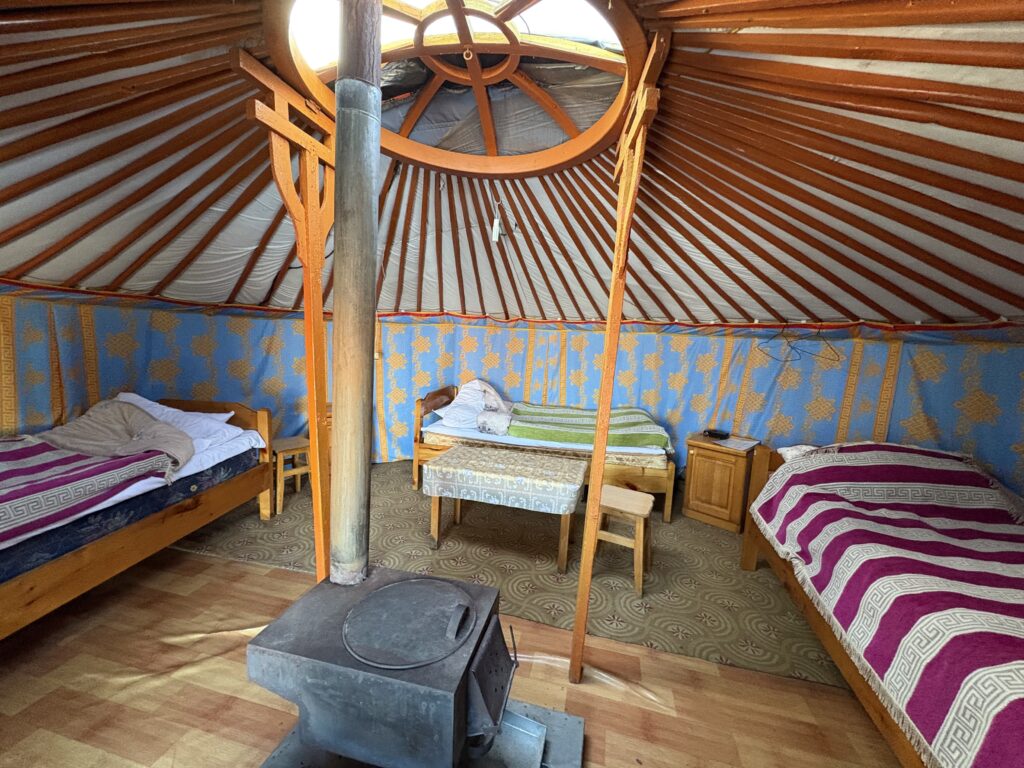
A Mongolian ger has two pillars in the center, and the roof is supported by both the walls and the pillars.
A Kyrgyz yurt, on the other hand, has no central pillars. It’s supported by the wall framework alone, with many poles reaching up to the roof to hold the tunduk firmly in place.
Thanks to this unique “pillar-free” structure, when you step into a yurt the space opens up wide and the tunduk makes an even stronger impression.
Meanwhile, the pillars in a Mongolian ger come with a very interesting story ⇩
https://mongol-jyouba-gakkou.com/blog/column-ger-vs-yurta-difference
The Meaning of the Red, the Sun, and the 40 Rays on the Kyrgyz Flag
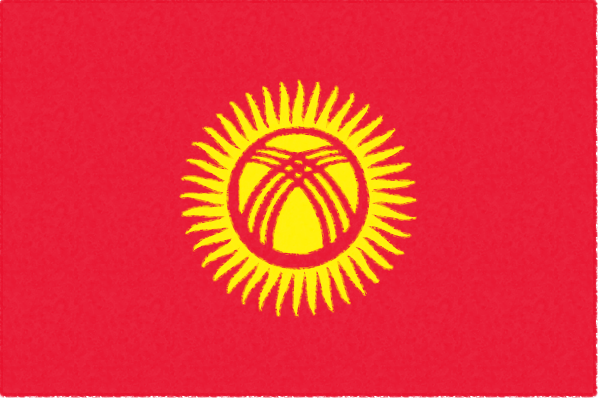
The Kyrgyz flag has a simple design: a sun on a red field, with a tunduk at its center.
The color and the number of rays each have a clear meaning.
Red
There are various theories, but it is said to come from the color of the banner raised by the hero of the epic poem “Manas.”
It symbolizes courage, strength, and unity.
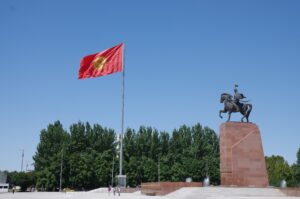
The Sun
A symbol of life that brings light to the land of Kyrgyzstan.
The 40 Rays (Lines of Light)
They represent the unity of the 40 tribes said to have formed Kyrgyzstan.
[Fun Fact] The Design Was Revised in 2023! The Reason Is…
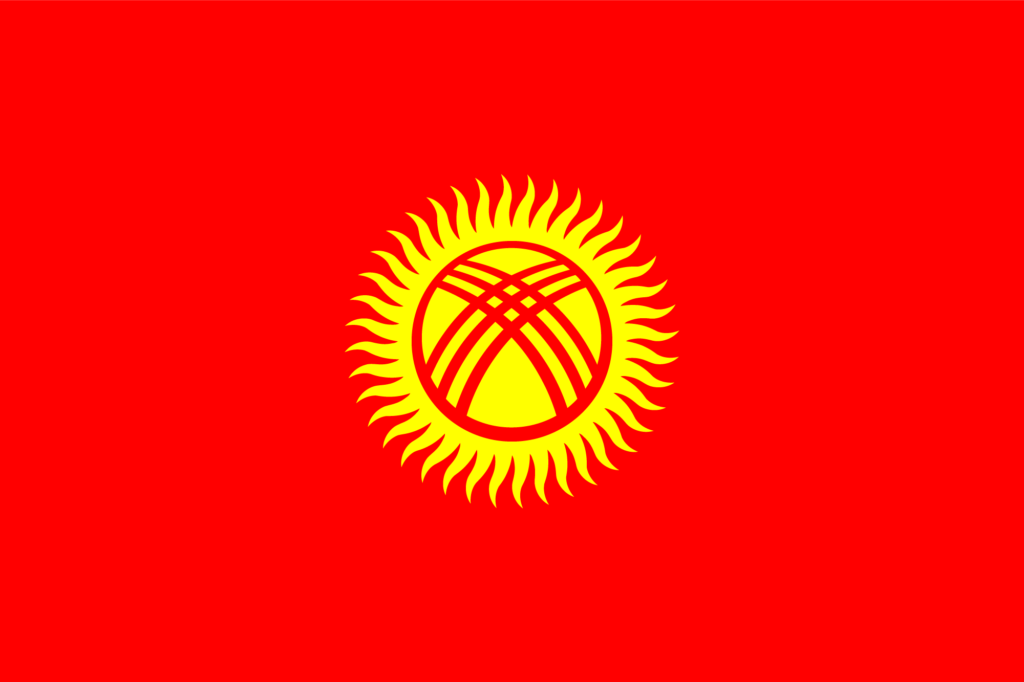
After people pointed out that the sun on the flag “looks like a sunflower,” the way the sun’s rays are drawn was made a little sharper in 2023.
Personally, I wonder if that was really the reason… it doesn’t look much like a sunflower to me.
When I asked Kyrgyz people around me, some said, “The old one was better.”
I think both look cool and like them both, but I feel the old one had more movement and was more memorable.
Knowing “What the Flag Means” Changes How You See the Scenery
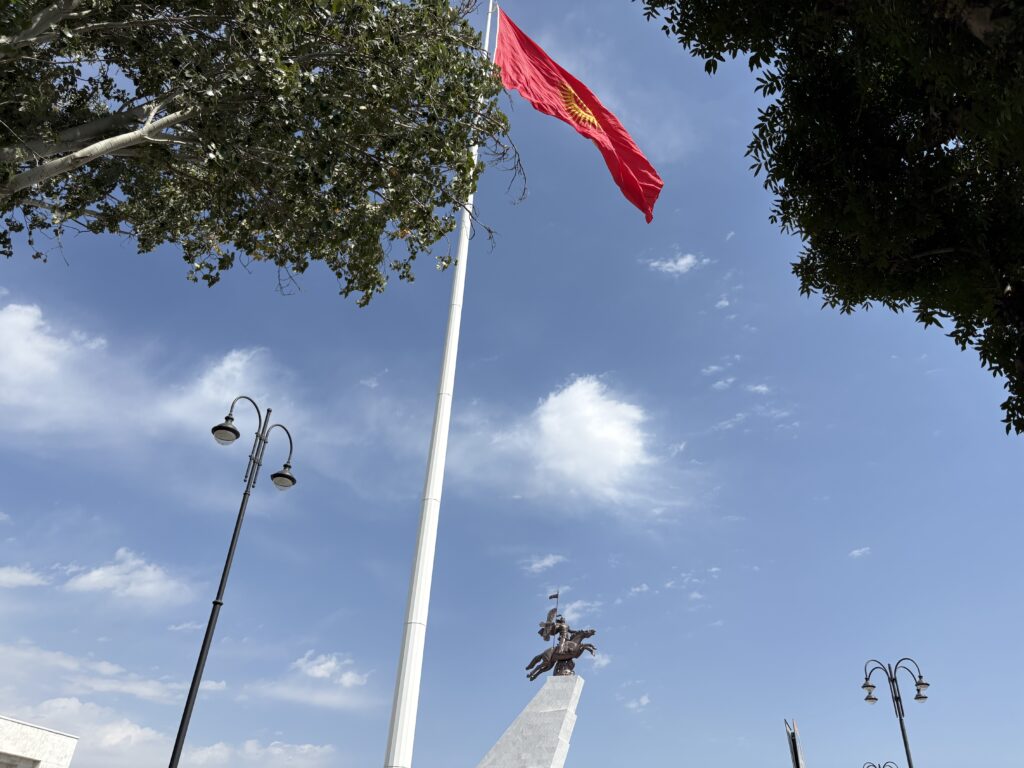
What lies at the center of the flag isn’t just a pattern — it’s the very life and spirit of Kyrgyzstan.
You’ll see the flag everywhere in Bishkek in daily life. It always strikes me how much Kyrgyz people love their flag.
Now that you know what the flag means, your trip to Kyrgyzstan should be ten times more fun! When you stay in a yurt, be sure to look up at the ceiling. You may be able to feel the hopes and way of life of the Kyrgyz people.
For a Trip That Goes Beyond Sightseeing, Choose ASHU TRAVEL
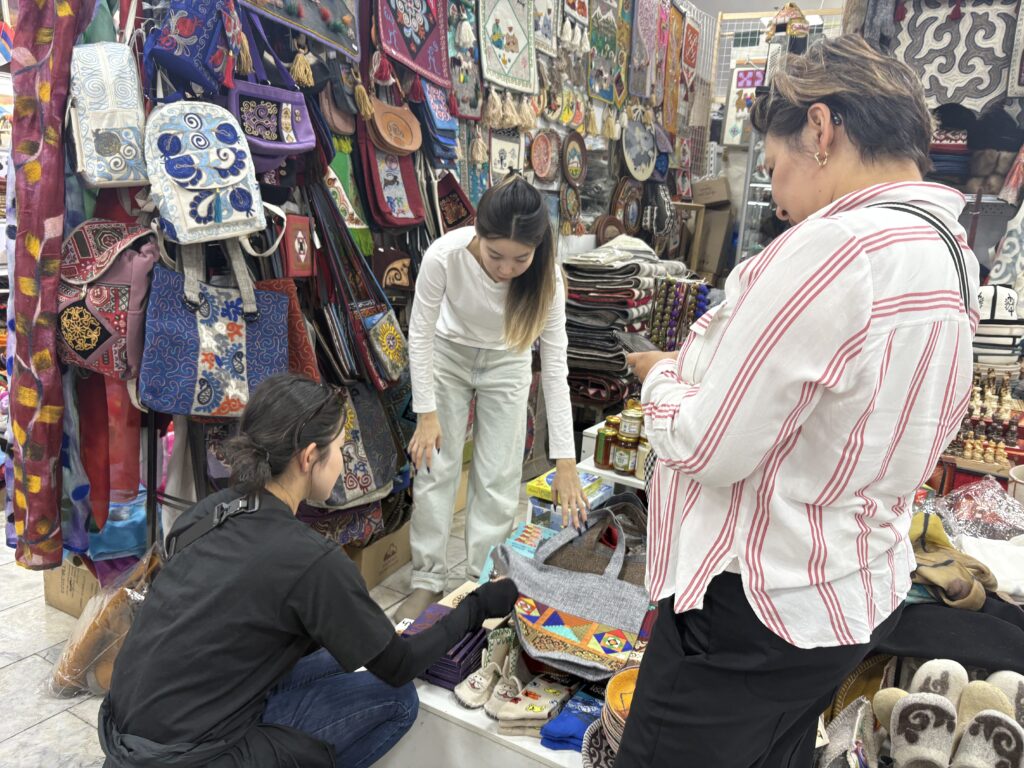
Independent travel in Kyrgyzstan is possible, but the main languages spoken locally are Russian and Kyrgyz. English isn’t widely understood, and travelers unfamiliar with the area often find it hard to get around.
With ASHU TRAVEL, a Japanese- or English-speaking guide fully supports you throughout the entire trip. Just getting past the language barrier deepens your understanding of the people, culture, and landscapes you encounter, and makes your trip so much richer.
Also, our prices include transfers, meals, accommodation, and horse riding, so preparing for your trip is surprisingly smooth. There are courses with yurt stays and options where you can actually help assemble a yurt — perfect for anyone who wants to experience nomadic culture in depth!
We offer trips that let you step deeper into Kyrgyz culture.
Recommended Tours
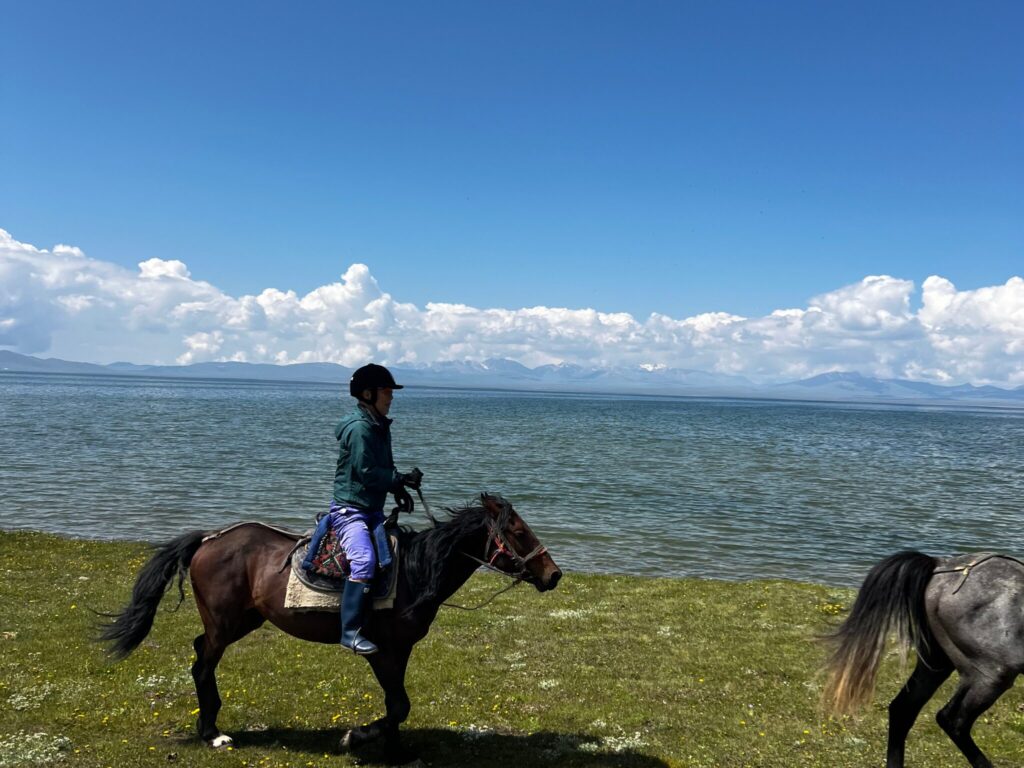
Horse Riding × Yurt Stay at Song-Kul, the Lake in the Sky
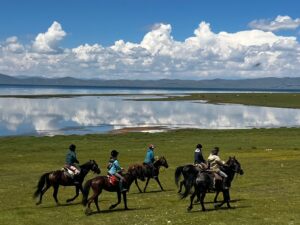
A popular tour where you ride around Song-Kul Lake, which sits at about 3,000 m and reflects the sky like a mirror.
ASHU’s signature tour, with yurt stays that let you experience nomadic life.
*Can be arranged to start and end at Manas Airport
https://ashu-travel.com/en/tour/son-kul-5days/
The Perfect 2-Day, 1-Night Tour for First-Timers in Kyrgyzstan
A short plan that lets you efficiently enjoy scenery, culture, and experiences even if you’re short on time.
If you’re unsure what to choose for your first trip to Kyrgyzstan, this course is a safe bet.
https://ashu-travel.com/en/tour/kazakhstan-kyrgyzstan-budget-1night-2days-tour/
Day Trips That Are Easy to Combine with Independent Travel
From city tours to famous sights, a lineup you can easily add to your itinerary.
We’ll also take you to the popular Manas statue.
https://ashu-travel.com/en/tour/bishkek-1day-walking-tour/
Nomad Homestay (Yurt Assembly Experience Available)
A rare course where you can experience life just as nomads live it.
You can also join in assembling a yurt as an option, giving you a look at the very heart of the culture.
https://ashu-travel.com/en/tour/kyrgyz-homestay-horseback-retreat/
📩 Contact Us & Follow Us on Social Media for the Latest Updates!
🌍 We share the latest Kyrgyzstan travel news and stunning scenery on Instagram!
📸 Follow us to see what our trips are really like!
▶︎ Visit our Instagram
📩 Questions about our tours
▶︎ Ask us on our official LINE account
▶︎ Contact form


 Related Articles