
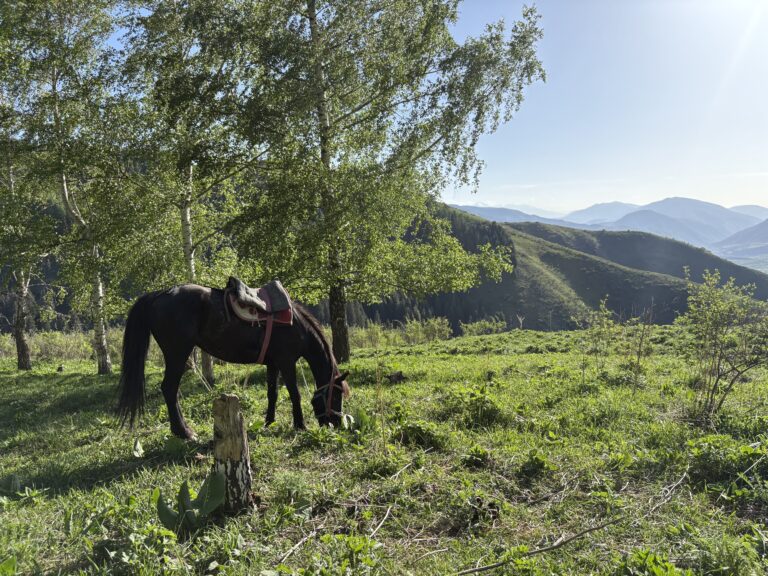





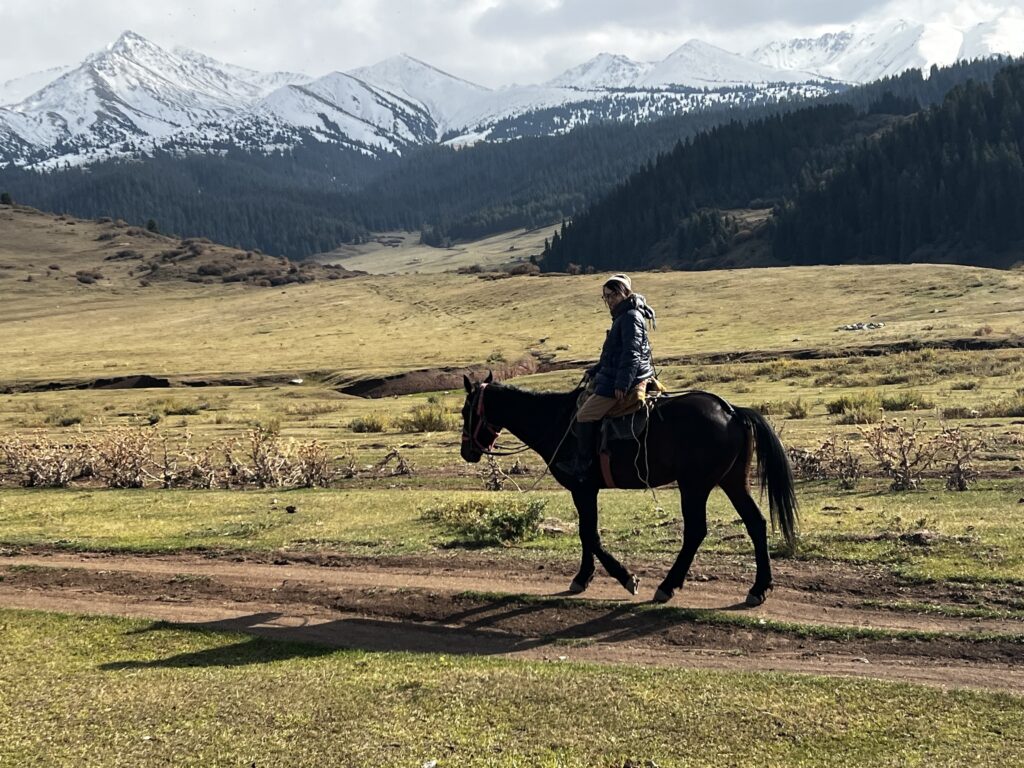
◆ Horse riding involves risk.
◆ Whether you are joining an ASHU TRAVEL tour or planning to ride in Kyrgyzstan on your own, please read this, whether you are new to riding or experienced.
◆ Our company cannot accept any responsibility for accidents or injuries. Please take out your own travel insurance.
* We ask all guests to sign a waiver before riding.
Salamatsyzby! This is Sugi from ASHU TRAVEL, your guide to spectacular horse riding journeys in Central Asia.
To be honest, I still can’t quite say “drrrr.” “Drrrr” is the rolled-tongue sound Kyrgyz riders use to calm their horses. Our guests are usually better at it than I am.
Even so, I didn’t give up, and I’ve kept on riding again and again.
This manual is packed with what I learned from our director Nuriya and local instructors, plus all the things I thought “I wish I had known this!” while riding myself.
Just keeping this knowledge from the field in mind makes a huge difference to both your safety and your enjoyment.
The Appeal of Horse Riding in Kyrgyzstan
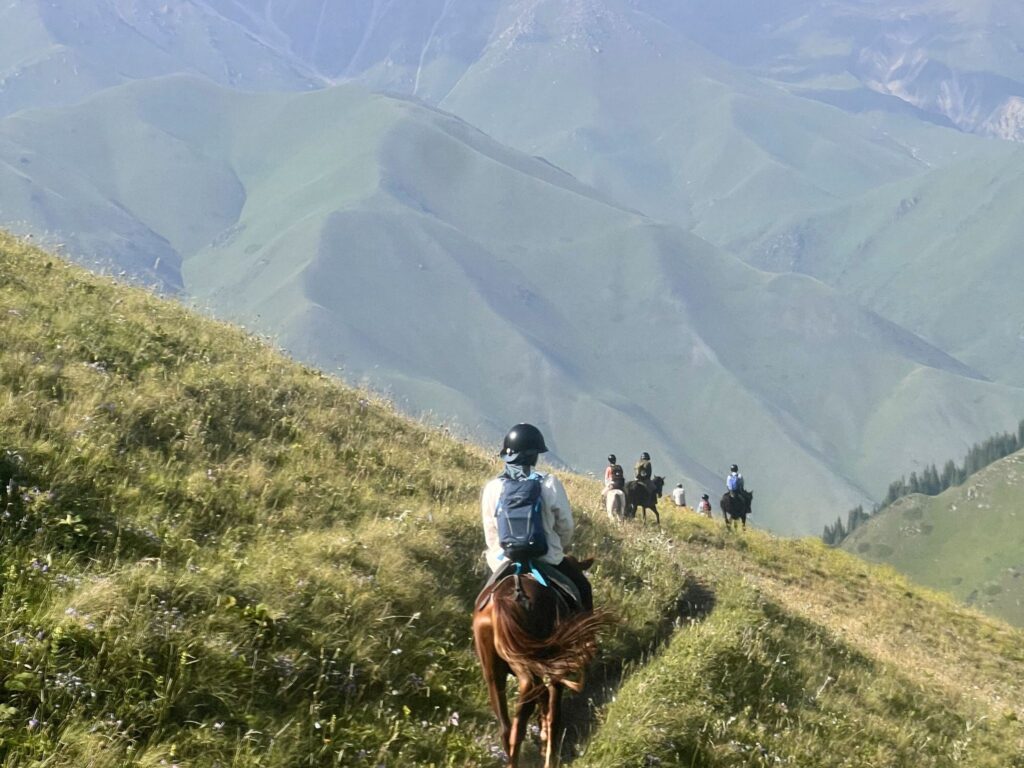
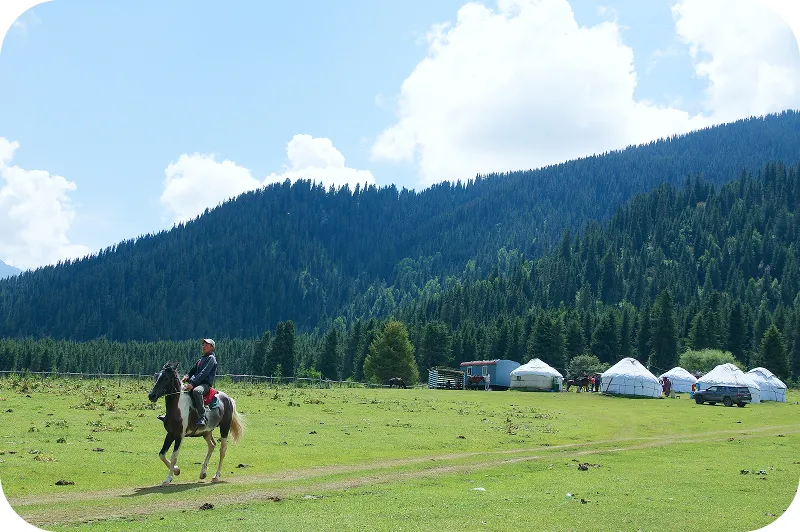
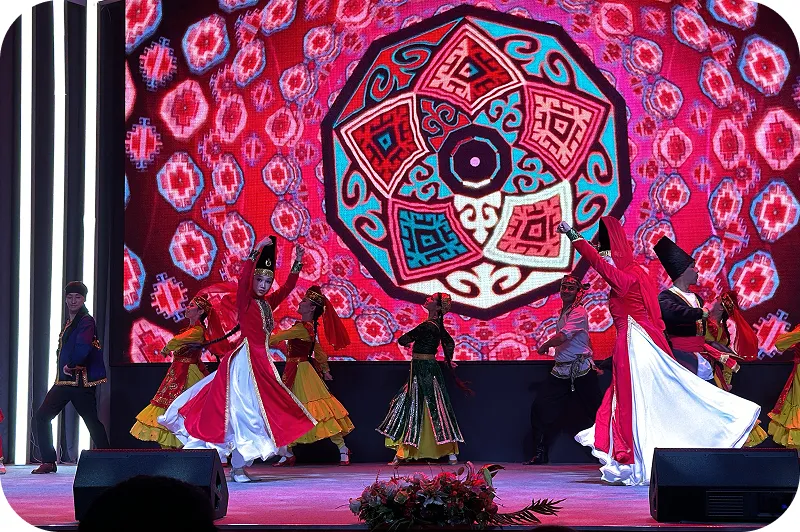
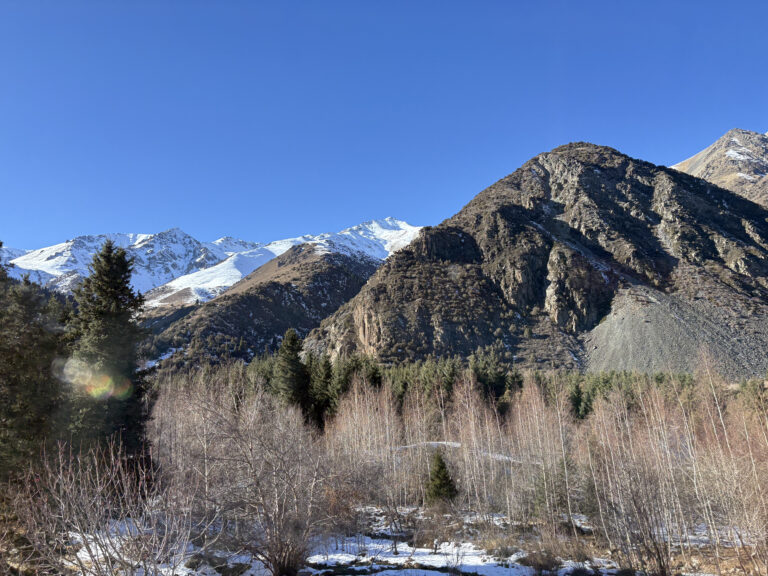
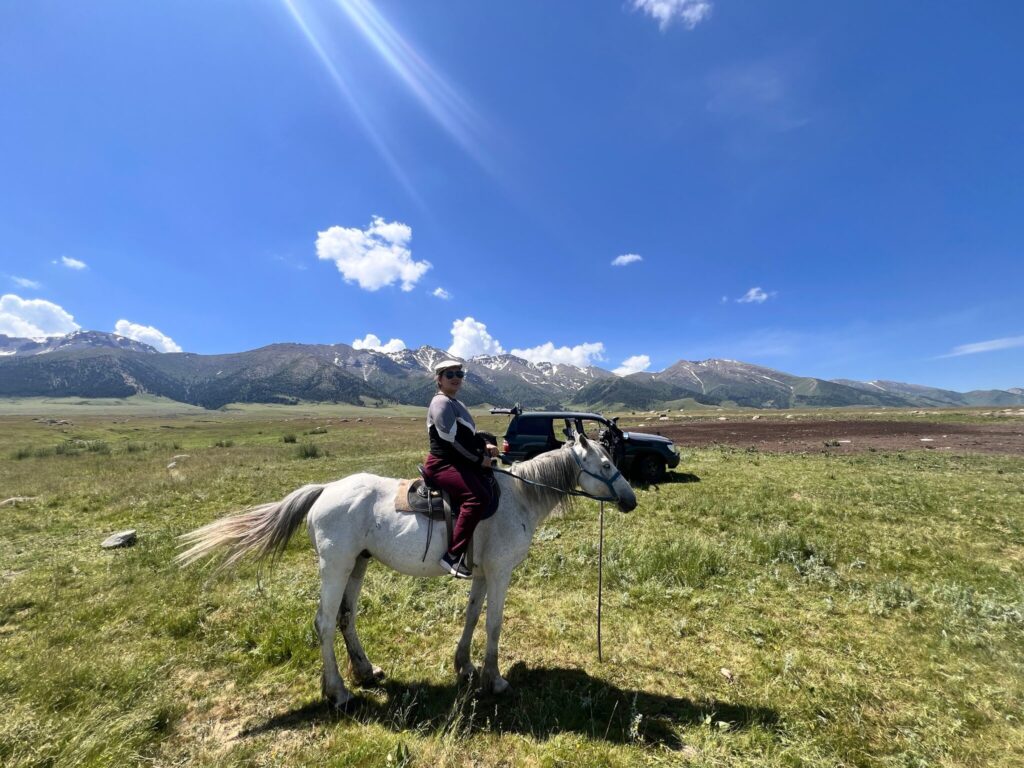
“What’s the difference between riding in Mongolia and in Kyrgyzstan?” We get asked this a lot. The biggest difference is the mountains. In some places, you ride through mountains over 3,000 m high.
There are no fences and no set courses. As you climb the slopes of the Tian Shan and glance to the side, the rocky peaks you were looking up at a moment ago are now below you. That feeling is something only riding in Kyrgyzstan can give you.
We have covered this in detail in a separate article, so please read it as well.
👉 [Link] 5 Reasons to Love Horse Riding in Kyrgyzstan
4 Things to Keep in Mind for Riding in Kyrgyzstan
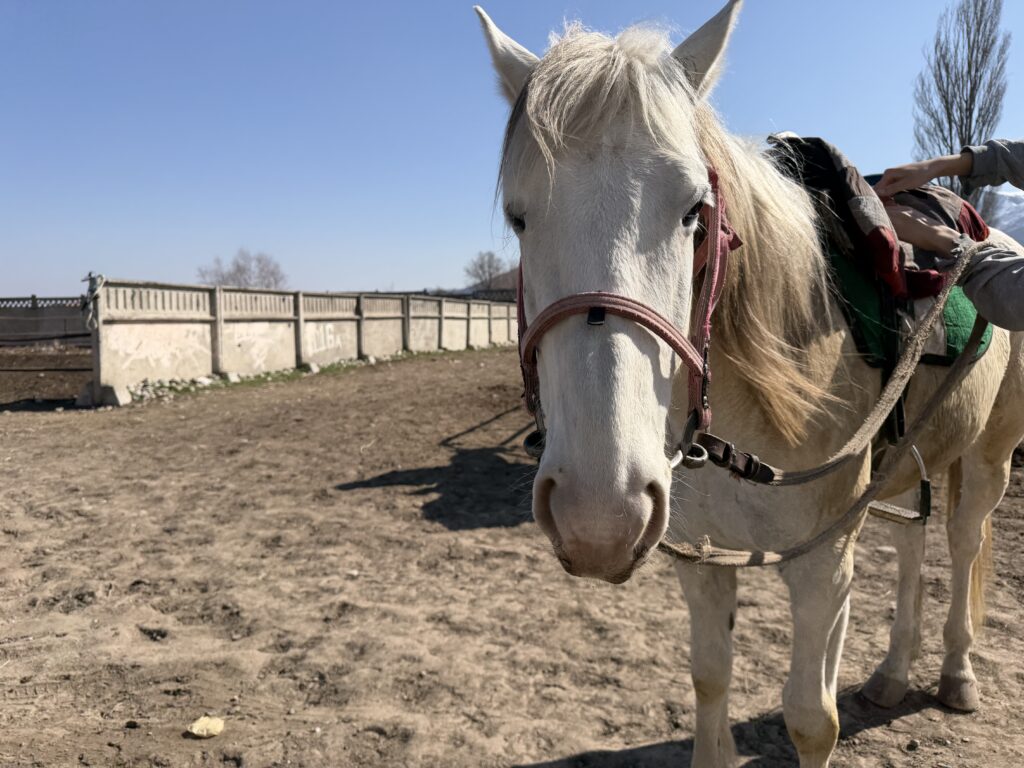
① It’s completely different from riding in Japan
Riding in Kyrgyzstan is fundamentally different from the way it is done at riding clubs in Japan.
In Japan, riding is based on Thoroughbreds, and you learn technique inside a fenced arena under set rules. Kyrgyz horses, on the other hand, are bigger than Mongolian horses but shorter than Japanese horses, and you ride them in mountainous terrain with no fences.
I have been to a riding club in Japan myself, and both the size of the horses and the way the reins are handled were completely different. It felt like a different activity altogether.
⚠️ Riders used to the Japanese style are often the ones who let their guard down. First, keep in mind that “the way it’s done is different,” and listen to the instructor’s explanation as if starting from zero.
② Don’t tough it out at high altitude
About 94% of Kyrgyzstan is mountainous. If you feel a headache, dizziness, shortness of breath or nausea at high altitude, tell your guide right away. Don’t try to tough it out.
③ Trust your horse and stay calm
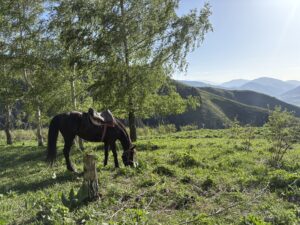
Kyrgyz horses are born and raised in terrain full of steep climbs, steep descents and rocky paths. They keep their footing firmly even on steep slopes. Trust your horse, relax your body and ride.
⚠️ However, horses quickly sense when you feel scared, and an anxious horse may move unexpectedly. If you get scared, don’t push yourself: tell your guide and stop for a moment.
④ Horses in winter are different from horses in summer
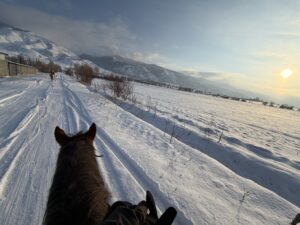
During winter, Kyrgyz horses spend most of their time in the stable for long periods. Horses suddenly called out for a tour may be excited and act up.
On winter tours, especially during the first ride, watch your horse’s behavior closely and follow your guide’s instructions. Even on canter tours, the guide may call off cantering if they judge it to be dangerous.
Before Riding in Kyrgyzstan | What to Bring, What to Wear and Your Physical Condition
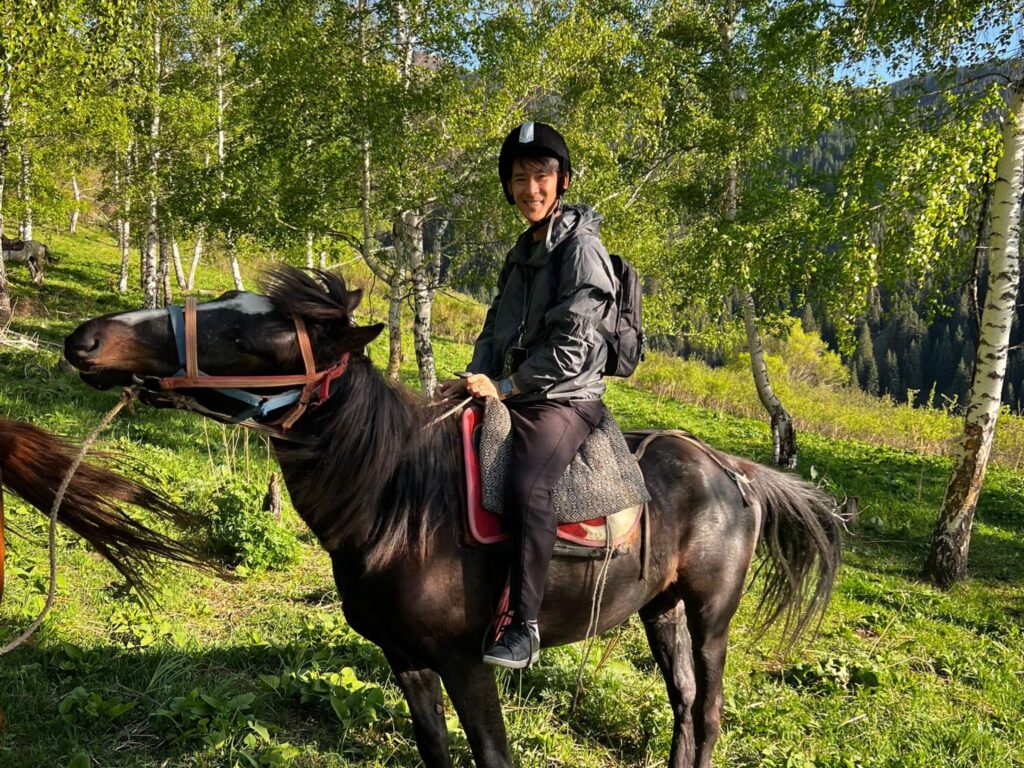
Clothing
- Upper body: A long-sleeved shirt or polo shirt. Always bring a fleece or windbreaker. When going to high altitudes, don’t forget a light down jacket, even in summer.
- Lower body: Long pants that are easy to move in. Please avoid loose pants and skirts.
- Shoes: Sneakers or riding boots. Sandals, high heels and hiking boots risk getting caught in the stirrups if you fall.
- Gloves: Thin leather gloves or cotton work gloves. In winter, two layers are warmer but make the reins harder to handle, so we recommend a thin pair plus a thick pair.
What to bring
- Water, passport, credit card
- Raincoat or windproof outer layer (essential)
- Sunscreen, sunglasses, a wide-brimmed hat, lip balm
- A waist pouch is recommended. Shoulder bags can fall off.
- Half chaps and helmets are lent free of charge.
* When it’s hot, you can leave your jacket in the car.
Before Riding in Kyrgyzstan | 6 Precautions
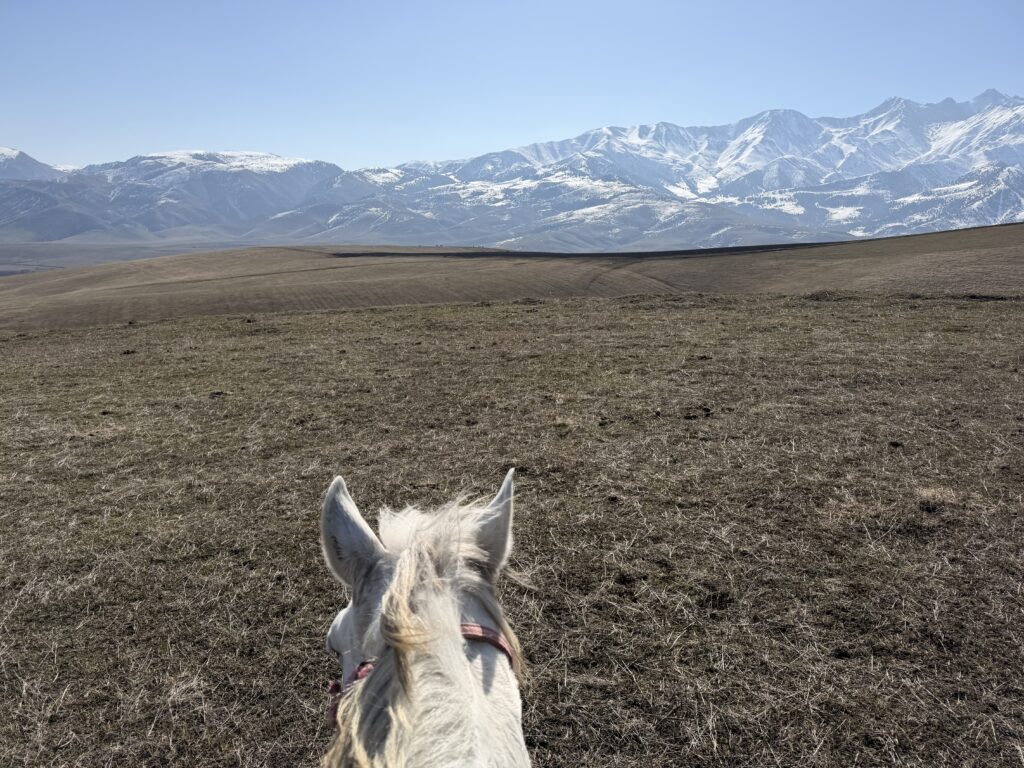
① Don’t stand behind a horse
The area behind a horse is its blind spot. If startled, it may kick.
② Always mount and dismount from the left side
This is a universal rule. If you try to mount from the right, the horse will be startled.
③ Don’t mount or dismount until you’re given the signal
Mounting and dismounting are moments when you are vulnerable. Follow the instructions of the instructor or guide, and don’t act on your own judgment.
④ Have your stirrup length adjusted
As soon as you are in the saddle, have the instructor adjust the length of your stirrups.
Length guideline: your legs should not be overextended, and you should be able to straighten them when you lean back to stop the horse. At first, slightly shorter is safer.
⑤Don’t put your feet too deep into the stirrups
If your foot gets caught when you fall, it can be life-threatening. Ride with the stirrup in front of the arch of your foot.
⑥ Follow instructions on how to hold the reins
How to hold the reins can vary depending on the riding area and the horse. Even if it differs from what you learned in Japan, give priority to the instructions of the instructor on the spot.
While Riding in Kyrgyzstan | Basic Horse Controls
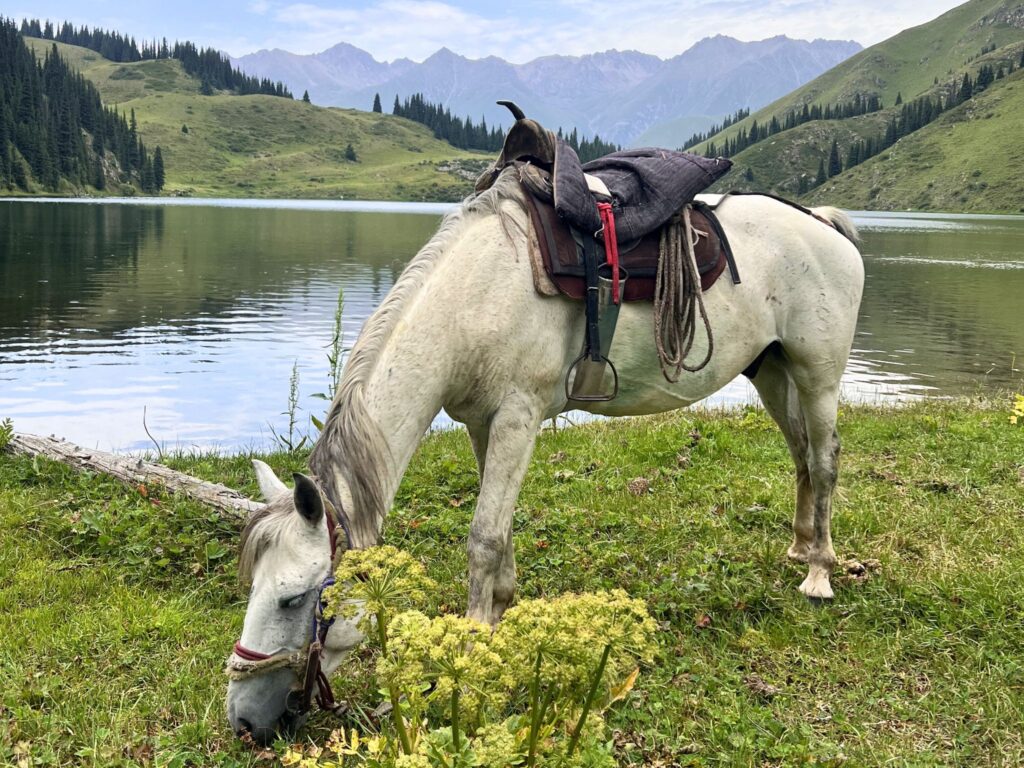
Kyrgyz horses are raised with Kyrgyz words.
Go: “Chuu!”
Lean your weight slightly forward, say “Chuu!”, and lightly kick the horse’s belly with both legs.
However, some horses will start running if you kick too hard. At first, be gentle and find the right amount while watching how the horse responds.
Stop / calm down: “Drrrr~”
Straighten your back, shift your weight back, pull the reins toward you, and say “Drrrr~” with a rolled tongue.
The trick is rolling your tongue. I still find it hard to say, but try it while copying your guide.
Changing direction
Shift your weight toward the direction you want to go and slowly pull the rein on that side. Don’t yank it with force; be gentle but clear.
While Riding in Kyrgyzstan | Reading Your Horse’s Mood
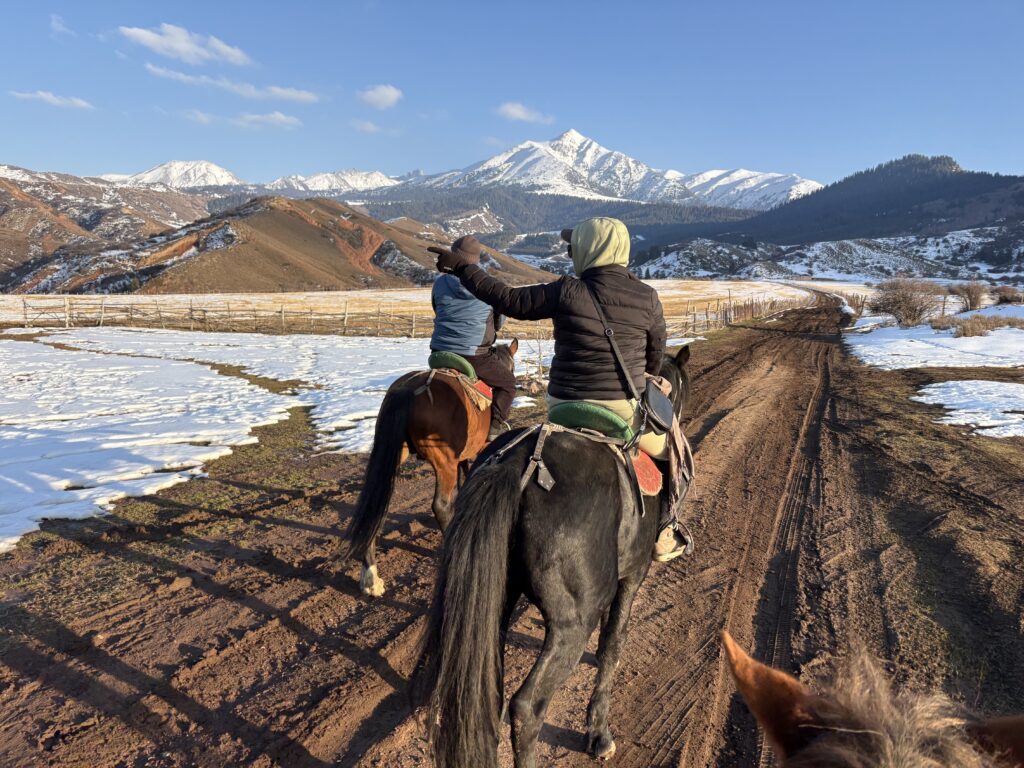
A horse’s ears are a barometer of its emotions.
[Danger level: Low] Ears pointing left and right: relaxed and observing its surroundings.
[Danger level: Medium] Ears pricked straight forward: focused on what is ahead.
[Danger level: High] Ears pinned flat and back: there is a good chance the horse is angry. Don’t try to force control; tell the staff right away.
While Riding in Kyrgyzstan | 3 Precautions
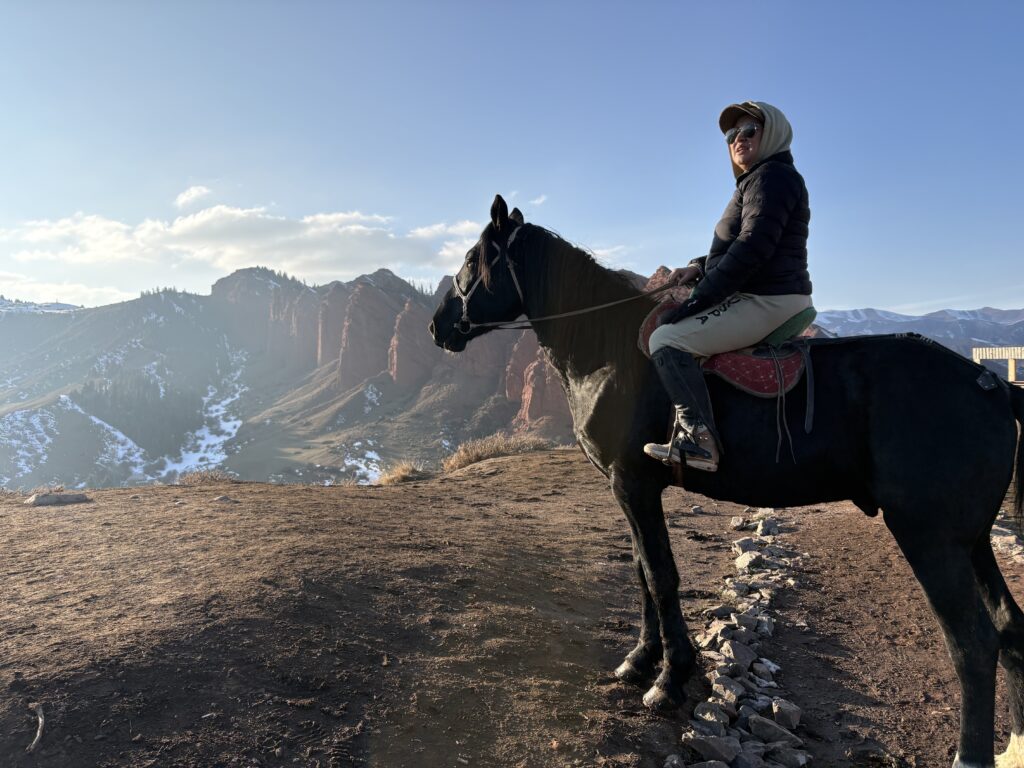
① Don’t canter on your own
Cantering is allowed only after the guide and instructor have checked the horse’s condition, how well horse and rider get along, and the terrain.
If the guide judges it to be dangerous, they may tell you to stop in the middle of a canter. Please follow their instructions immediately.
Also, if you canter on your own, the instructor will come to stop you, and the horses may start fighting each other. Please don’t act on your own judgment.
② Don’t approach other horses on the road
You may meet other horses on mountain paths or in villages. Horses may start playing or racing with each other, so if you see one, don’t approach it; stay behind the instructor.
③ Keep your distance between horses
When riding in Kyrgyzstan, you may ride horses gathered from different parts of a village. Often the horses are meeting for the first time and don’t get along.
Always keep at least one horse length between you and the horses in front and behind. If they get too close, horses may kick each other.
A Video to Watch Before You Ride
Nuriya, the director of ASHU TRAVEL, clearly explains the precautions for riding in Kyrgyzstan. These are the words of a professional guide who has led more than 3,000 people. Please watch it before reading the manual.
3 Tips to Avoid Falling Off
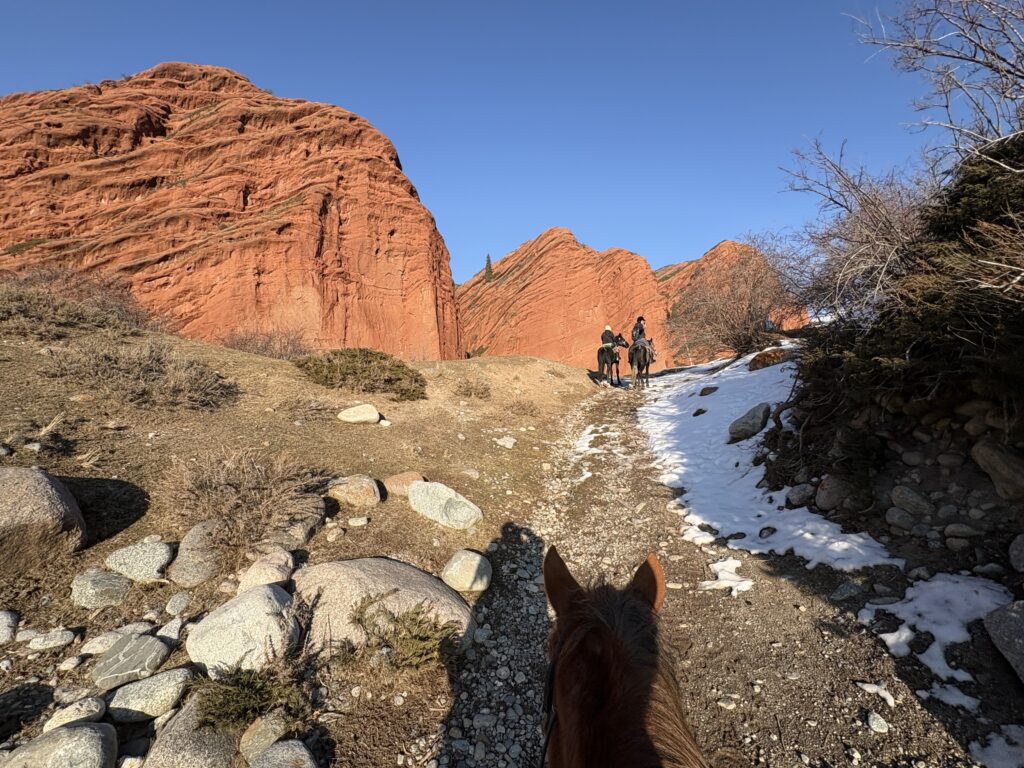
- Hold the reins short (the faster you go, the shorter, but keep your body supple)
- Put your weight into your heels (sinking your weight into your heels stabilizes your posture)
- Grip the horse’s body with your thighs and legs (imagine holding on to the horse with your entire lower body)
Just in Case: How to Fall Safely
The most important thing is not to fall in the first place. That said, if a fall is unavoidable, fall forward and to the side. Falling backward puts you at risk of being kicked. Curl up your body like a judo breakfall and protect your head. It’s OK to let go of the reins.
Absolutely avoid falling with your foot tangled in the stirrup. Before you fall, always make sure your foot comes free.
In an Emergency
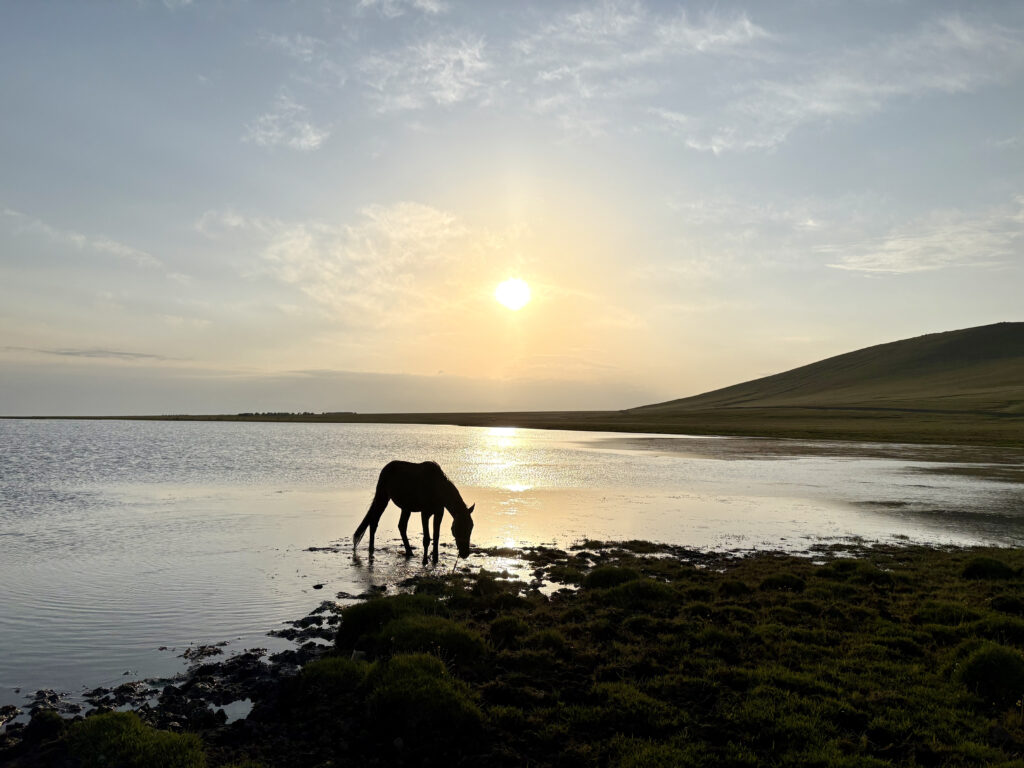
⚠️ Costs related to accidents or injuries are your own responsibility. Be sure to take out overseas travel insurance and check in advance how claims are paid.
After a fall, we assess the situation. If the injury is minor, riding continues; if first aid is needed, we arrange a vehicle; and if we judge it to be dangerous, we transport you to a hospital in Bishkek. If you notice anything wrong, let us know right away.
FAQ About Horse Riding in Kyrgyzstan
Q. Can I join with no riding experience?
A. Yes, you can! However, some tours are open to you and some are not. Each tour’s page lists guidelines such as “Beginners welcome” or “For experienced riders,” so please be sure to check before applying.
Q. Is it OK for a beginner who has only ridden a few times?
A. It depends on the tour. Please check the target level on the tour page before applying.
Q. Is riding experience in Japan an advantage?
A. Having experience certainly doesn’t hurt. However, riding in Kyrgyzstan is done differently from riding clubs in Japan. Some people let their guard down, thinking “I’ll be fine because I ride in Japan,” and then can’t control the horse well. Experienced riders in particular should listen to the explanations keeping in mind that “the way it’s done is different.”
Q. From what age can children join?
A. In general, children aged 5 and up can join. However, small children may not be able to reach the stirrups, in which case they cannot take part in cantering. If you are traveling with children, please consult us in advance.
Q. Do you ride in rain or bad weather?
A. In Kyrgyzstan, it doesn’t often rain all day long, but mountain weather changes easily. In light rain we may continue, but in severe weather we pause and wait to see how it develops. Safety comes first. Just in case, be sure to bring a raincoat or an outer layer that protects against wind and rain.
Q. Can I take photos while riding?
A. Please refrain from taking photos with your own smartphone or camera. If you ask your guide or instructor, they will take photos for you.
You may use cameras that attach to your body and leave both hands free, such as an Insta360, but we cannot take responsibility for damage or loss.
You may sometimes see young people from the village riding while using their smartphones, but that’s because they have been riding since they were small. It is dangerous to do the same.
Once You’ve Read the Manual, It’s Time to Practice

Riding is mostly something you learn with your body on the horse rather than with your head.
I’ve put together what I heard from guides and instructors and the mistakes I’ve made myself, but I still have a long way to go before I can say I ride well…
Even so, having some background knowledge makes a big difference to both your safety and your enjoyment.
The moment you move in harmony with your horse at the foot of the Tian Shan, as if soaring through the sky, is a truly special time like no other. Keep these precautions in mind and enjoy it to the fullest!
📸 For the latest news and inquiries, find us on Instagram or LINE 📩
▶︎ Instagram → @ashutravel_jp
▶︎ Ask on our official LINE → Add us on LINE here


 Related Articles