Salam! This is Sugi from ASHU TRAVEL, offering scenic horse riding trips in Central Asia.
Russian has a rolled R sound (written “р” in Russian).
It’s not like Spanish, and it’s not like English: it’s an R you simply can’t pronounce unless your tongue trills.
…Yes, as expected, I couldn’t do it.
Day 1 of my language study in Kyrgyzstan. A relaxed lesson with a kind teacher. But behind the scenes, a 40-year-old wrestling with a tongue that just won’t roll.
This time, I’ll share about the language school I attend, what the lessons are like, and the realities of studying abroad:
the real story of studying Russian, for people who genuinely want to learn.
The School I Attend
First, let me introduce the school I actually attend after deciding to study Russian in Kyrgyzstan.
School Basics
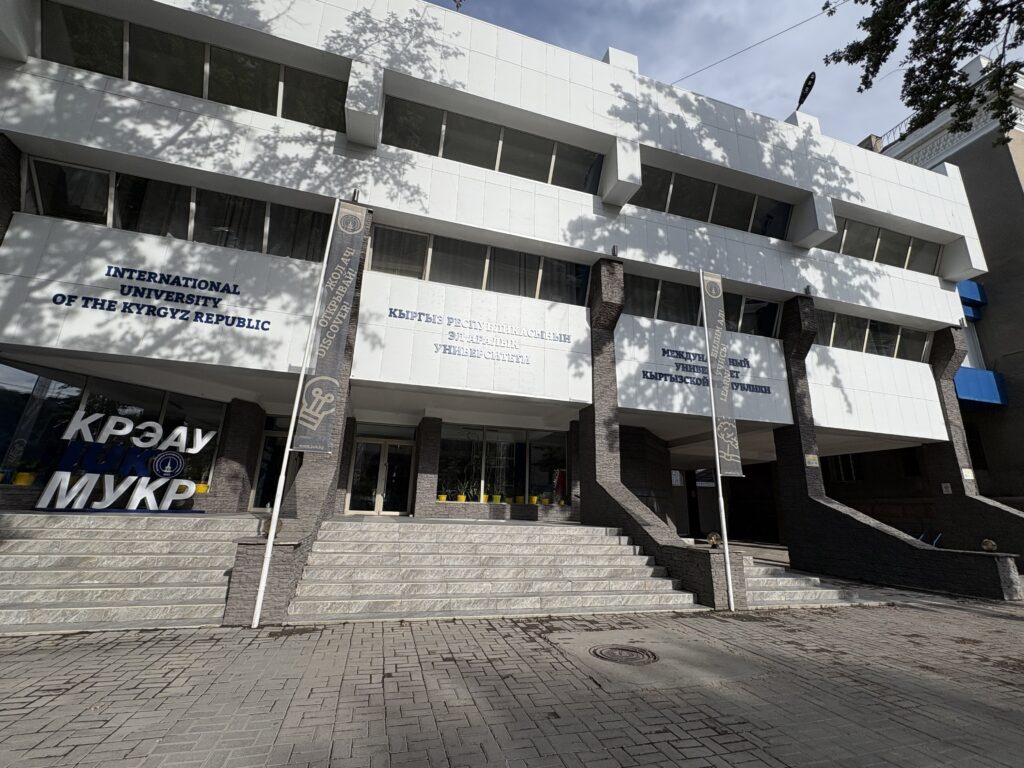
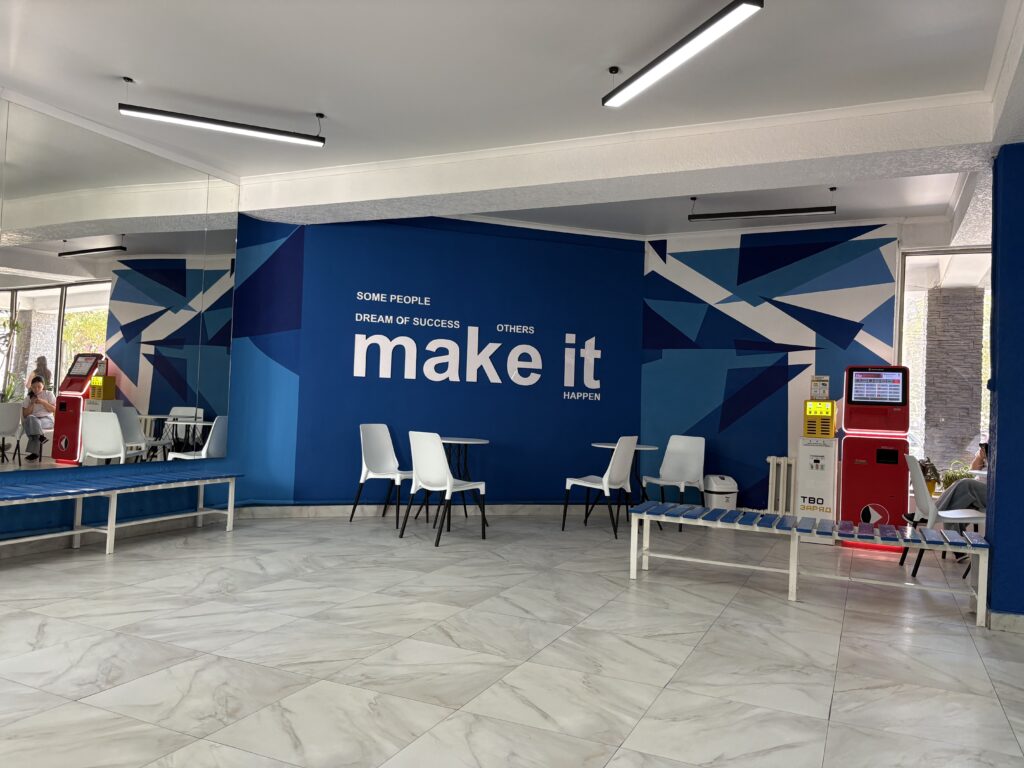
I attend the Center for International Education affiliated with Kyrgyz International University.
This education center is run in partnership with Kyrgyz International University (Kyrgyz International University),
and it’s on the same campus, located in central Bishkek.
Kyrgyz International University itself is a semi-public, semi-private university with about 4,000 students (as of September 2025).
The Center for International Education, one of its affiliated institutions, is also an official language school licensed by the Kyrgyz Republic.
Because of that, one of its features is that you can get a long-term student visa for language study. You can study for as little as 2 weeks, and they apparently offer both private and group lessons.
*Details such as tuition, start dates, and visas are subject to change, so please always contact the teacher directly by email for the latest information.
Why I Chose This School
Honestly, if you search in Japanese for Russian language schools in Kyrgyzstan, there’s very little information.
A few candidates came up in my searches, but I couldn’t find one that felt quite right.
That’s when I came across this Center for International Education affiliated with Kyrgyz International University. There wasn’t a lot of information, but when I saw its homemade-looking website,
my first impression was, “There are real people here.”
As a marketer, I’m sensitive to “packaged information.”
This school’s website is definitely not a modern design, but somehow I felt a warm atmosphere coming through.
With languages, who you learn from and in what atmosphere really matters. My intuition was right: the moment I actually met the teacher, I naturally thought, “I want to study here.”
Meeting Teacher Takena and Making an Appointment
How I made the appointment
Before I decided to study in Kyrgyzstan, I had actually visited Bishkek once as a tourist.
At that time, I thought, “If I come back, I want to properly learn Russian here,” and researched several schools in advance.
Among them, I was especially drawn to the Center for International Education at Kyrgyz International University, which I ended up choosing, so
while I was still in Japan, I decided to email them directly to set up an appointment.
However, the problem was language.
The teacher basically speaks only Russian, with just a little English.
I was starting from zero in Russian, so I asked Nuriya, ASHU TRAVEL’s local staff member,
to come with me on my first visit.
“Sugiiiii!” at Our First Meeting
On that day, I nervously went to the entrance of the center.
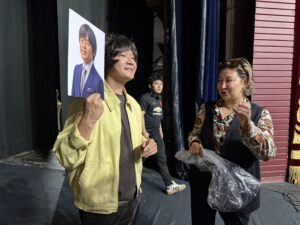
A woman came out, and the moment she saw me, she shouted with a huge smile:
“Sugiiiiiiii!!!” (For some reason, she stretched out the end.)
…I couldn’t help but laugh.
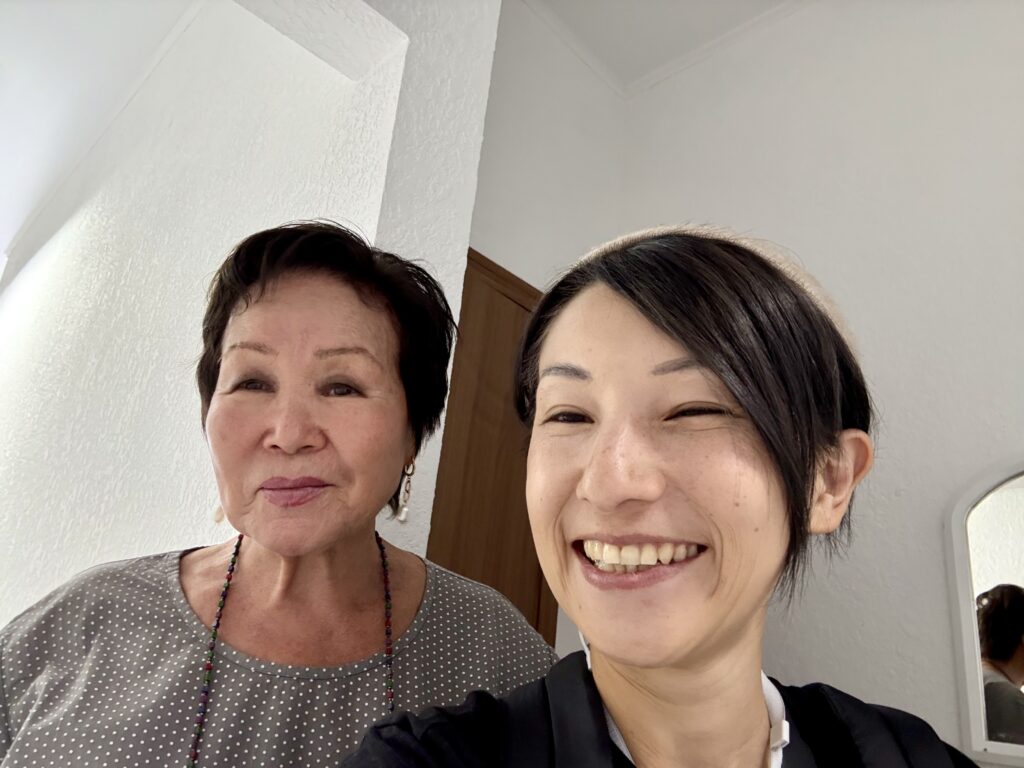
That was my first meeting with my current teacher, Takena Akylbekova.
My first impression: incredibly cheerful, energetic, and very friendly.
She wasn’t overly formal, yet she really took in my worries and hopes, and I thought, “I want to learn from her.”
The Reality of Lessons and Costs
Pricing
As of September 2025, the teacher’s one-on-one lesson fees are as follows:
🕒 1 lesson: 80 minutes (40 minutes × 2)
📅 5 days a week (weekdays)
💵 $15 per lesson
💰 $75 per week (5 lessons)
📆 $300 per month
🏷️ With a 9- or 12-month contract, there’s a discount to $200 per month
Laid out like this it may look cheap, but from other people’s blogs, it seems that until a few years ago it was “$5 per lesson.”
Considering that, I can feel that the wave of rising prices has definitely reached Kyrgyzstan in recent years.
That said, it still feels quite affordable compared with typical study abroad in other countries.
How Lessons Work
There’s no fixed curriculum. The teacher watches how things are going in the moment and adjusts to my level of understanding and how I’m doing that day.
It’s not the usual language-school format of “Let’s cover X pages of this textbook every week.”
It’s more human, maybe closer to “deepening your learning through conversation.”
So
if you want to “organize grammar systematically” or “follow set materials,”
you might find it a little lacking.
But for my lifestyle, going to school during the day and doing remote travel work in the mornings and evenings, this flexibility is a real blessing.
Other Costs
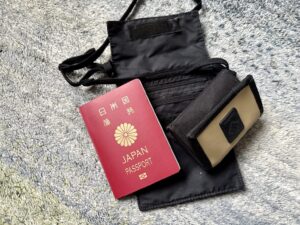
If you attend long-term, you’ll need to get a student visa. The staff at the school’s center handle this for you after you arrive.
This is required if you stay in Kyrgyzstan for more than 60 days; for short stays of under 60 days, no visa is said to be required.
There are two types of visas:
Single-entry visa (one entry only): 7,300 som
Multiple-entry visa (enter and exit freely): 5,500 som
At the education center I attend, you can also apply for a multiple-entry visa, and in that case the issuance fee was 7,300 som (just under about ¥12,000) (as of 2025).
However, procedures and required documents vary over time, so for specific procedures, be sure to check the Japanese Ministry of Foreign Affairs’ overseas safety website (or your own government’s travel advice):
*I actually contacted the embassy about this… and it was a bit of an ordeal. That’s a story for another time.
First-Day Lesson Report | From the Alphabet to a Fruit Break
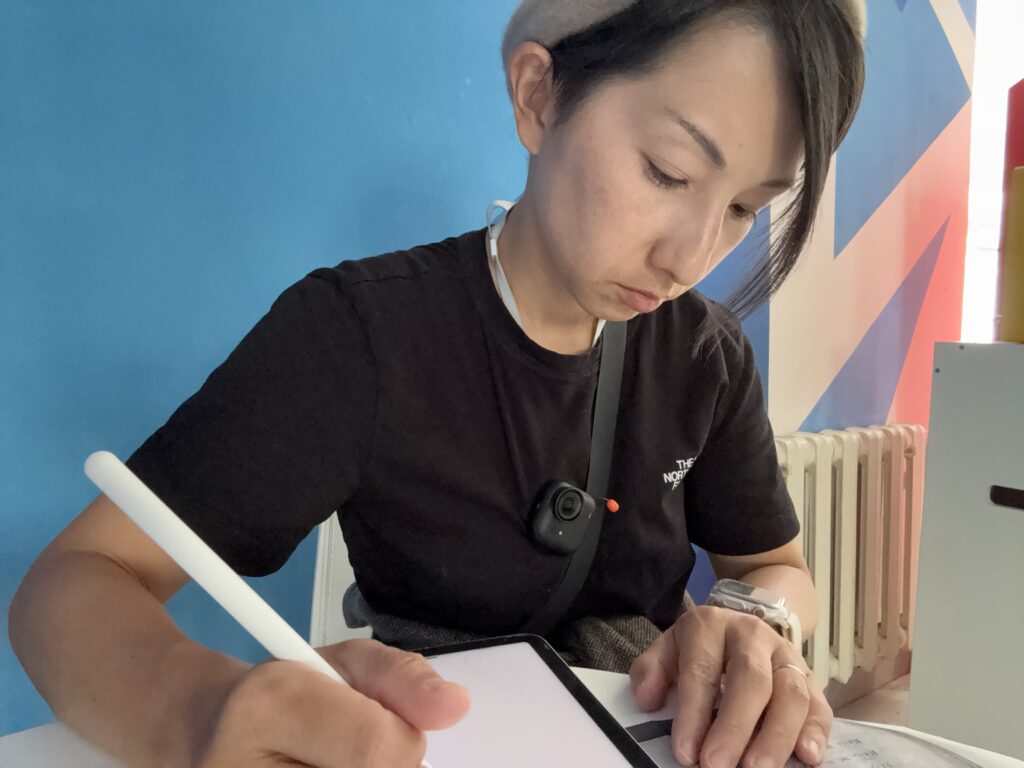
Finally, my first day of Russian lessons. I could say “Здравствуйте,” but conversation was still a long way off. That’s where I started.
The teacher basically uses only Russian, but a little English gets through too. For words I didn’t understand, she drew pictures or used gestures.
Rather than a class, it felt like the time spent in Russian itself was the learning.
Stumbling on the Rolled R
The biggest hurdle that day was “Р.”
It’s not the English “R” or the Spanish “R,” but a rolled sound unique to Russian.
I’d practiced it many times on YouTube beforehand, but when I actually said it out loud,
my tongue wouldn’t roll at all.
The teacher patiently repeated “р-р-р…” for me, but my mouth just spun its wheels.
“If you approach it like the Japanese ‘ra-ri-ru-re-ro,’ you’re stuck in seconds.”
That first day, I felt exactly that.
The Alphabet Is Full of Tricksters, Too
Besides the rolled R, I was also confused by the gap between how letters look and how they sound.
For example:
“Н” is “N”
“Р” is not “R” but a “rolled R”
“В” is not “B” but “V”
I had to “convert” each letter in my head, and I felt
I needed to reset my English instincts for a while.
Even Breaks Become Russian Practice
In the middle of the lesson, the teacher suddenly took out a pear from her own snacks and asked, “Want to eat this?”
As I took the pear, I asked, “How do you say ‘pear’ in Russian?”
She slowly pronounced, “груша (grusha).”
Like this, even casual moments all become Russian practice.
It was a moment where I immediately felt the real joy of studying a language abroad.
Learning Russian in Kyrgyzstan as an Option
Kyrgyzstan is often described as “cost-effective for studying abroad” because of its low tuition and living costs, but its appeal goes beyond that.
Study costs are very reasonable
Besides tuition, living costs such as housing, food, and transportation are generally low. For short- to mid-term language study, if you want to “really immerse yourself in Russian while keeping costs down,” it’s an option that more than makes sense.
Impressions of safety / Life close to nature
Some people may feel uneasy at the sound of “Central Asia,” but Bishkek is a relatively calm city.
There are few pushy vendors or tourist scams, so in terms of comfort it may even beat Southeast Asia.
Driving is a bit rough, but overall I don’t feel there’s any need to worry too much about safety.
And above all, astonishingly beautiful nature stretches out just outside the city.
Weekend horse treks and closeness to nature
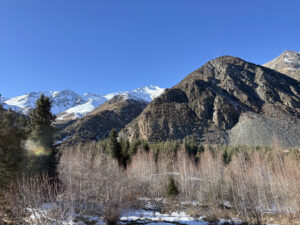
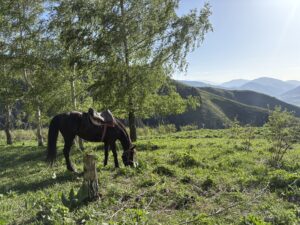
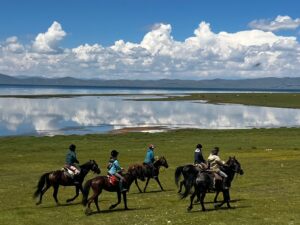
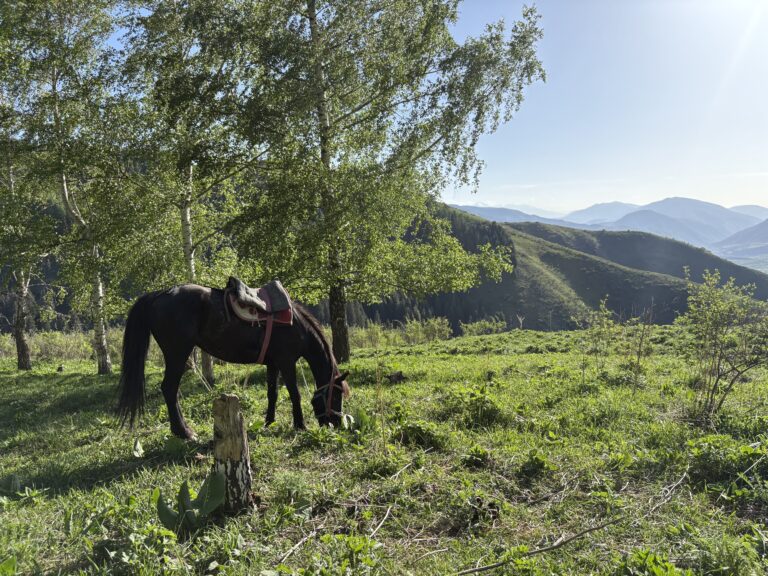
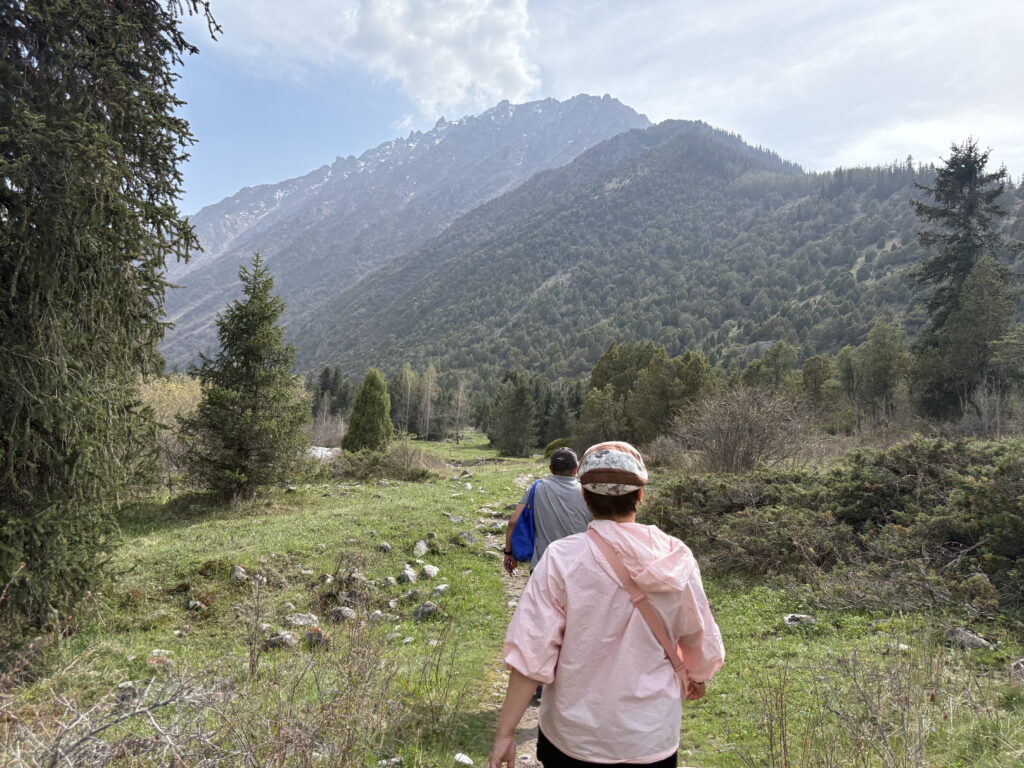
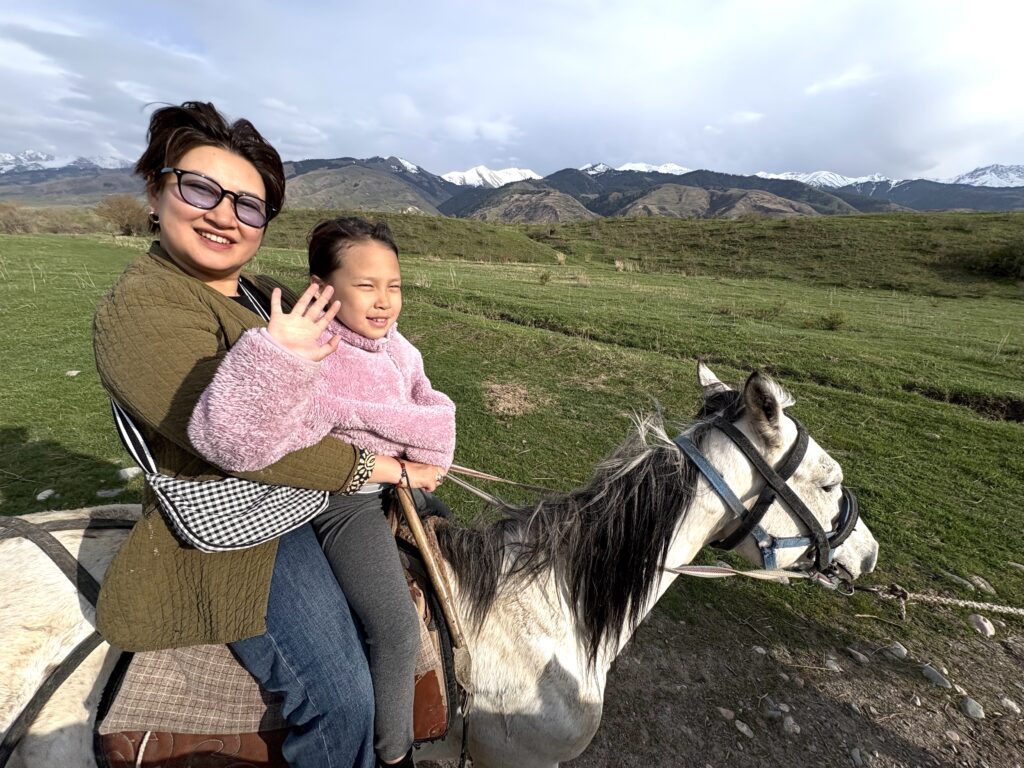
Bishkek has superb access to nature. Just 30 minutes by bus or taxi takes you to valleys, mountains, and hot springs. With horse treks through valleys and weekend stargazing camps, language input and nature experiences feel seamlessly connected.
A country where you can “learn as if you live there.” That’s Kyrgyzstan.
Recommended For
People who seriously want to learn Russian but find other countries hard to go to
People who want as much exposure to Russian as possible while keeping costs down
Curious people who think, “If I’m going, I’d like some travel too”
People who value safety and a friendly atmosphere
People drawn to time in nature and a life that’s a little inconvenient but rich
If You Come to Kyrgyzstan, Enjoy Traveling Too
If you’re staying in Kyrgyzstan, it would be a shame to only study. From city walking tours perfect for a weekend break to full-on adventures across high plateaus and lakes,
here are some easy-to-join ASHU TRAVEL tours we recommend.
◎Recommended for your very first day
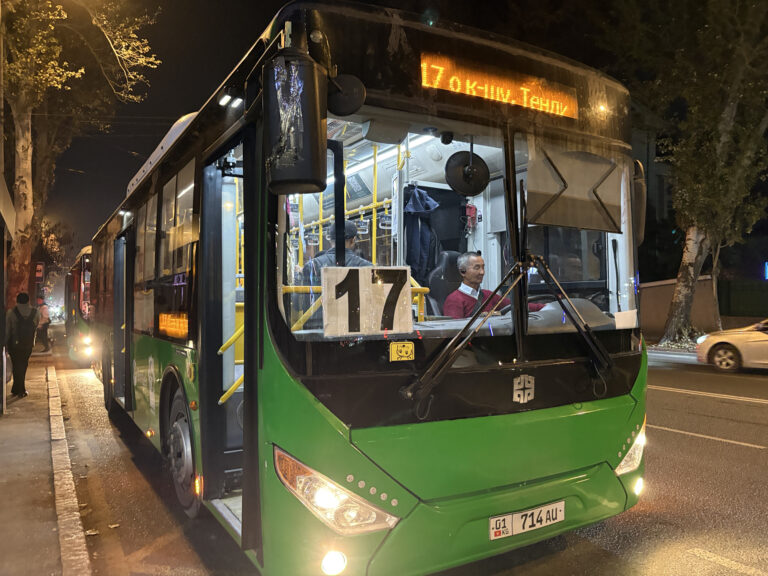
Bishkek walking tour & bazaar experience! Day trip city walk with a transportation lesson
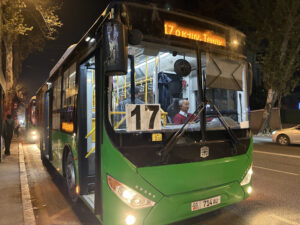
So you won’t get lost in Bishkek for the first time. We carefully explain how to use local buses and taxis.
2 days, 1 night: [Recommended for Kyrgyzstan first-timers] 2 days, 1 night from $240: budget-friendly, action-packed Silk Road sightseeing & horse riding tour
Departures and returns from Almaty are also possible. Cross the border from Kazakhstan and enjoy a concentrated taste of the ancient city of Osh and Kyrgyzstan, the land of horses.
A 40-something editor who loves the outdoors. Wanders around Japan and abroad in search of unique experiences. Longing for a digital detox, she goes on a trip, but in the end, she can't give up her computer, which is a problem.
We are a local travel company based in Kyrgyzstan, sharing the spectacular Tian Shan mountains and the charm of nomadic culture. Our founder, Nuriya, is a Kyrgyz guide fluent in Japanese who once worked at the Embassy of Japan. Blending Japanese attention to detail with warm Central Asian hospitality, we can also arrange trips that cross borders.
Our base is Ashu Guesthouse, located inside a national park. With a sauna and a pool, it is a comfortable place for a retreat that restores body and mind in the heart of nature. What matters most to us is sustainable travel.
By keeping groups small to protect nature, and by paying local guides and nomads fairly, we want travel to bring new energy to the region. Through safe, meaningful experiences, both our guests and our hosts come away uplifted. Why not come and discover something “beyond sightseeing” with us?
Why Travelers Choose ASHU TRAVEL
Japanese- or English-speaking guides
No language worries, and a real understanding of the culture and background. Not just “seeing” Central Asia, but enjoying it because you understand it.
A pro who has guided 3,000+ travelers
Founded by a guide with many years in the field. Every trip is planned with safety, routes and pacing in mind so it never feels rushed.
Shared tours: join solo and save
Solo travelers are welcome. When other travelers book the same tour on the same dates, you share it and the per-person price drops with the number of participants. The final price is fixed about three weeks before departure.
Based at a trusted guesthouse with 20+ years of history
Our base is Ashu Guesthouse, a long-established guesthouse inside a national park. With private rooms, showers, heating, a sauna and a pool, you stay comfortable even in the wild.
Sustainable travel built as equal partners
Our trips are made together with guides, nomads, their families and the community. As a locally run company, we pay fair wages, so the livelihoods and skills of everyone involved are protected.









 Related Articles