





Salamatsyzby! This is Sugi from ASHU TRAVEL, your partner for scenic horse riding trips in Central Asia.
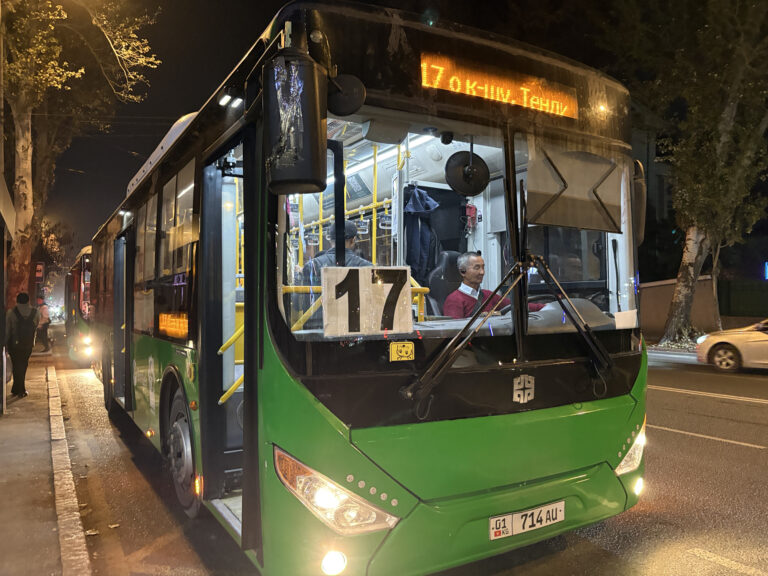
When traveling long distances alone in Kyrgyzstan, many people use marshrutkas and shared taxis.
Recently we’ve been getting questions like “Can I use marshrutkas or shared taxis?” I was curious about how safe they are, so I decided to try one myself.
Plenty of kind people have shared information about them online, but our local guide Nuriya told me that “the pick-up point has moved because of construction,” so here is what it’s really like as of March 2026.
*Information may change. Please always check the latest information locally when you travel. We’ll update this post as new information comes in.
What are marshrutkas and shared taxis?
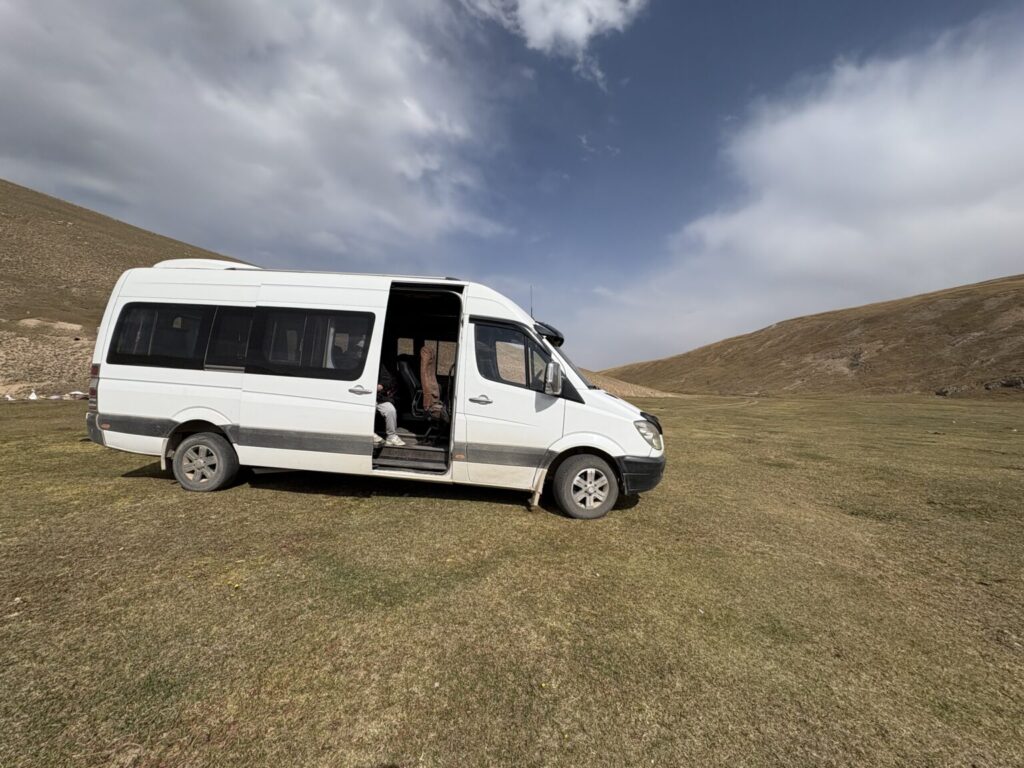
A marshrutka is a shared minibus that runs on a fixed route. A shared taxi is a taxi that gathers people heading to the same destination before setting off. Both are common ways to travel long distances in Central Asia.
How marshrutkas and shared taxis work
1. Go to the pick-up point
2. Find someone who looks like a driver and tell them where you’re going (Karakol, Osh, etc.)
3. Check the price and get in
4. The vehicle leaves as soon as enough passengers have gathered, or leaves at a set time with however many people have shown up
Where do marshrutkas and shared taxis leave from?
Pick-up points vary depending on the destination. Bishkek has terminals such as the East Bus Station and the West Bus Station.
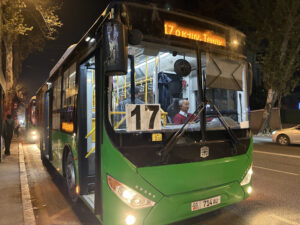
Locals also flag down passing marshrutkas and taxis and hop on along the way.
There’s no official website or anything like that, so it’s a fairly challenging way to get around.
The advantages of marshrutkas and shared taxis
The biggest advantage is the low price. I’ve seen people online say that if enough passengers gather, you can sometimes travel long distances for around ¥500–1,000 per person (prices vary by destination and season).
My experience riding a shared taxi in Kyrgyzstan
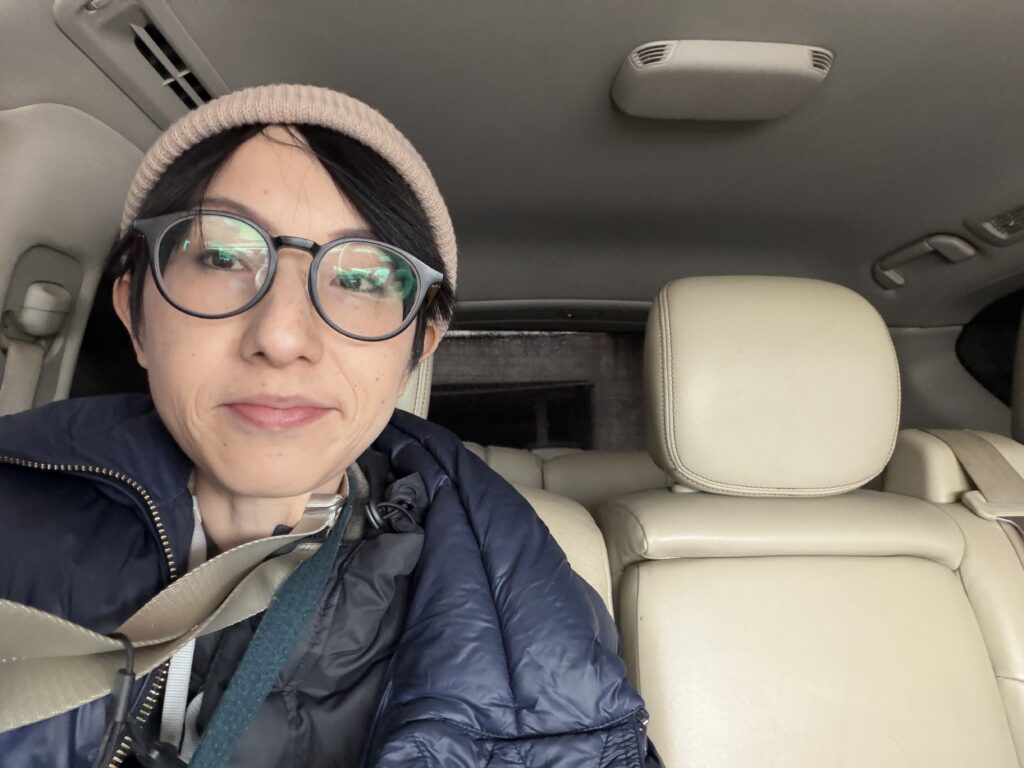
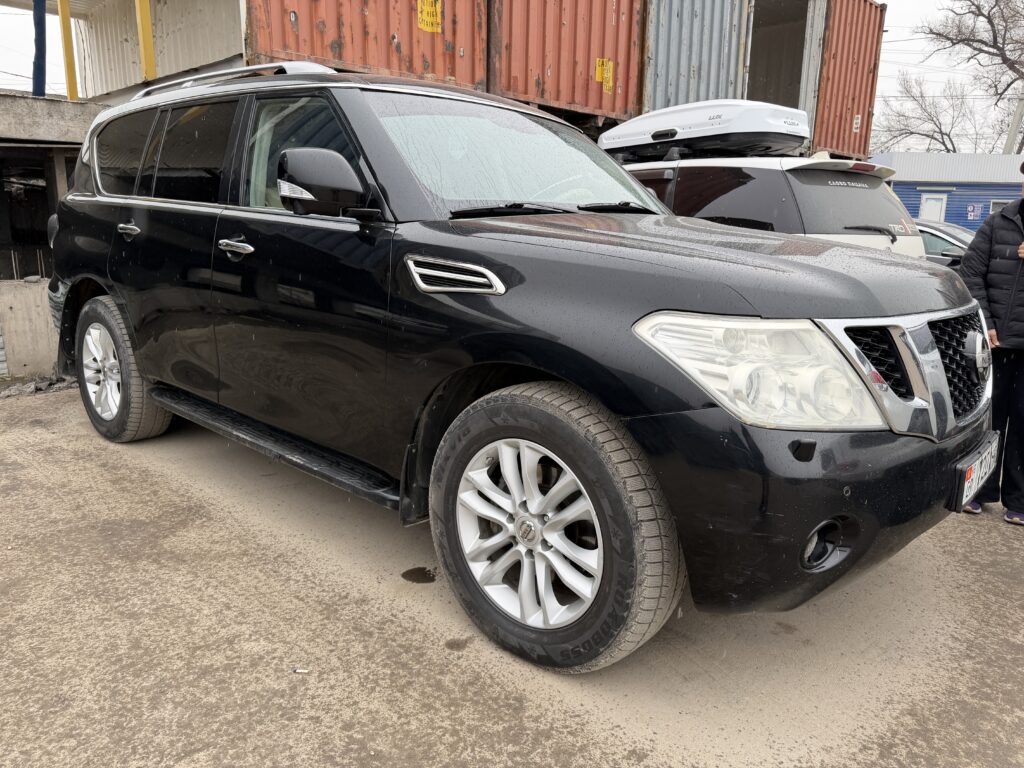
I actually wanted to try a marshrutka, but the timing didn’t work out, so this time I took a shared taxi. Both were around, but on that day the only rides to Karakol were taxis.
Here’s my honest take on where to catch one and what the ride was like.
The shared taxi pick-up point was different from what I’d read online
↑ The West Bus Terminal I found online (Google Maps shows it as closed)
This time I was traveling from Bishkek to Karakol. If you search online, Bishkek’s “West Bus Terminal” comes up.
Just to be sure, I asked some Kyrgyz people nearby, and they told me, “That place is under construction now, and the pick-up point has moved.” Glad I asked…
*By the way, the East Bus Terminal, which serves the Chong-Kemin area, is reportedly still in use as of February 2026.
*It’s only the Karakol rides that weren’t leaving from the West Bus Terminal this time; other destinations may still depart from there as usual. Even the locals said they weren’t really sure about the details.
The actual pick-up point for Karakol
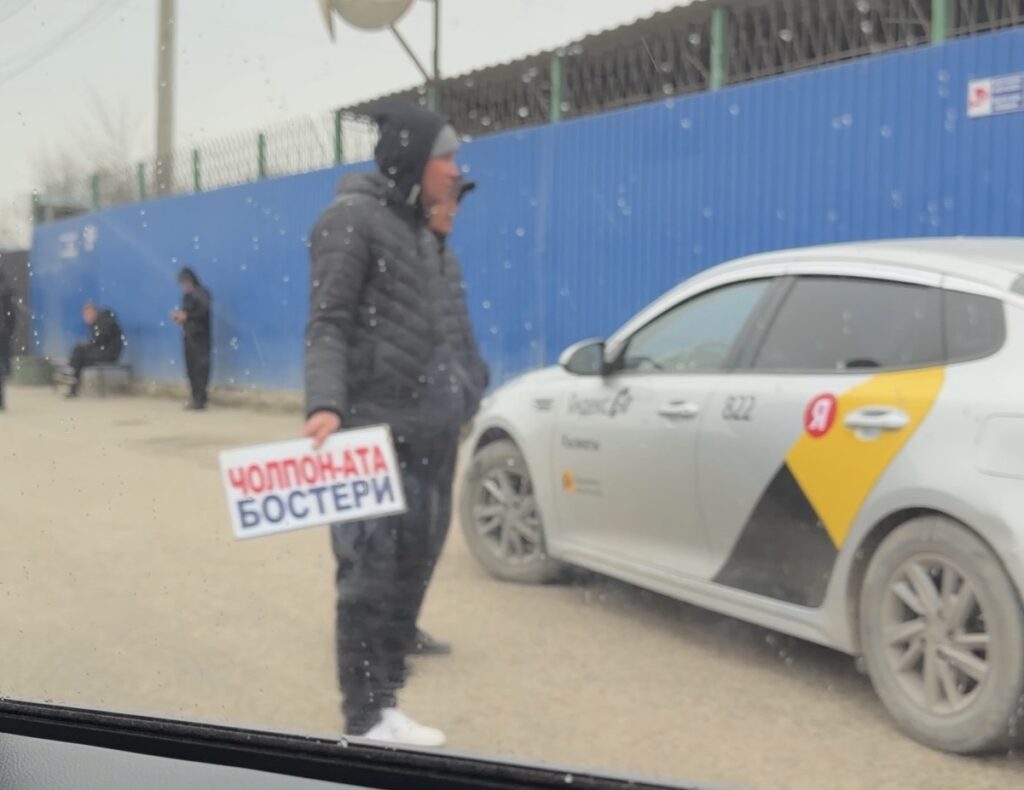
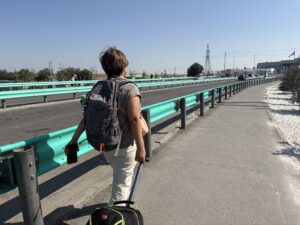
It was a parking lot along the highway, about 30 minutes by car from central Bishkek.
↑ The terminal I used this time
Lots of drivers were standing around, and some were holding signs (whether there are signs probably depends on the day).
I managed to get there because Nuriya brought me, but if you’re on your own, the only way to get there is by taxi. There are no signs or anything.
When I asked our guide Nuriya, “Only locals would know about this place, right?”, she said that while the construction is going on, it’s mostly locals who use it.
Price and waiting time
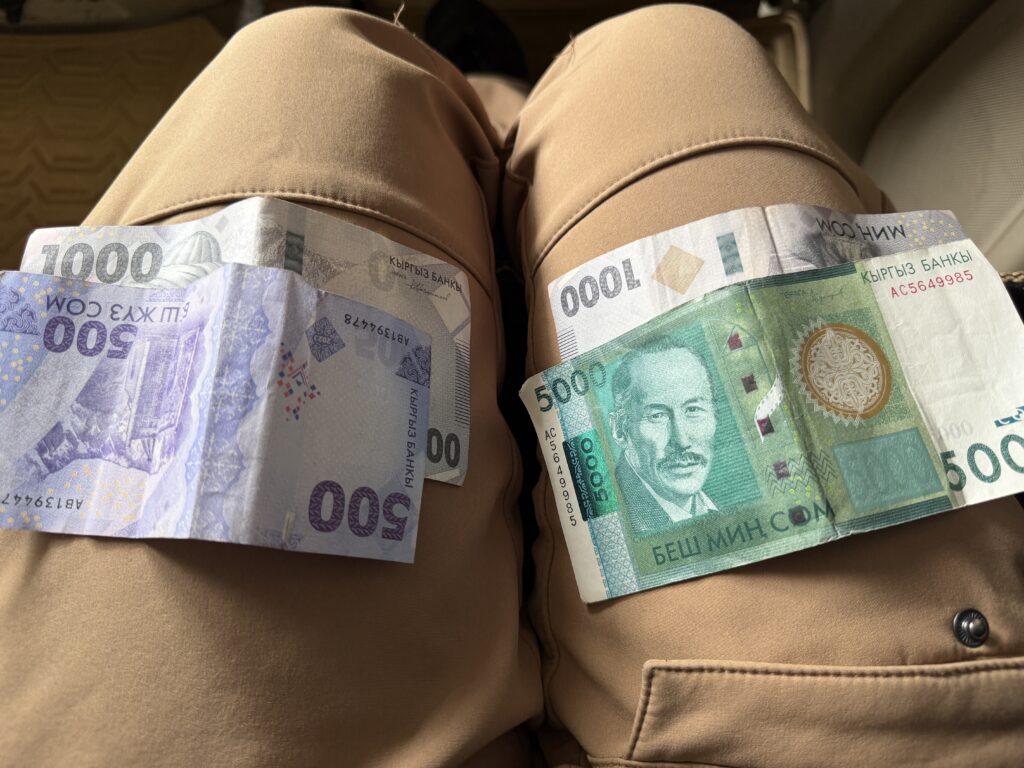
Nuriya checked the driver and the car and judged whether he was someone we could trust. Just in case, I also took a photo of the vehicle and we exchanged contact details. We also confirmed that he could drop me off at my hotel in Karakol.
The fare was 6,000 som for one person. If three people gathered, it would be 1,500 som each. I was told that if nobody else came within 40 minutes, we’d leave anyway.
I waited 40 minutes, snacking as I went.
Nobody came…!!!
So off I went with the whole car to myself for 6,000 som.
Travel time from Bishkek to Karakol
The trip takes about 6–7 hours. The route runs along the north shore of Issyk-Kul, the world’s second-largest alpine lake.
It’s quite a long way, so I recommend leaving plenty of time.
Inside the car
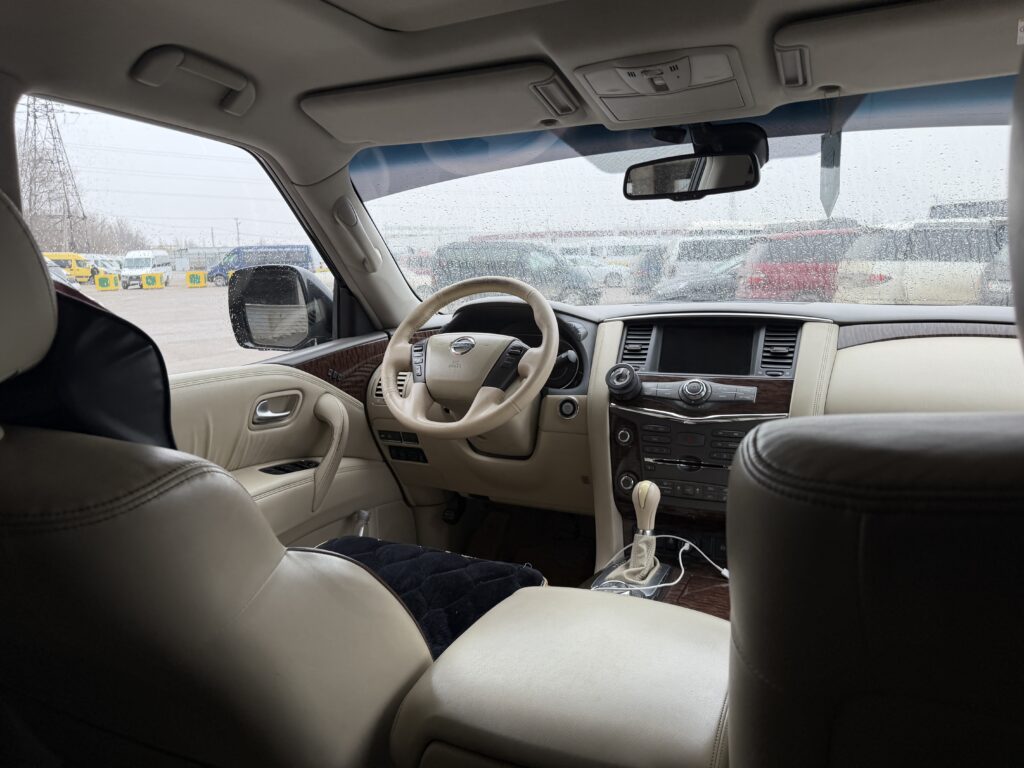
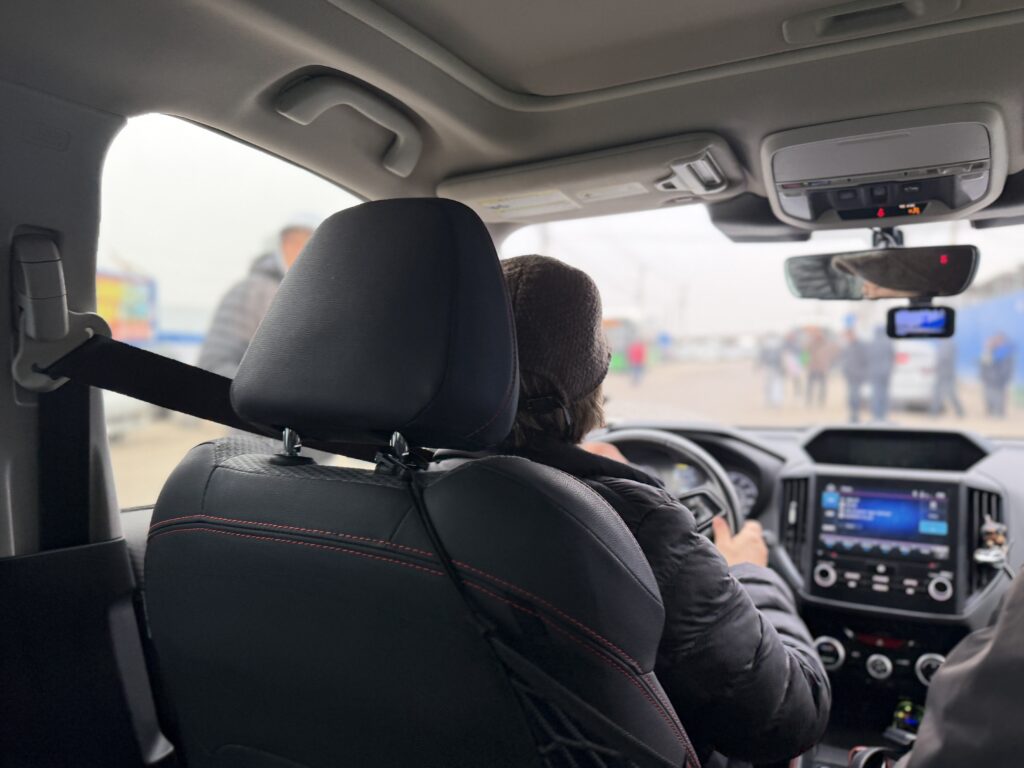
The car was clean and comfortable. In the front seats were the driver and his older brother (they looked exactly alike). I sat watching them, thinking that since they’re family, his brother probably wasn’t paying.
A break at a rest stop along the way
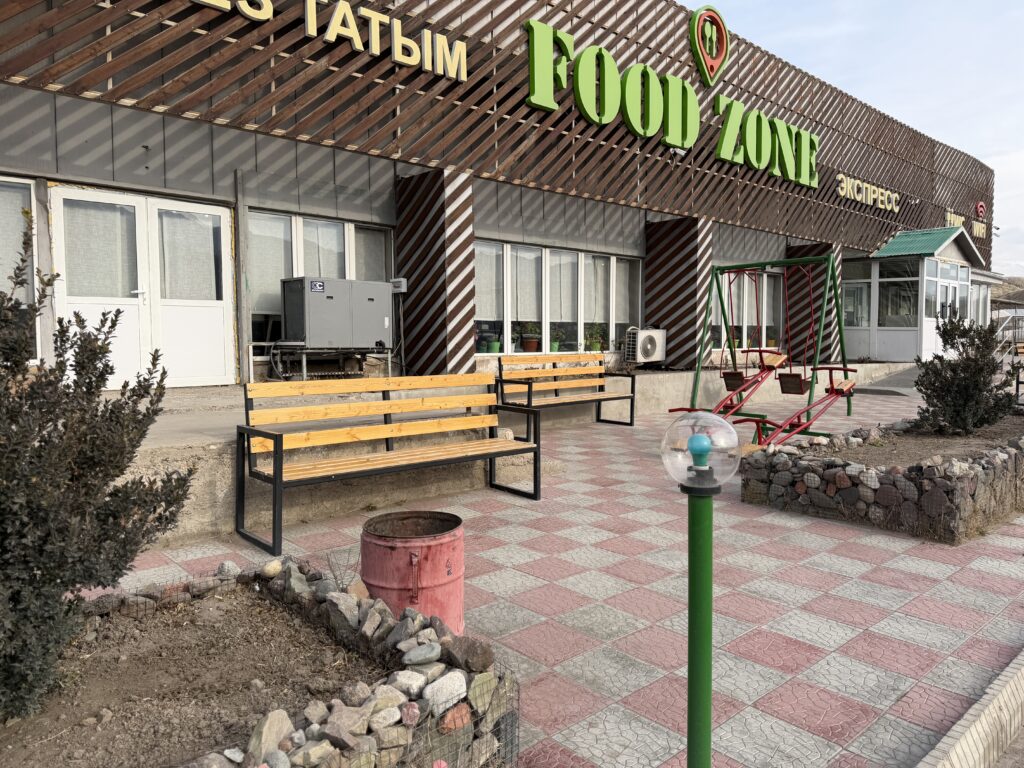
After driving for a while, we took a break at a rest stop. The driver told us in Russian, “We’re taking a break, go grab something to eat or use the restroom.”
The rest stop has a cafeteria, a shop and restrooms.
I thought about eating something, but I was tired, so I just bought some potato chips. Cards were accepted.
There were two restrooms, but one was locked, so I used the one closer to the cafeteria.
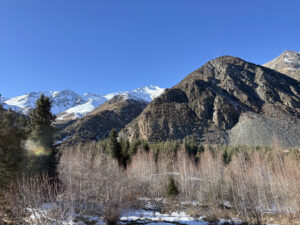
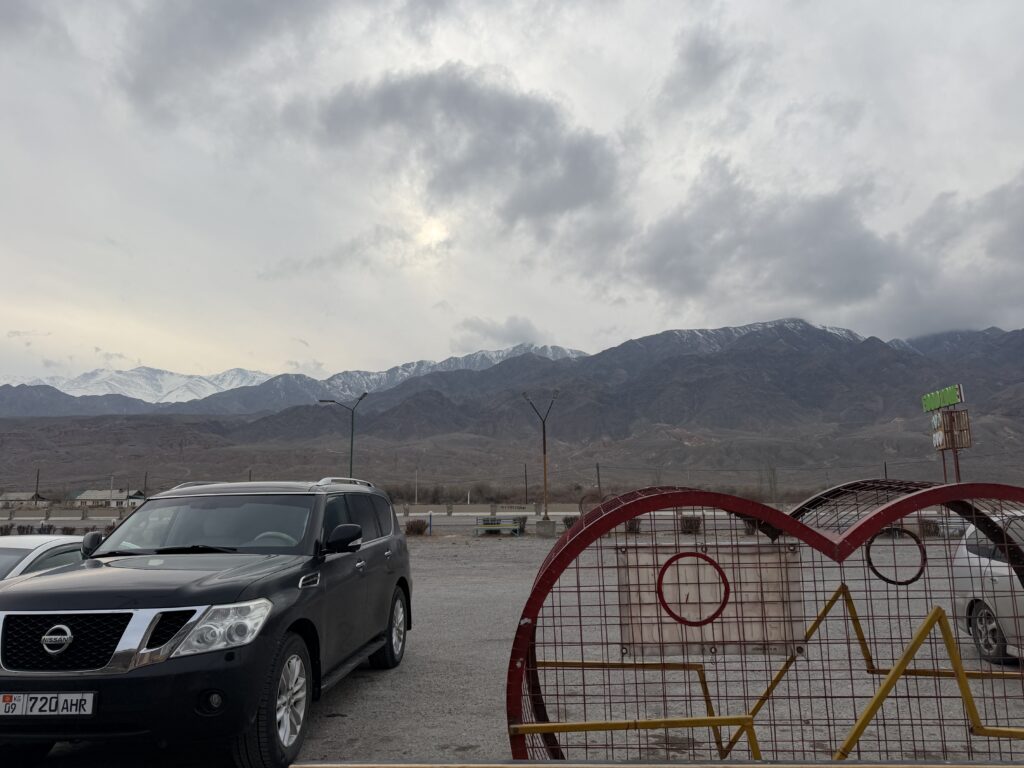
The weather was bad, but the mountains were beautiful.
Someone suddenly jumped in along the way?!
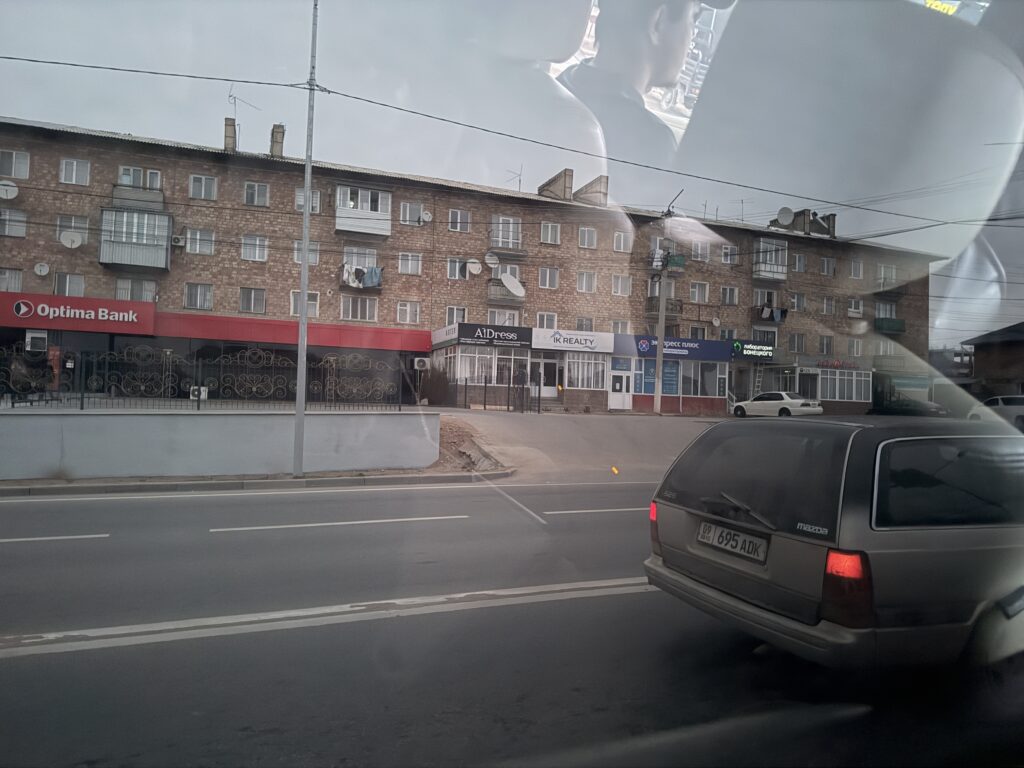
After our break at the rest stop, someone suddenly got into the car. I wondered what was going on, and it turned out to be a last-minute passenger who wanted to go to Cholpon-Ata.
It seems they saw the “Karakol” sign on the front of the car and realized we were taking the same route for part of the way. They spoke Kyrgyz, so they were probably a local.
My fare didn’t go down because of the extra passenger who joined partway.
Arriving in Karakol
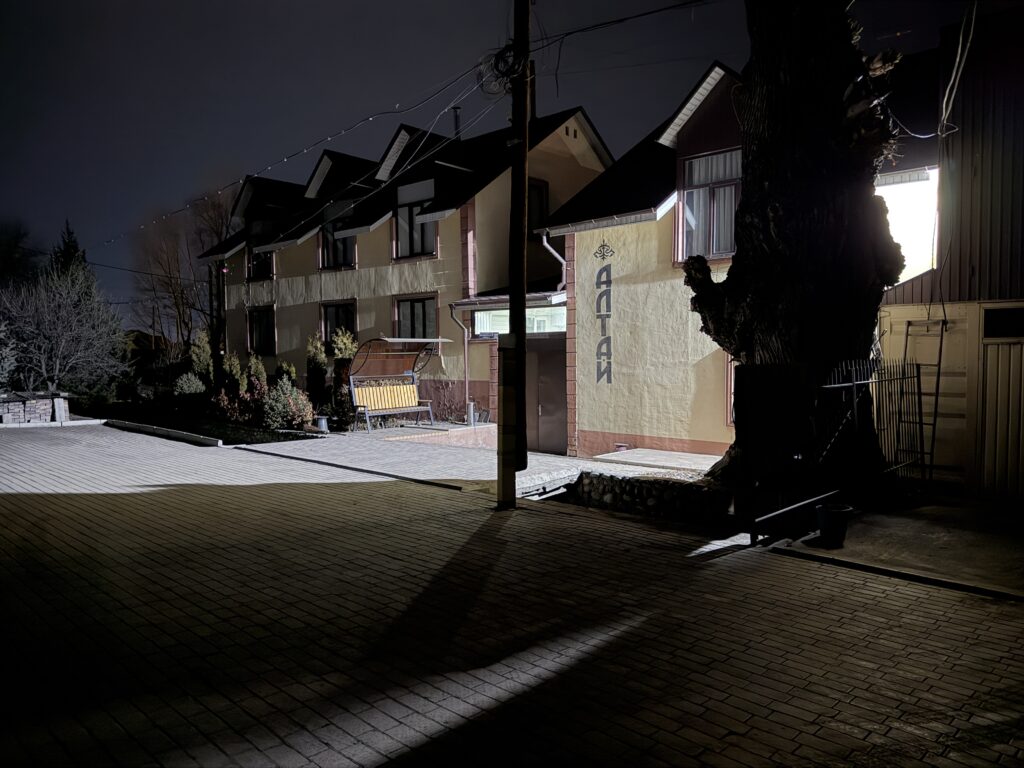
The car was so comfortable that I was dozing off while working, and the driver checked on me: “You okay? We’re almost there.”
Six and a half hours after setting off, I arrived safely at my guesthouse. I spent most of the time working and sleeping, so it didn’t feel as long as I expected, but I was still a little relieved the moment we arrived.
6 things to know before traveling by marshrutka or shared taxi
This time the car was clean and I got there without any problems, but there are four things I’d like you to know before you ride.
Pick-up points change without notice
There’s a lot of construction going on in Kyrgyzstan right now, and pick-up points or facilities that were in use yesterday can suddenly become unavailable.
There’s no official website for marshrutkas or shared taxis, so if you go based on information you found online, you may end up like me, thinking, “This isn’t what I was told.”
If you’re traveling solo, I recommend checking with your hotel or wherever you’re staying locally.
A translation app is a must
Communication with drivers is basically in Kyrgyz, or Russian at best (Russian is used in Bishkek, but people from the regions often don’t understand it).
English is hardly understood at all (if you’re lucky, numbers might get through).
Be sure to install a translation app. If you speak the language, no problem, but otherwise, honestly, it’s very difficult without one.
Install a map app
Even if the driver is a nice person, there’s a chance your destination won’t come across properly and you’ll be dropped off somewhere completely different. Over a short distance that’s manageable, but over a long distance it’s really hard to recover from. Make sure you can check the map along the way!
Buy a local SIM card
Neither map apps nor translation apps work without internet. There are SIM cards you can buy online before leaving home, but in my experience, many of them either didn’t connect at all or were so slow they were almost unusable…
You won’t need one if you’re on a tour, but if you’re traveling solo, I recommend buying a SIM card locally.
SIM cards and eSIMs can be bought in Bishkek city or at the airport. I recommend a SIM with a phone number rather than a data-only one, because you’ll need a phone number to use the Yandex Taxi app.
Risk of losing time waiting or paying the full fare yourself
You have to keep waiting until enough passengers gather, and there’s no telling when you’ll be able to leave.
Or, you wait until the time the driver sets, and if nobody else comes, you pay the full fare.
I waited 40 minutes, nobody came, and I ended up paying the full fare myself. Be careful if you’re short on time or want to be sure of your costs.
You need to judge the driver carefully
On long-distance trips, you’ll also pass through deserted stretches of road along the way.
This time I felt safe because Nuriya checked the driver and car in advance, but it’s quite hard to judge on your own.
I felt that judging who you ride with is the most important thing when using this way of getting around.
Who shared taxis and marshrutkas are (and aren’t) for
It may seem odd coming from someone who runs a travel website, but I don’t want anyone coming to Kyrgyzstan to have a bad experience, so I’ll be honest.
After actually trying it, I found it to be a fairly demanding way to travel: you don’t know where the pick-up point is, you can’t communicate, you don’t know when you’ll leave, and you have to judge the driver.
For travelers who can enjoy a bit of the unexpected on the road, or backpackers who want to keep costs as low as possible, I think it’s a reasonable option.
However, if you want to travel safely, comfortably and efficiently, I honestly can’t recommend it.
Depending on the wait, you might end up paying the full fare yourself, which makes it less attractive in terms of value too, and a dedicated private driver feels more reliable and safer. If you’re lucky it’ll be cheaper, but how it turns out is a gamble…
Having actually lived in Kyrgyzstan, I find the main tourist areas safe, but with so many people around, there are some shady characters who target or try to scam tourists.
Honestly, I just don’t want anyone who has come all this way to a country with beautiful nature and so many kind people to have a frightening experience.
At ASHU TRAVEL, we offer package tours that include a dedicated driver and guide, plus all meals and accommodation, so travelers can enjoy their trip with peace of mind.
If it’s your first time in Kyrgyzstan and you want a comfortable, safe trip, feel free to contact us.
For the latest updates and inquiries, reach us here!
▶︎ Instagram → @ashutravel_jp
▶︎ Ask us on our official LINE → Add us on LINE here



 Related Articles