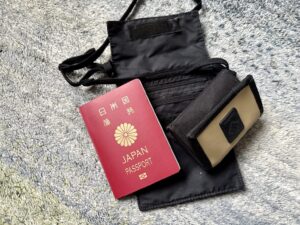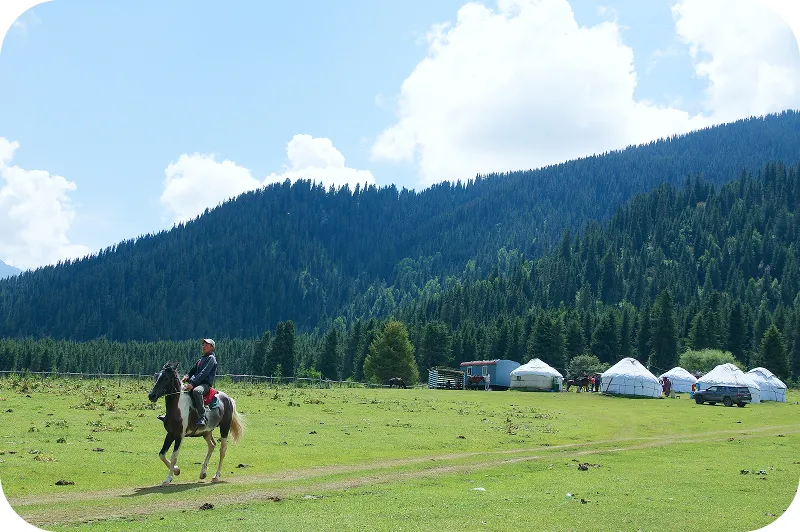









Information checked on: August 28, 2026 Kazakhstan’s ETA system is expected to change in stages between November and December 2026. Please check the latest information before you depart. We will update this page as things develop.
Salaam! This is Sugi from ASHU TRAVEL, scenic horseback journeys across Central Asia.
Lately we keep getting the same question: do I need an ETA to enter Kazakhstan?
As of August 28, 2026, Japanese citizens are not required to get one. However, the schedule for making it mandatory is already moving forward, with dates attached.
What is QazETA?

QazETA is an app the Kazakh government provides for foreign visitors. Electronic travel authorization (ETA), e-visas, border-crossing certificates: it brings the entry-related procedures together in one place.
The ETA is one of its functions. It’s a pre-travel authorization that people from visa-exempt countries obtain before departure.
An ETA is not a visa. It’s in the same family as the US ESTA and Korea’s K-ETA. You apply on your smartphone and that’s it. There’s no need to visit an embassy.
Japanese citizens are already visa-exempt for Kazakhstan. No visa is needed for short stays of up to 30 days: up to 30 days per visit, and up to 90 days in total within 180 days of your first entry. These limits remain unchanged.
Even if an ETA becomes mandatory in the future, that doesn’t mean visas are coming back. You’ll still be visa-free, with just one extra form to fill out.
You apply through the app, at least 72 hours before travel. Once issued, it’s valid for 180 days, and you don’t need a new one to re-enter within that period. However, a plan to make it valid for 90 days instead is reportedly under consideration.
Official website → https://qazeta.kz/ru
Sources
- Ministry of Foreign Affairs of Japan, overseas safety website, Kazakhstan: “Visas, immigration, etc.” https://www.anzen.mofa.go.jp/info/pcsafetymeasure_187.html
- QazETA official website https://qazeta.kz/ru
What happened on August 25?
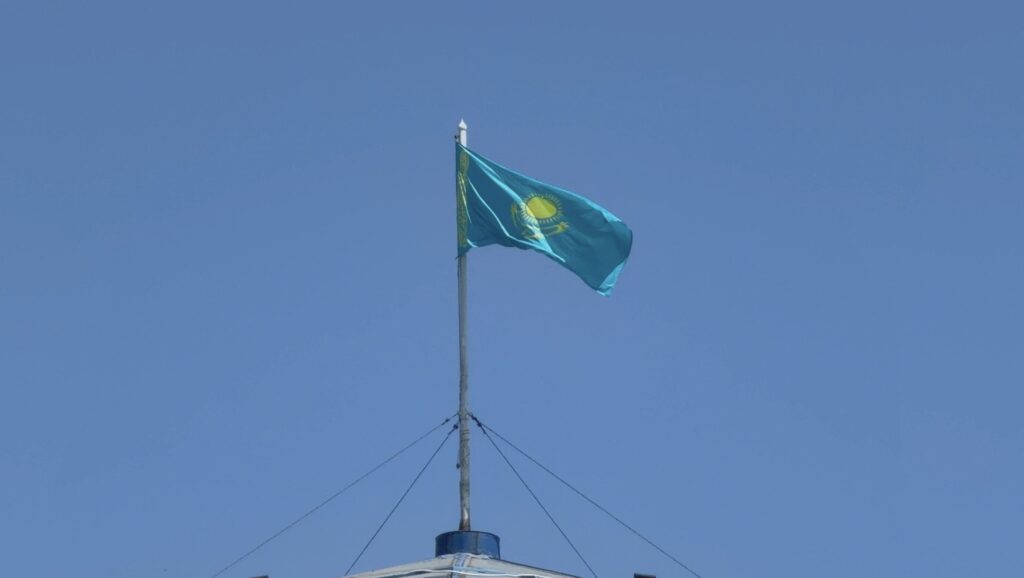
Some of you may have seen headlines saying “Kazakhstan introduces ETA from August 25.”
That’s only half right.
On June 24, 2026, President Tokayev signed Law No. 326-VIII, an omnibus amendment covering digitalization and personal data protection, among other things. Through it, the term “electronic entry permit (ETA)” appeared in Kazakhstan’s migration law for the first time.
The law takes effect 60 days after promulgation, so the ETA-related provisions took effect on August 25, 2026.
The law defines an ETA as an electronic document, issued at the authorities’ discretion, that allows a foreign national to enter or transit through Kazakhstan.
One more thing: a new ground for refusing entry was added. The law now provides that a foreign national who needs an ETA but doesn’t have one may be refused entry.
However, that applies only once the system is fully in operation.
Here’s what actually happened on August 25.
- August 25 → only the legal framework came into effect
- Who it will be mandatory for, and from when → still to be decided by the government
- Until then → you won’t be refused entry for not having an ETA
Think of it as the day the starting line was drawn. Nobody has started running yet.
Sources
- EY Kazakhstan, “Introduction of Electronic Travel Authorization (ETA)” (legal alert based on Law No. 326-VIII and explanations from the Ministry of Internal Affairs, August 2026) https://www.ey.com/en_kz/technical/tax-alerts/2026/08/kazakhstan-electronic-travel-authorization-eta-2026-migration-law-changes
Do Japanese travelers need one now?

It’s not mandatory, at least for now.
Japan’s Ministry of Foreign Affairs overseas safety website states the following, based on information the Embassy of Japan in Kazakhstan received from Kazakhstan’s Ministry of Foreign Affairs and others:
- During the trial period, obtaining an electronic travel authorization is “recommended,” not “mandatory”
- After the trial period ends, the system will move to full operation and is expected to become mandatory in stages. However, the specific timing has not been decided
Kazakhstan’s Ministry of Internal Affairs says much the same. In the initial phase, you won’t be stopped at the border without an ETA. You’ll be let through and simply told to get one next time. That’s how it’s expected to work, according to the ministry.
To begin with, the list of countries subject to the requirement hasn’t yet been approved by the government. As long as there’s no list, we’re not at the stage where you could be refused entry simply for not having an ETA.
Just one more note.
At the time of writing, the Japanese Ministry of Foreign Affairs page still says “in trial operation as of February 2026.” The official information available in Japanese stopped being updated half a year ago.
The system is moving on the Russian- and Kazakh-language side. That’s why we created this page.
Sources
- Ministry of Foreign Affairs of Japan, overseas safety website, Kazakhstan: “Visas, immigration, etc.” https://www.anzen.mofa.go.jp/info/pcsafetymeasure_187.html
- EY Kazakhstan legal alert (cited above)
- BES.media, “What changes with QazETA from August 25” (report based on interviews with the Ministry of Internal Affairs) https://bes.media/news/qazeta-dlya-inostrantsev-chto-izmenitsya-pri-vezde-v-kazahstan-s-25-avgusta/
So when will it become mandatory?

Now for the main point.
On July 31, 2026, Kazakhstan’s Ministry of Internal Affairs published a draft amendment to a government resolution: Resolution No. 148 of 2012, which sets the rules for the entry, stay, and exit of foreign nationals. Public comments were accepted until August 17.
This draft includes a phased schedule.
| Date | Details |
|---|---|
| From August 24, 2026 | Requirement applies at air and road border checkpoints. However, travelers without an ETA will not be refused entry; they will only be advised to obtain one for future trips |
| From November 1, 2026 | Mandatory at all air checkpoints. Airlines will not be able to board passengers without one |
| From November 15, 2026 | Extended to road checkpoints on EAEU (Eurasian Economic Union) external borders |
| From November 30, 2026 | Extended to road checkpoints on internal borders between EAEU member states |
| From December 15, 2026 | Extended to all rail and seaport checkpoints |
The first row of the table says August 24, while the law mentioned earlier took effect on August 25. The one-day difference is because they have different legal bases. August 25 is the date the law itself (No. 326-VIII) took effect. August 24 is the start date written in the Ministry of Internal Affairs’ draft. Since the draft hasn’t been adopted, even this one-day gap isn’t final yet.
If you’re flying into Almaty or Astana, November 1 is the first key date for you.
However, there are 3 points to keep in mind.
First, this is a draft. At the time of writing, we have not been able to confirm any announcement that the resolution has been formally adopted.
Second, a different schedule has also been reported. Some reports describe a provisional plan from the Ministry of Internal Affairs with airports from September 1, road crossings from February 1 of the following year, and rail from July 1. This doesn’t match the draft’s schedule.
Third, the list of countries covered has not been finalized. There’s no doubt the system is being designed on the assumption that Japan will be included, but it hasn’t been formally approved.
The accurate way to put it right now is this:It has been decided that it will become mandatory. The dates are still split across several proposals.
Sources
- Summary of the Ministry of Internal Affairs draft by WPK (a migration law consultancy in Kazakhstan with offices in Astana, Almaty, and Atyrau) https://new.wpk.kz/qazeta
- The Times of Central Asia, “Kazakhstan Proposes Rules for Paid Electronic Entry Permits” https://timesca.com/kazakhstan-proposes-rules-for-paid-electronic-entry-permits/
- For.kg (report on the Ministry of Internal Affairs’ provisional schedule) https://www.for.kg/news-928092-ru.html
What about overland travel from Kyrgyzstan?
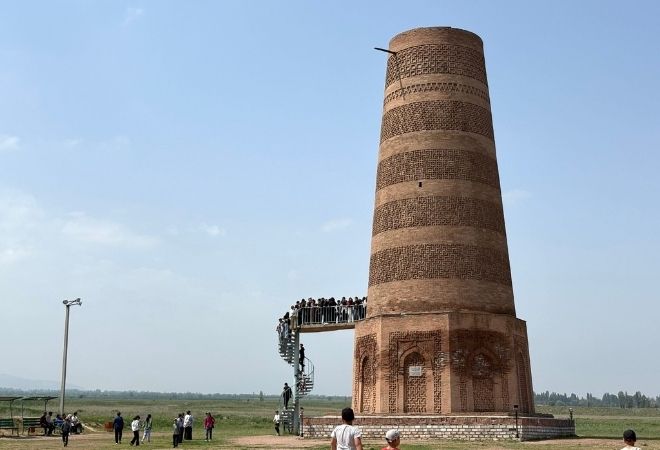
For anyone joining an ASHU tour, this is the most important part.
The overland route linking Kyrgyzstan and Kazakhstan: from Bishkek to Almaty, or the other way around. That’s the section where you cross the Korday border.
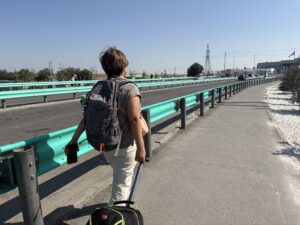
Kyrgyzstan is an EAEU member state. In other words, the Kyrgyzstan–Kazakhstan border is an internal EAEU border.
Applying this to the table above, it falls under the November 30, 2026 phase.
That’s about 4 weeks later than November 1 for air travel.
One point that’s easy to confuse:
There’s an ongoing debate locally over whether Kyrgyz citizens will need an ETA, and there have been reports that Kyrgyzstan’s Ministry of Foreign Affairs has asked the Kazakh side for clarification. However, this doesn’t affect Japanese travelers.
When Japanese travelers cross overland, they’re assessed as Japanese nationals. What matters is how the border being crossed is classified.
One more thing. If you’re doing a loop, such as flying into Kazakhstan, crossing overland into Kyrgyzstan, and then returning overland to Kazakhstan, the requirement applies each time you enter. However, once issued, an ETA is valid for 180 days and is designed to be used for multiple entries. You don’t need a new one every time you cross a border.
Again, this schedule is still a draft. We’ll update this page once it’s finalized.
Sources
- Summary of the Ministry of Internal Affairs draft by WPK https://new.wpk.kz/qazeta
- Kaktus.media (report on the Kyrgyz side’s inquiry) https://kaktus.media/doc/550351_s_25_avgysta_kazahstan_vvodit_elektronnoe_razreshenie_na_vezd._rech_pro_qazeta.html
![Lake Issyk-Kul & Cultural Experiences | From Almaty: Kyrgyzstan Sightseeing & 2 Horse Rides, 5 Days / 4 Nights [No Experience Needed]](https://ashu-travel.com/wp-content/uploads/2026/06/3bae2665755f5632d791693d1b1684f4.jpg)
Lake Issyk-Kul & Cultural Experiences | From Almaty: Kyrgyzstan Sightseeing & 2 Horse Rides, 5 Days / 4 Nights [No Experience Needed]
![Cross a Mountain Pass on Horseback to Remote Kol-Ukok Lake | From Almaty, 6 Days / 5 Nights Kyrgyzstan Riding Tour [Intermediate and Above]](https://ashu-travel.com/wp-content/uploads/2026/06/9689ab9707e595c449494a6b3bbfc17d-1.jpg)
Cross a Mountain Pass on Horseback to Remote Kol-Ukok Lake | From Almaty, 6 Days / 5 Nights Kyrgyzstan Riding Tour [Intermediate and Above]
What we know and what we don’t know yet
Here’s a summary of the points where information is mixed
What we’ve been able to confirm
- Apply through the QazETA app at least 72 hours before travel
- Valid for 180 days and can be used for multiple entries
- Having an ETA doesn’t guarantee entry; the final decision rests with the border officer
- If you enter on a visa obtained from, for example, the Embassy of Kazakhstan in Japan, no ETA is needed even after full rollout
- People staying with a valid residence status also don’t need an ETA to re-enter
- Holders of diplomatic and official passports are exempt
What we don’t know yet
Fees
The law states that a fee will be charged for issuing an ETA, and that the amount and method of payment will be set by the government.
The Ministry of Internal Affairs’ draft includes figures of 1 MRP for an advance online application and 2 MRP if obtained at a border checkpoint (1 MRP in 2026 is 4,325 tenge; at the August 28, 2026 rate, that’s about ¥1,500 or about US$9. 2 MRP would be about ¥3,000).
On the other hand, the Ministry of Internal Affairs told reporters that there will be a fee but the amount hasn’t been decided, and that differentiated fees are planned. A figure of “a standard $10” has also appeared in the press, but it hasn’t been officially announced.
In short, the figures in the draft and the authorities’ explanation don’t match. We’re not yet in a position to give you the amount as confirmed information.
List of covered countries
Not yet approved.
Children
The information is conflicting, so we can’t say for sure. We’ve seen claims that there’s an age-based exemption, but since this hasn’t been officially confirmed, we won’t include it on this page. We’ll provide an update once the ETA becomes mandatory.
Specific start date for Japanese travelers
As described above, several proposals are on the table.
Note that obtaining an ETA is currently reported to be free.
FAQ
Q. Do I need an ETA to enter Kazakhstan now?
A. As of August 28, 2026, it’s not mandatory. Japanese citizens are not required to obtain one. The Kazakh government describes the ETA as “recommended,” not mandatory. All you need is a valid passport.
Q. What’s the difference between an ETA and a visa?
A. An ETA is not a visa. It’s a pre-travel authorization that people from countries that can already enter without a visa obtain before departure, the same system as the US ESTA or Korea’s K-ETA. Since Japanese citizens are visa-exempt for Kazakhstan, even if an ETA becomes mandatory in the future, it will be “no visa needed + ETA required.”
Q. When will it become mandatory?
A. It hasn’t been finalized. The Kazakh Ministry of Internal Affairs’ draft proposes a phased rollout: air travel on November 1, 2026, road crossings on November 15 and November 30, and rail and seaports on December 15. However, we haven’t been able to confirm that the resolution has been adopted, and some reports give a different schedule.
Q. Is Kazakhstan’s visa exemption still valid?
A. Yes. Japanese citizens don’t need a visa for short stays of up to 30 days. The conditions of up to 30 days per visit and up to 90 days in total within 180 days of your first entry are also unchanged. Your passport must be valid for at least 6 months at the time of departure.
Q. Will I need one when entering Kazakhstan overland from Kyrgyzstan?
A. If things go as the draft says, it’s expected to be required from November 30, 2026. Since Kyrgyzstan is an EAEU member state, the Kyrgyzstan–Kazakhstan border is an internal EAEU border and falls under that phase. However, this is still a draft schedule.
Q. How much does an ETA cost?
A. It hasn’t been finalized. It’s currently reported to be free. The Ministry of Internal Affairs’ draft includes figures of 1 MRP for an advance application and 2 MRP if obtained at the border, but the ministry itself says the amount is undecided, so the two don’t match. The “$10” figure hasn’t been officially announced either.
Q. Where do I apply?
A. You apply through QazETA, the Kazakh government’s official app. The official website is https://qazeta.kz/ru. You’re required to apply at least 72 hours before travel.
Q. How long is it valid? How many times can I use it?
A. Once issued, it’s valid for 180 days and can be used for multiple entries. You don’t need a new one to re-enter Kazakhstan within that period. However, a plan to make it valid for 90 days instead is reportedly under consideration.
Q. Do children need one too?
A. We can’t say for sure at this point. We’ve seen claims of an age-based exemption, but since this hasn’t been officially confirmed, we don’t cover it on this page. We’ll provide an update once the ETA becomes mandatory.
Q. If I have an ETA, am I guaranteed entry?
A. Entry is not guaranteed. The final decision is made by the border officer. An ETA is a pre-travel authorization, not an entry permit itself.
Q. What if I have a Kazakh visa?
A. You don’t need an ETA. According to official explanations, if you enter on a visa obtained from, for example, the Embassy of Kazakhstan in Japan, or if you’re re-entering while staying with a valid residence status, no ETA will be needed even after full rollout begins. Holders of diplomatic and official passports are also exempt.
For travelers joining an ASHU tour
There’s nothing you need to do right now.
As of August 28, 2026, all Japanese citizens need to enter Kazakhstan is a valid passport (with at least 6 months’ validity remaining at the time of departure).
With that said, we have one request.
As your departure approaches, please check the official announcements.
The system is in flux. Information that was correct when you booked may not be correct when you depart. Especially if you plan to enter Kazakhstan in November or later, it’s safest to check once more just before you go.
We’ll keep updating this page: when the resolution is adopted, when Japan is added to the list of covered countries, and when fees are decided. Whenever information comes out that changes how you prepare for your trip, we’ll reflect it and update the “checked on” date.
If you’d like to get ready now, simply installing the QazETA app is enough. The application itself can be completed entirely on your smartphone.
In Central Asia, a single border formality can cost you an entire day. Finding out only after you arrive is the one situation we really want to help you avoid.
If anything concerns you, feel free to ask us anytime.



 Related Articles