




Salam! This is Sugi from ASHU TRAVEL, your guide to Central Asia’s breathtaking landscapes.
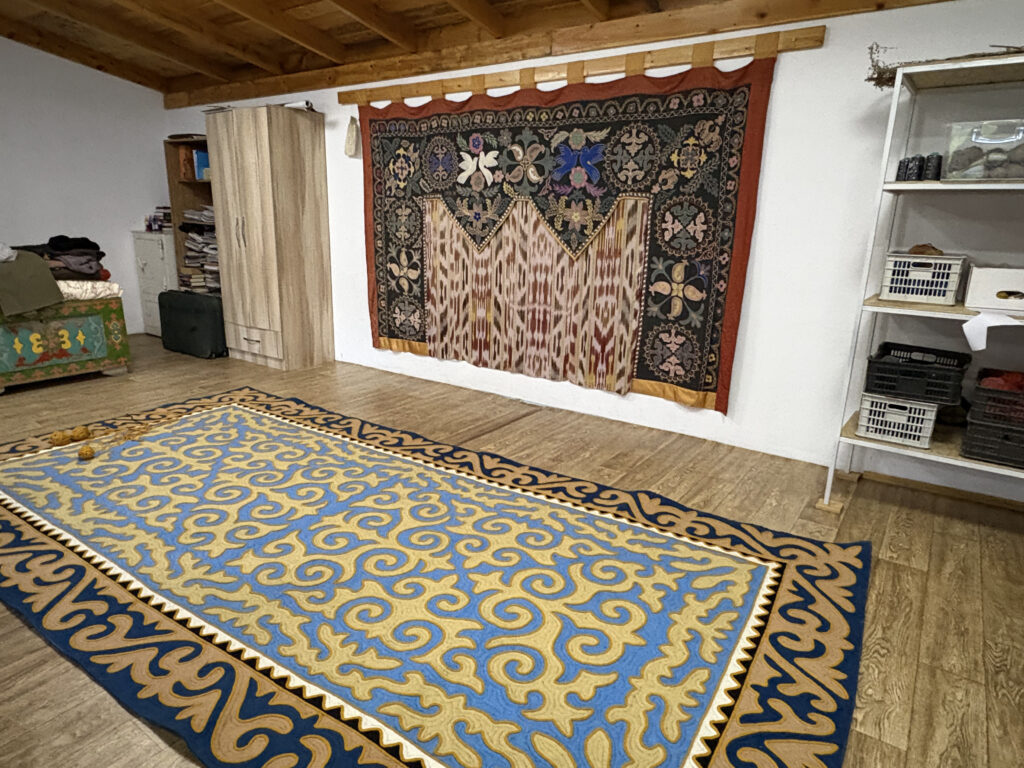
Those colorful embroideries you see in yurts and guesthouses —
many of you have probably thought, “How cute!”
In fact, every one of those patterns has a meaning.
What Is Kyrgyz Embroidery Like?
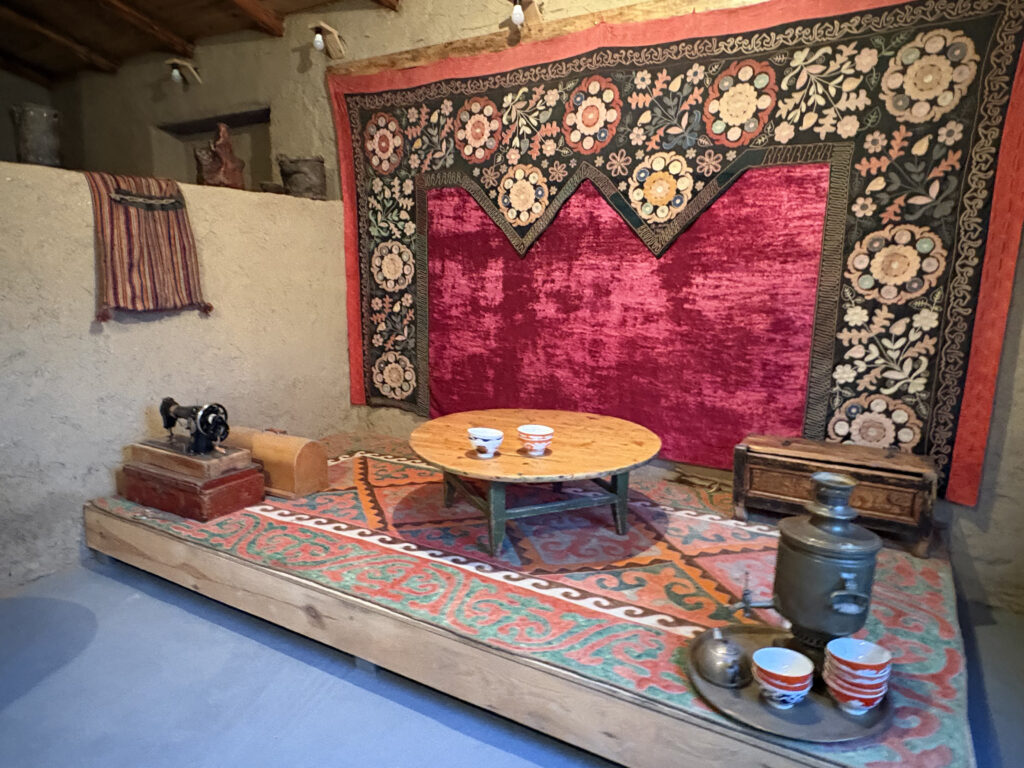
Embroidery has long been part of Kyrgyz culture. In the days of nomadic life, women would stitch inside their yurts between household chores, carefully making wall hangings and small textile items.
Many of the patterns are inspired by nature, animals, and everyday life, and behind them lies the wish: “May my family be healthy and well.”
Even within Central Asia, embroidery styles vary widely.
Kyrgyz embroidery often features fine geometric patterns and designs inspired by family, and is known for its simple, warm character.
Common Embroidery Motifs and Their Meanings
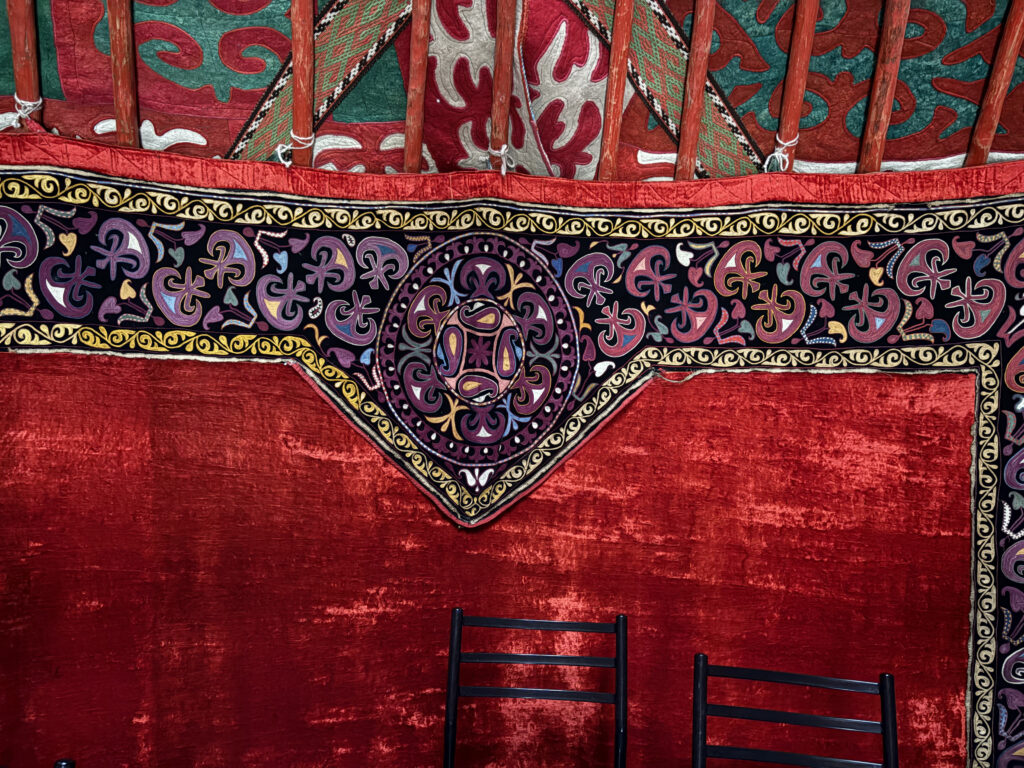
What makes Kyrgyz embroidery so interesting is that “everything has a meaning.”
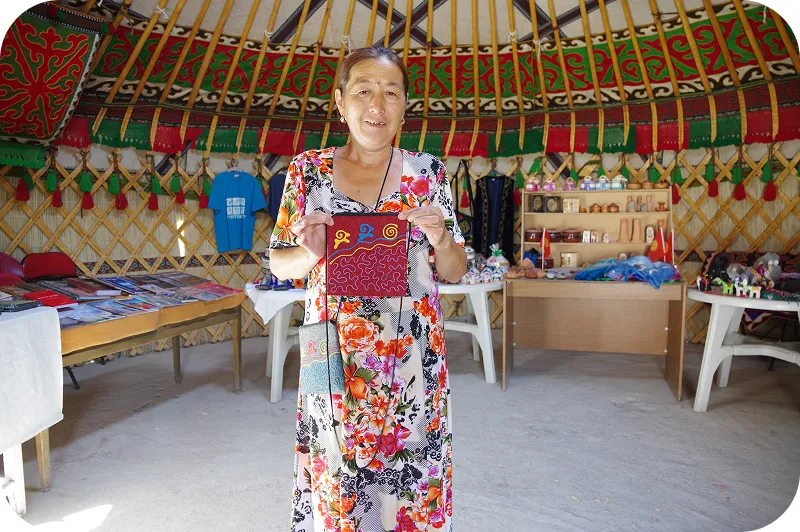
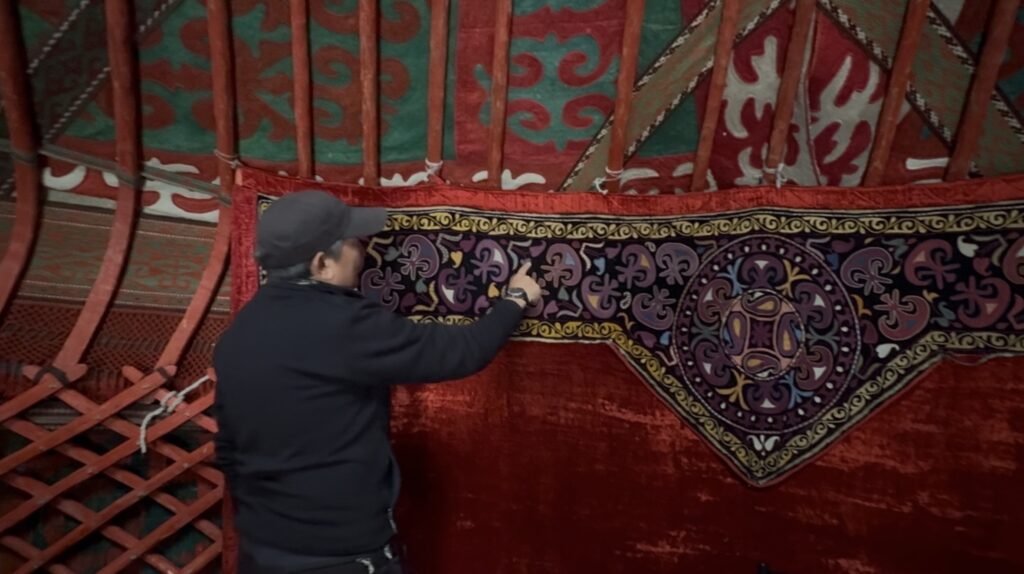
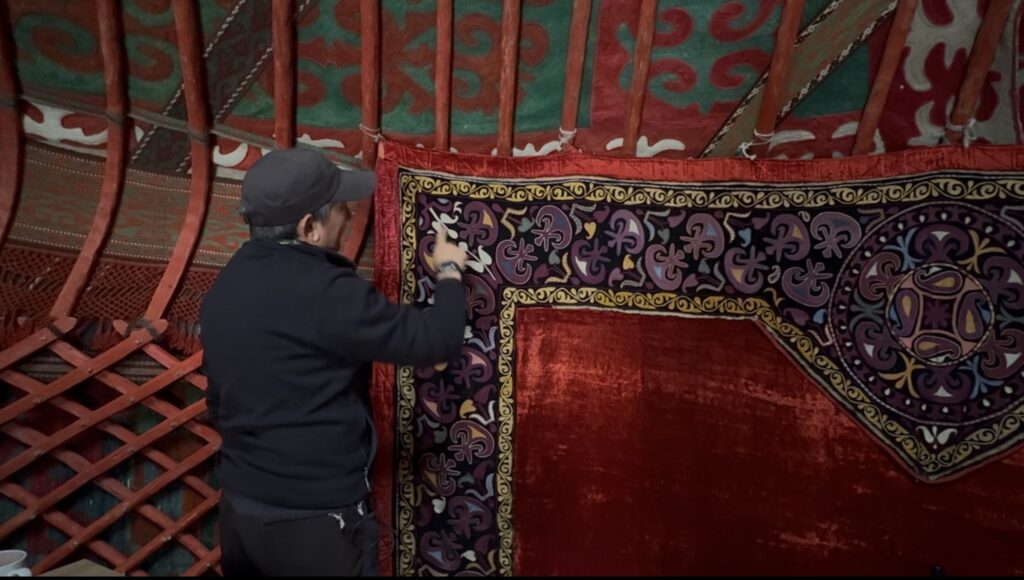
Meanings vary from piece to piece, so this time we asked a Kyrgyz mother at a yurt camp in Ak-Tala about the meaning of the embroidery she made.
- A man with a head, hands, and feet = son
- Flowers at the edges = daughters
- A motif representing good luck
Also seen on Uzbek hats.
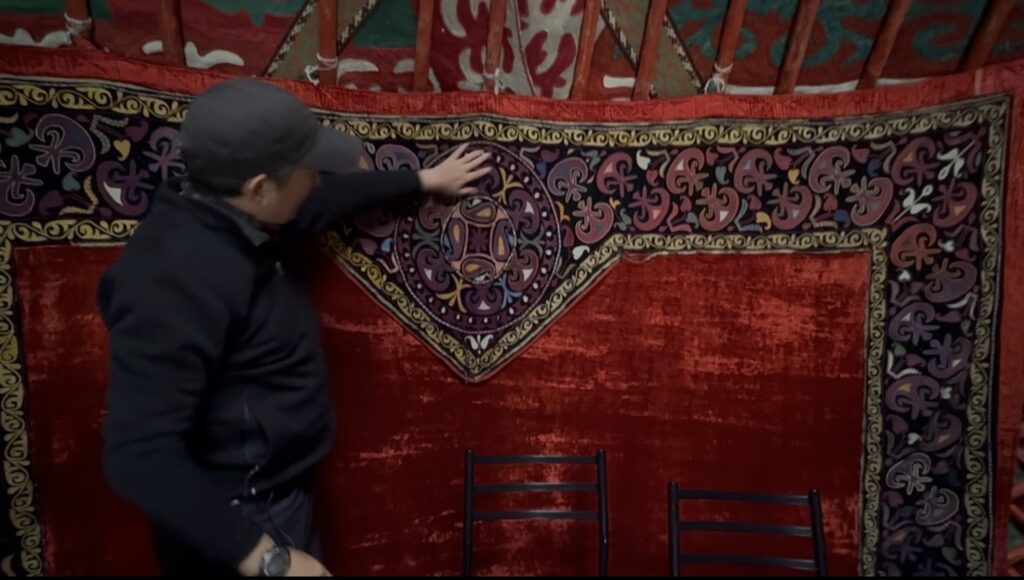
- A motif wishing for good health
A pattern painted on traditional tableware.
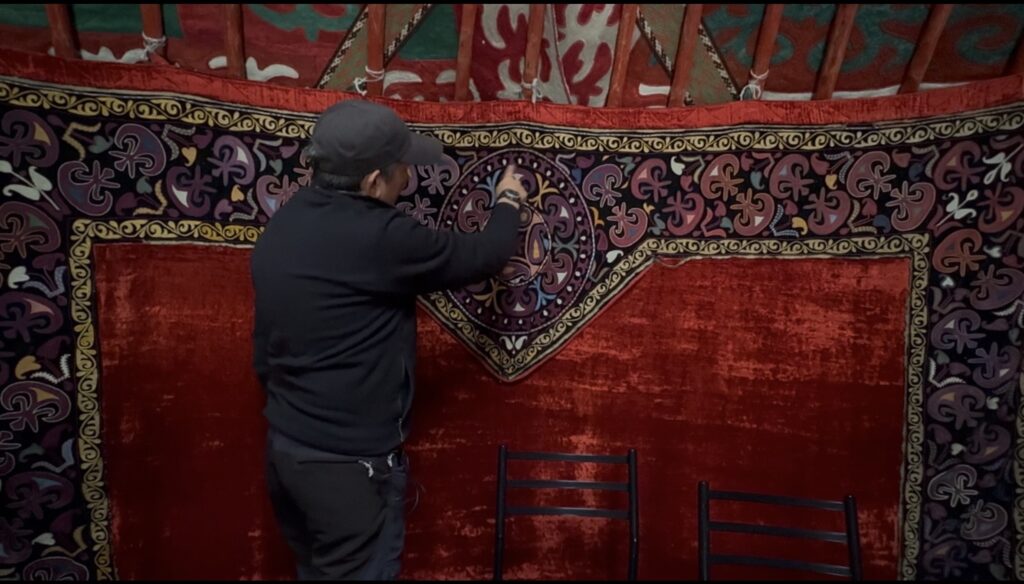
- The “glass dove,” a wish for long life
Because “glass lasts a long time,” this motif expresses the wish that the children will live long lives.
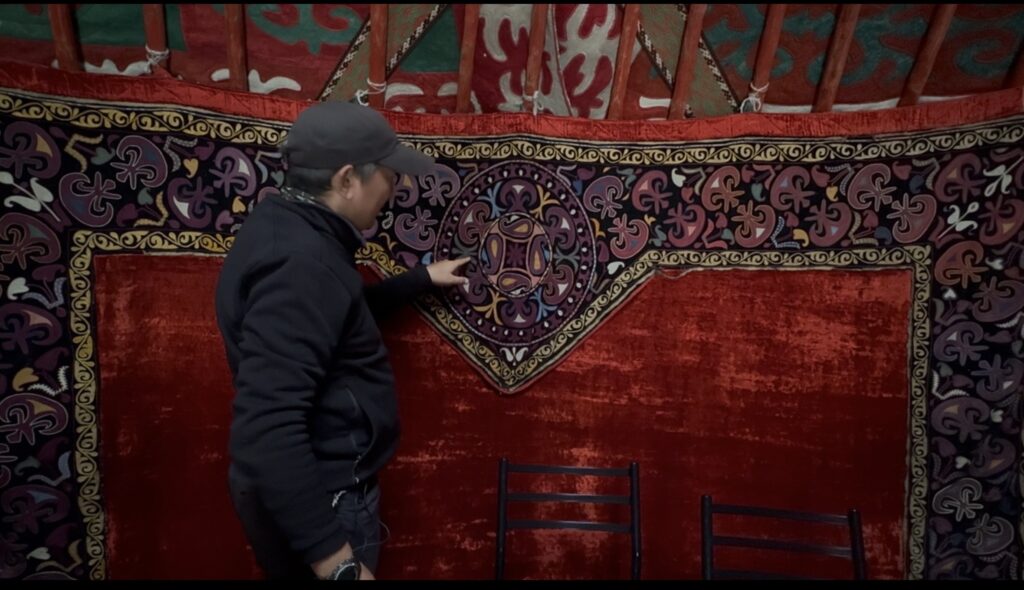
In the end, all of these patterns lead back to the same wish: “happiness, health, and long life for the family.”
Why Embroidery Is “Different in Every Family”
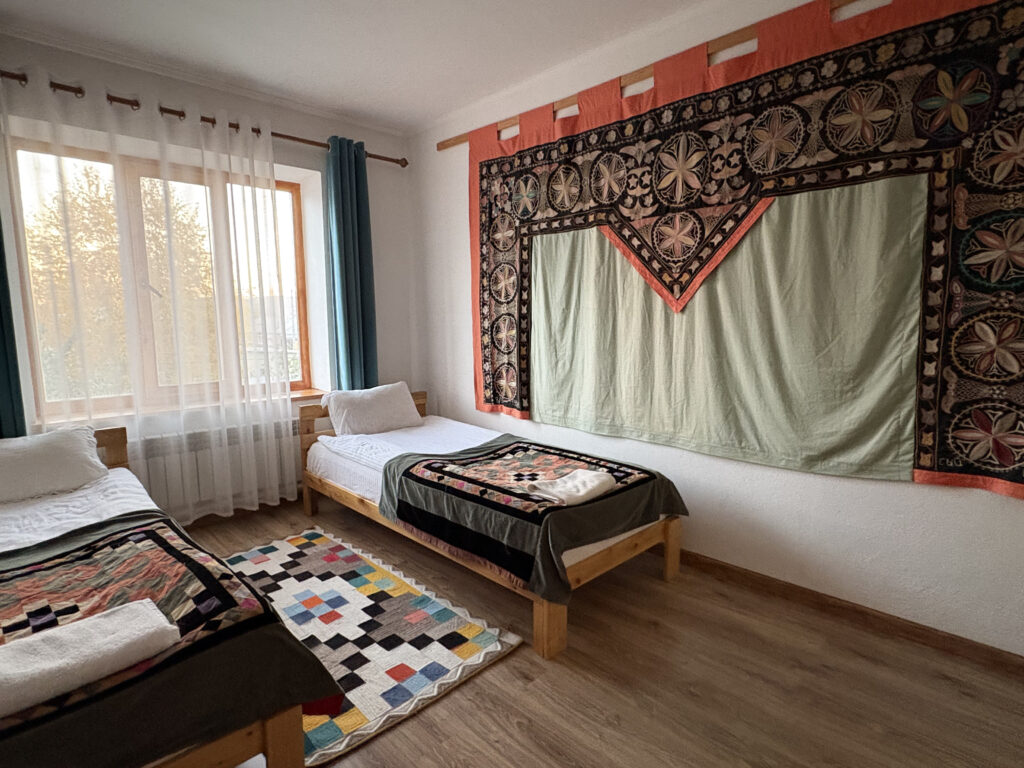
Why do Kyrgyz embroidery designs differ from household to household?
Because the mother is thinking of “her own children” as she stitches.
A son’s personality, hopes for a daughter’s future, the family’s own story — the feelings of that moment are stitched into the fabric as patterns, so no two embroideries are ever exactly the same.
In a way, you could say embroidery served as a kind of family photo album.
Where Can You Find Kyrgyz Embroidery on Your Trip?
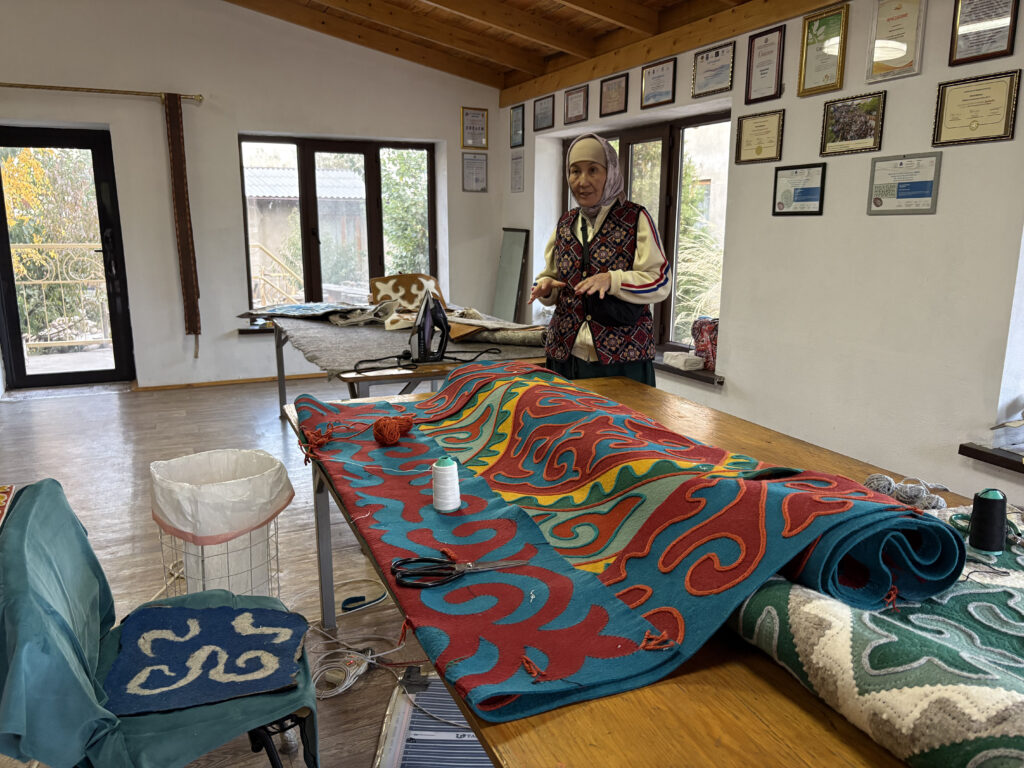
There are surprisingly many places where travelers can come across embroidery.
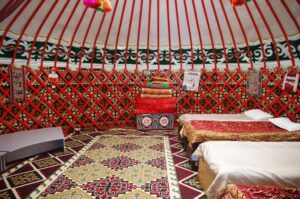
- Wall hangings in yurts and guesthouses
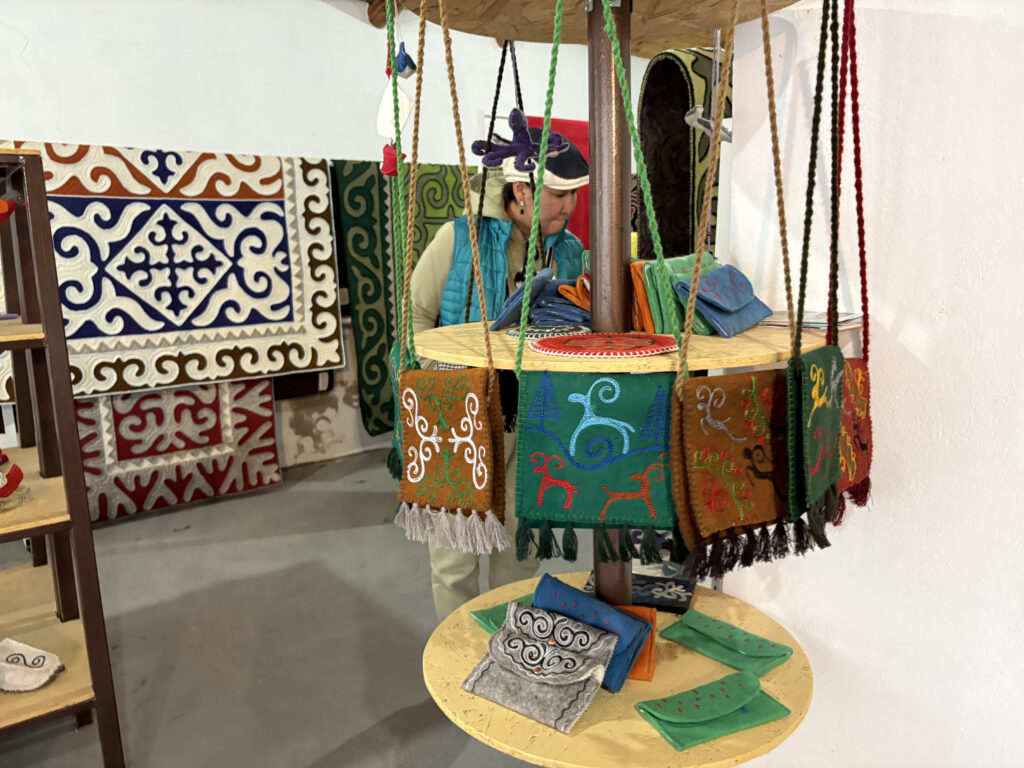
- Cushions and tapestries at traditional craft shops
- Handicraft markets
- Small textile items at souvenir shops (bags, pouches, etc.)
When you spot embroidery on your travels, try imagining, “What wishes were stitched into this?”
It’s not just decoration — there may be a family’s story hidden in it.
Experience Embroidery Culture on an ASHU TRAVEL Trip
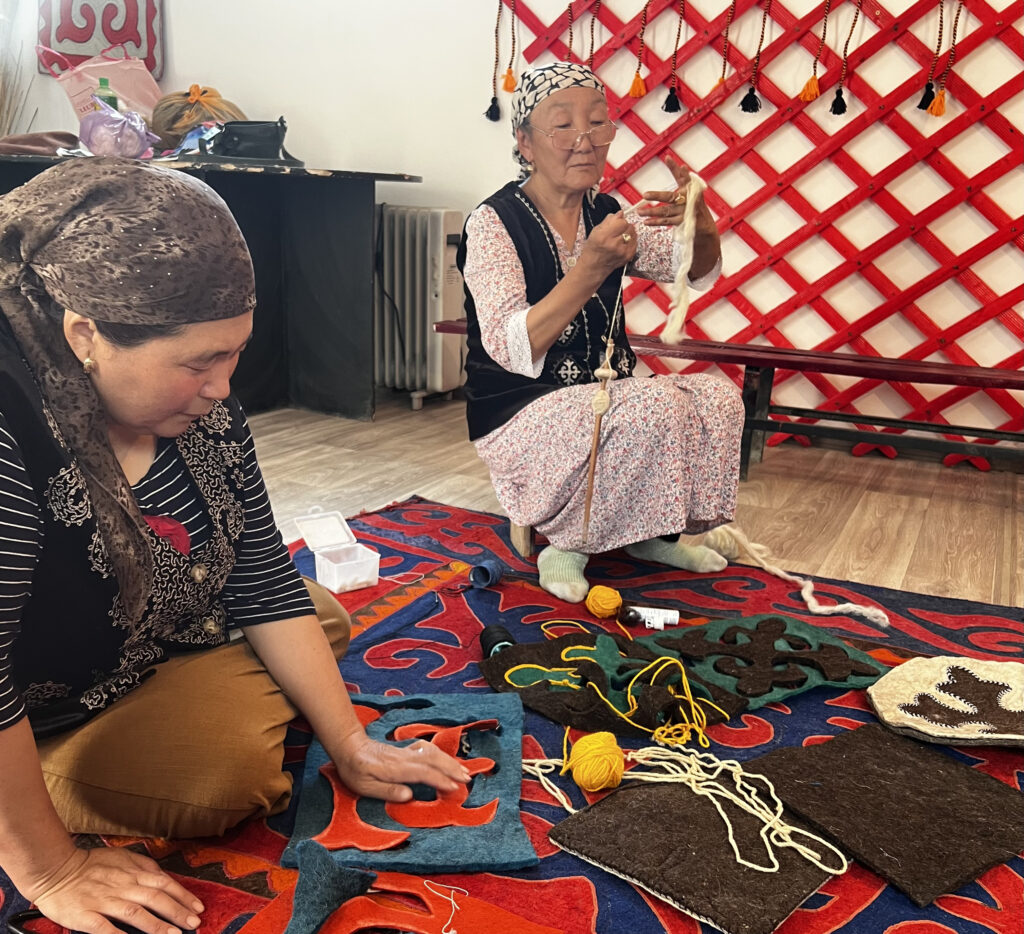
ASHU TRAVEL tours offer opportunities to encounter embroidery culture.
- See “real” embroidery during a nomad homestay
- Experience the world of traditional decoration on a yurt stay
- Local guides carefully explain the cultural background
- We take you to local markets selling embroidery and handicrafts
Once you “understand what the patterns mean,” your trip becomes so much richer.
Why not come and savor Kyrgyzstan’s warm culture in person?
Recommended Tours
• 7-Day Tour: Scenic Horse Riding Followed by a Felt Show
A culture-focused plan where you can experience both nomadic life and traditional handicrafts.
https://ashu-travel.com/en/tour/son-kul-7days/
• Homestay & Horseback Retreat with Real Nomads
For those who want to know the “way of life itself” behind embroidery and felt-making.
https://ashu-travel.com/en/tour/kyrgyz-homestay-horseback-retreat/
📩 Contact Us & Follow Us on Social Media for the Latest Updates!
🌍 We share the latest Kyrgyzstan travel news and stunning scenery on Instagram!
📸 Follow us to see what our trips are really like!
▶︎ Visit our Instagram
📩 Questions about our tours
▶︎ Ask us on our official LINE account
▶︎ Contact form
Related Articles
Be sure to read about felt, too!



 Related Articles