





Hello everyone, Сәлеметсіз бе? (Salemetsiz be? That’s “hello” in Kazakh!) This is Sugiura from ASHU TRAVEL, your guide to scenic horse riding tours in Central Asia.
This time I’m sharing the basics you’ll want to know before traveling to Kazakhstan, a country full of charms that are still little known in Japan! With its vast steppes, grand history and unique culture, it might be the perfect destination for your next adventure.
Whether you’re already planning a trip to Kazakhstan or you’re interested but haven’t taken the first step yet, be sure to read this article and get fully prepared for your trip!
What Kind of Country Is Kazakhstan? Check the Basics

“I know the name Kazakhstan, but what kind of country is it?” If that’s you, read on. It’s actually a country with an astonishing scale and history! Let’s take a quick look at the basics you’ll want to know before you go.
The 9th Largest Country in the World!

Kazakhstan covers 2,724,900 square kilometers. Hard to picture? Let’s compare it with Japan.
✅ About 7 times the size of Japan
✅ Larger than Germany, France and Spain combined!
✅ In US terms, 1.6 times the size of Alaska!
It’s simply huge! And despite being this big, it’s the world’s largest landlocked country, with no coastline on the ocean. Most of the country is steppe and desert, and endless land between cities is the norm. Getting around is mainly by long-distance bus or plane.
A Population of Only About 19.8 Million!?

Living on this vast land are about 19.8 million people (as of 2024, UN Population Fund).
The population density is just 7 people per square kilometer.
By comparison, Japan has about 330. In other words, Kazakhstan is a country of vast, empty land! Once you leave the cities, you’ll be overwhelmed by endless steppes and deserts.
Is the Capital Astana a Futuristic City!?

The capital of Kazakhstan is Astana. But until 1997, Almaty was the capital!
Why was the capital moved?
✅ Almaty is in an earthquake-prone area
✅ Astana, in the center of the country, was more convenient geopolitically
✅ To balance the population against the north, where many ethnic Russians lived
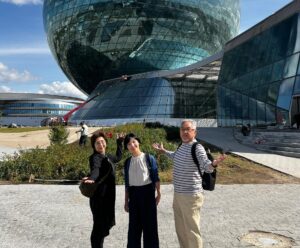
Astana’s urban plan was designed by Japanese architect Kisho Kurokawa, and the city looks like something out of the future. Glass mosques and giant pyramid-shaped buildings line the streets, creating a cityscape that will make you wonder, “Wait, is this really Central Asia?”
Where Is Kazakhstan? Its Location on the Map May Surprise You!
Few people can answer right away when asked, “Where is Kazakhstan?” On the map, it sits right on the border between Europe and Asia.
✅ Russia to the north; Uzbekistan, Kyrgyzstan and Turkmenistan to the south
✅ China to the east, and the Caspian Sea to the west
Its culture and history are also a mix of Asia and Europe, and walking around town you’ll see a unique landscape of mosques alongside Russian-style buildings.
Time Difference and Flight Time from Japan

Two things travelers want to know: the time difference and access. The time difference between Kazakhstan and Japan is 3 or 4 hours, depending on the region.
✅ Astana and Almaty are 3 hours behind Japan
✅ Western areas such as Aktau are 4 hours behind
How long is the flight?
✈ Tokyo (Narita) → Seoul (transfer) → Astana or Almaty (about 10 to 12 hours)
✈ Tokyo (Narita) → Istanbul (transfer) → Astana or Almaty (about 15 hours)
It’s a long journey, but an experience full of exotic atmosphere awaits you!
Kazakhstan’s Climate and Best Season

Kazakhstan’s seasons are quite different from Japan’s. Learn about the climate and find the best time for your trip!
Four Distinct Seasons! But Winters Are Brutally Cold

Like Japan, Kazakhstan is a country with four seasons, but they’re quite extreme. In particular, the winter cold is beyond what you’d imagine!
✅ Summer (June to August): Daytime temperatures can exceed 30°C. But the humidity is low and the nights are cool, so it’s comfortable.
✅ Autumn (September to November): Temperatures start dropping quickly, and mornings and evenings get cold. A beautiful time for autumn leaves.
✅ Winter (December to February): Bitterly cold. In Astana, the low can drop below -30°C! Protection against the cold is essential.
✅ Spring (March to May): It starts to warm up, but snow may remain in some areas.
Because the country is so large, the climate varies greatly by region. Almaty in the south is relatively mild, while Astana in the north is bitterly cold in winter. In desert areas, the difference between day and night temperatures is extreme, and nights get cold.
When Is the Best Time to Visit?

The best season for Kazakhstan depends on what you want to do!
🟢 Mainly sightseeing?
→ May to October is recommended. Flowers bloom in spring and the autumn leaves are beautiful. Summer is hot, but the low humidity keeps it comfortable.
❄ Want to enjoy winter activities?
→ December to February is the time for skiing, snowboarding, horse riding and more. Shymbulak Ski Resort near Almaty is a popular spot.
🏜 Want to see spectacular natural scenery?
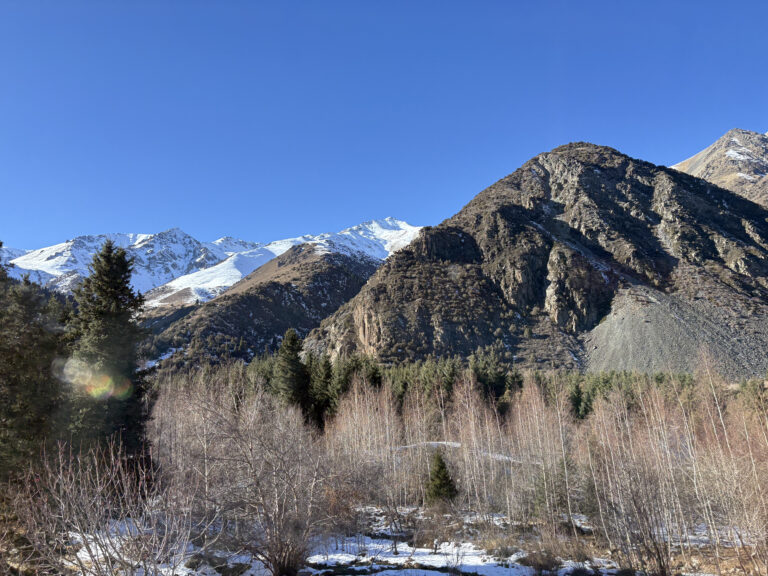
→ April to June and September to October are ideal. Summer is too hot, so it’s better to avoid it. For Charyn Canyon and Altyn-Emel National Park in particular, spring and autumn are the best times for stunning views!
🌍 Want to take your time with culture and history?
→ Any time of year! City sightseeing in Almaty and Astana can be enjoyed all year round. Just be sure to prepare for the cold in winter.
Learn About Kazakhstan’s Culture and History

Kazakhstan lies in the middle of the Eurasian continent, where many cultures and ethnic groups meet. Its nomadic history, the influence of the Soviet era, its development since independence… Getting to know this country will make your trip even more enjoyable!
Kazakhstan’s Official Languages and Religions

Both Kazakh and Russian are used!?

In Kazakhstan, Kazakh is the state language, but Russian is an official language. Many signs in town are in Russian, and it’s widely used in business and everyday conversation. According to ASHU’s driver, some people can’t speak Kazakh but do speak Russian.
✅ Kazakh: The language of the Kazakh people. It’s written in Cyrillic, but there are plans to switch to the Latin alphabet in the future.
✅ Russian: Strongly influenced by the former Soviet era and widely spoken, especially in cities.
✅ What about English?: More young people and people in tourist areas can speak it, but they’re still a minority.
While traveling, it’s handy to learn a few simple Russian phrases!
👉 “Spasibo (Спасибо)” = Thank you
👉 “Zdravstvuyte (Здравствуйте)” = Hello
Kazakhstan’s Religions: Not Just Islam?

In Kazakhstan, Islam is the majority religion, but in fact many religions coexist.
📌 Islam (about 70%)
… Practiced by most Kazakhs. However, few people pray at mosques, and Islamic culture here is relatively relaxed.
📌 Russian Orthodox (about 20%)
… Practiced mainly by ethnic Russians. Astana and Almaty have beautiful Orthodox churches.
📌 Others (Buddhism, non-religious, etc.)
… Many ethnic groups live in Kazakhstan, and some people practice Buddhism or Judaism.
The cultural diversity that comes with being a multi-ethnic nation is one of this country’s charms!
A Quick Overview of Kazakhstan’s History!

Kazakhstan’s history follows the path of the nomadic era → rule by the Russian Empire → the Soviet era → independence .
📌 Once a land of nomads!
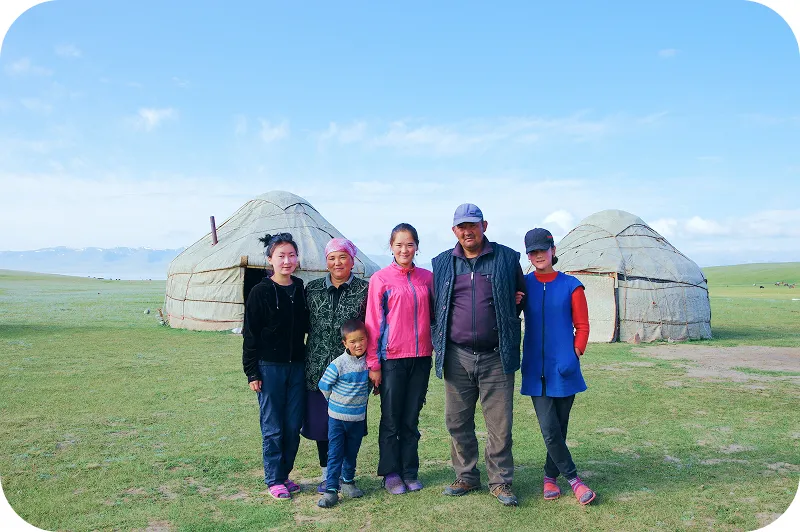
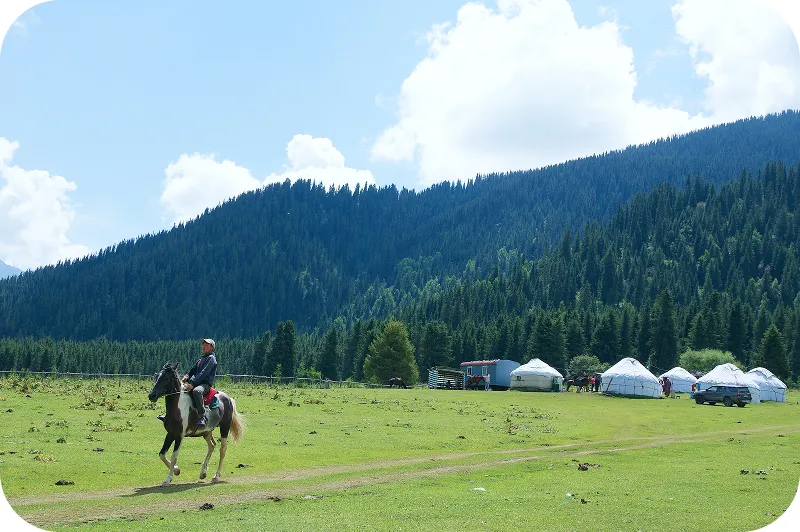
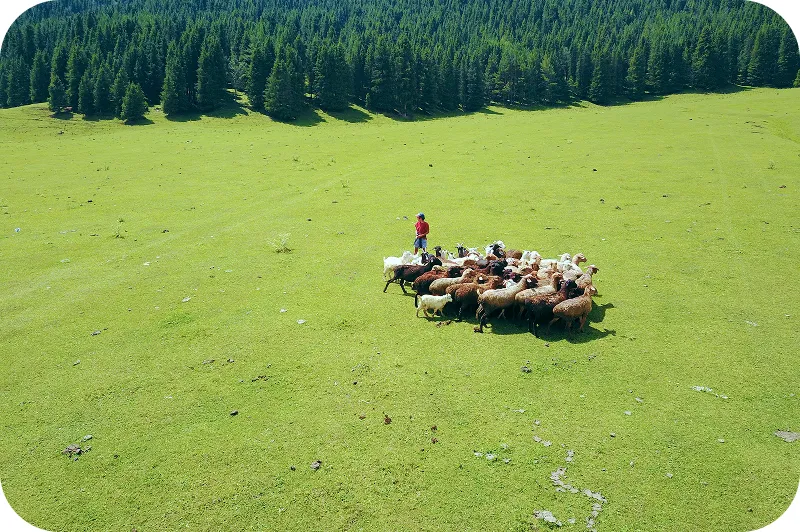
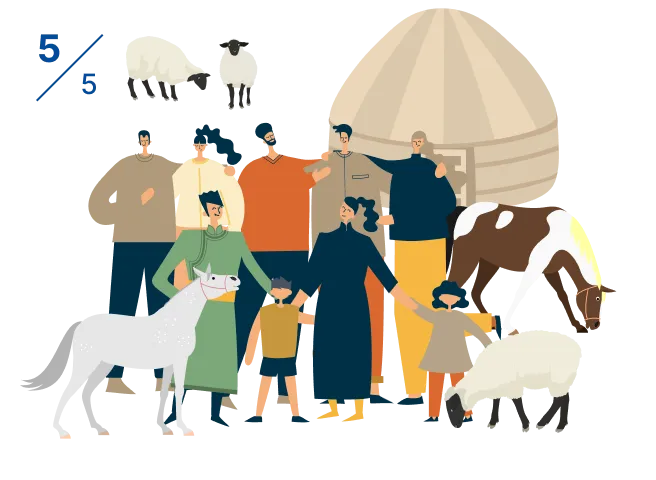
… The ancestors of the Kazakhs were nomads who raised livestock while moving across the vast steppes. The traditional life in yurts (portable tents) still survives in some places today.
📌 Under Russian rule
… In the 18th century, the Russian Empire advanced, and the Kazakh steppe gradually came under Russian control.
📌 The Soviet era (1920 to 1991)
… As part of the Soviet Union, Russian-language education spread and agriculture was collectivized.
… Huge projects such as the Baikonur Cosmodrome were also carried out during this period.
📌 1991: Independence at last!
… With the collapse of the Soviet Union, the Republic of Kazakhstan was born. The first president, Nazarbayev, held power for about 30 years.
Recently, relations with Russia have shifted and the economy has continued to develop. History is still in motion!
Relations with Japan? Some Surprising Connections

You might think, “Does Kazakhstan have anything to do with Japan?” But the two countries are surprisingly closely connected!
Political and economic ties
✅ Resource cooperation: Kazakhstan is the world’s largest producer of uranium! It’s linked to nuclear power generation in Japan.
✅ ODA (Official Development Assistance): Japan supports Kazakhstan with infrastructure development and more.
Cultural exchange is growing too
✅ Popularity of anime & J-pop: Japanese anime is hugely popular in Kazakhstan! “Naruto” and “Attack on Titan” are broadcast there too.
✅ Study abroad & business exchange: More and more Kazakhs are learning Japanese, and university exchange programs are active.
Check Out Kazakhstan’s Signature Foods!

Kazakh cuisine is known for hearty meat dishes rooted in nomadic history . Here’s a quick introduction to the classic dishes worth knowing before your trip!
Kazakhstan’s Signature Dishes

- Beshbarmak
A traditional dish of boiled horse meat or mutton eaten with flat noodles.The name means “five fingers,” and it’s traditionally eaten by hand. - Shashlik
Grilled skewers of lamb, beef, chicken and more. Fragrant from the charcoal and full of spices, it’s a must for BBQ lovers! - Lagman
A noodle soup influenced by Uyghur culture , with a texture similar to Japanese udon. It’s packed with the rich flavors of meat and vegetables.
Kazakhstan’s Classic Sweets & Drinks

- Baursak
Fluffy fried bread , usually eaten with jam or honey. You can also find it at bazaars (markets). - Kymyz
A drink made from fermented mare’s milk.It has a yogurt-like tang and a slight fizz , and is said to be good for your health.
Kazakhstan’s Top Sights! Check the Highlights

Kazakhstan has it all: futuristic cities, historical heritage and overwhelming nature . Here’s a selection of sights to check out before your trip!
The Capital Astana (Nur-Sultan): Walk Through a City of the Future

- Baiterek Tower: The symbol of the capital. Enjoy a panoramic view of the city from the observation deck!
- Hazrat Sultan Mosque: One of the largest mosques in Central Asia. Don’t miss its gleaming white beauty.
- Khan Shatyr: One of the world’s largest tent-shaped malls. Great for shopping and food!
Almaty: A City of Nature and Culture

- Zenkov Cathedral: A wooden building constructed without a single nail.
- Medeu & Shymbulak Ski Resort: The place for winter sports! Enjoy skiing and skating.
- Big Almaty Lake: An emerald-green lake. Popular as a scenic spot!
Kazakhstan’s Great Outdoors! Magnificent Scenery

- Charyn Canyon: “The Grand Canyon of Central Asia”. Breathtaking canyon scenery!
- Altyn-Emel National Park: Famous for its “Singing Dune” . A great place to enjoy unspoiled nature.
- Mangystau Region: Another world of chalk-white land and dreamlike salt lakes.
Preparing for Your Kazakhstan Trip and Things to Know

We’ve summarized the rules and useful information to know before you travel. Check them out so you can enjoy a comfortable trip!
Kazakhstan’s Visa and Entry Rules

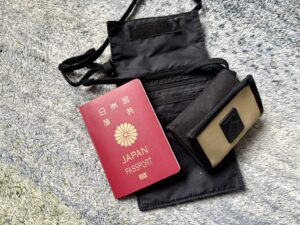
- Japanese citizens don’t need a visa for stays of up to 30 days. Longer stays require an e-visa.
- Be sure to check your entry stamp (if there’s only one, additional registration may be required).
Money and Prices

- The currency is the tenge (KZT). Credit cards are fine in cities, but cash is essential in rural areas.
- Prices are generally lower than in Japan, but tourist spots are a bit pricier.
Safety and Security

- Safety is generally good , but watch out for pickpockets and bag snatchers.
- Avoid walking alone at night, and use a ride-hailing app (Yandex GO) for taxis for peace of mind.
Clothing and Weather Preparation

- Winters can be bitterly cold (below -20°C) and summers can exceed 35°C . Pack clothes suited to the season.
- When visiting religious sites, wearing modest clothing is a good idea.
ASHU TRAVEL’s Recommended Kazakhstan Tour

“If I’m going all that way, I want to enjoy Kazakhstan to the fullest!” For travelers like you, here’s ASHU TRAVEL’s recommended tour!
8-Day Tour of the Pearls of the Tian Shan
📍 Tour details here ▶︎ 8 Days Exploring the Pearls of the Tian Shan
🔹 Tour highlights
✅ Enjoy the magnificent nature of two countries, Kazakhstan and Kyrgyzstan
✅ Almaty sightseeing & the beautiful Kaindy Lake and Charyn Canyon
✅ A journey through the stunning Tian Shan mountains and Kyrgyzstan’s traditional culture
Why Travelers Choose ASHU TRAVEL Tours
✈️ Japanese-speaking guide! No language worries
🚐 Comfortable private vehicle Even long drives are smooth
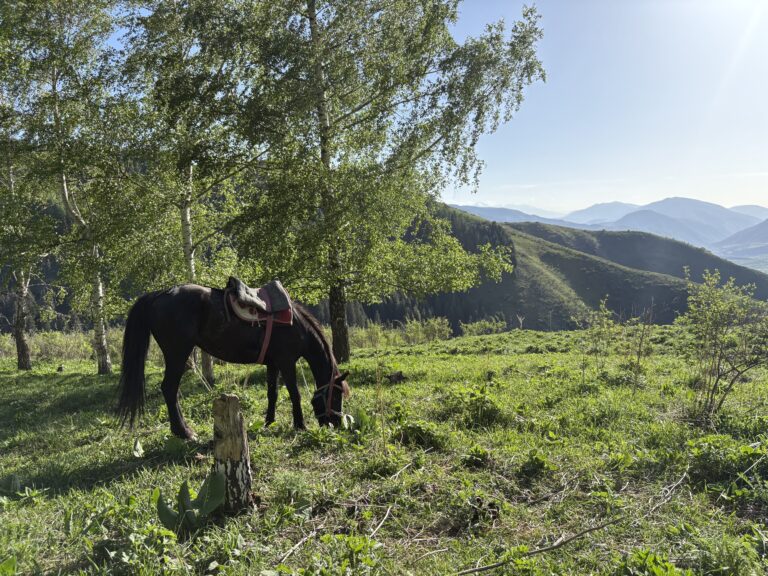
🏕️ Horse riding experience Beginners welcome! An experience you can only have here
🌏 Combine it with Kyrgyzstan! The charms of two countries you won’t find anywhere else
If you want to really enjoy Kazakhstan, leave it to ASHU TRAVEL!
📩 Contact Us & Follow Us on Social Media for the Latest Updates!
🌍 We share the latest Kazakhstan travel news and stunning spots on Instagram!
📸 Follow us to see what our trips are really like!
▶︎ Instagram
📩 Tour inquiries here
▶︎ Ask us on our official LINE
▶︎ Contact form
We hope your trip to Kazakhstan becomes an amazing experience!



 Related Articles