チャリンキャニオン&ソンクル湖|アルマトイ発ビシュケク着!11泊12日ツアー【乗馬なし】

Departure
アルマトイ空港(解散はマナス空港)
Season
6/1〜8/31
Destinations
アルマトイ(ゼンコフ教会・グリーンバザール), チャリン峡谷, カインディ湖, コルサイ湖, ケゲン国境, カラコル, アク・スウ温泉, スカスカ峡谷, ボコンバエバ, ソンクル湖, チョンケミン渓谷, ビシュケク, アラアルチャ国立公園
Accommodation
ホテル、ゲストハウス、ユルタ
Riding level
No riding No riding About riding levels

Tour Highlights

  • カザフスタンとキルギスの2か国を1本でアルマトイを起点にチャリン峡谷・カインディ湖・コルサイ湖をめぐり、ケゲン国境を越えてキルギスへ。カラコル、イシククル湖南岸、ソンクル湖、チョンケミン渓谷を通り、ビシュケクで解散します。アルマトイ着・ビシュケク発なので、同じ道を戻りません。
    ※アルマトイ方向へ戻るコルダイ国境ではなく、カラコルへまっすぐ近づけるケゲン国境を通ります。
  • 乗馬なし。車でめぐって見どころを歩きますチャリン峡谷の「城の谷」、スカスカの「おとぎ話の谷」、アラアルチャ国立公園。歩く距離や休憩は、その日の体調と天候に合わせて調整します。馬に乗らずに中央アジアの自然をご覧になりたい方のための行程です。
  • 移動の長い日の翌日はゆっくり国境越えのある4日目のあとはカラコルに連泊し、市内散策とアク・スウの温泉で体を休めます。8日目はチョンケミンのアシュゲストハウスで休養日。プール・サウナ・焚き火があり、料理目当てのリピーターさんがいるほど評判のアシュごはんが待っています。
  • ガイドは日本語と英語から選べます。宿・食事・車輌・入場料まで全部込みアルマトイ空港のお迎えから国境越え、最終日のマナス空港のお送りまで含みます。4WDでの移動や各施設の入場料も込みなので、身ひとつでご参加いただけます。
    ※ガイドの言語によって料金が変わります。お申し込み時にご指定ください。
Tour price (per adult)

$2,250–$5,700

  • 1 pax$5,700+ pp
  • 2 pax$3,400+ pp
  • 3 pax$2,650+ pp
  • 4 pax$2,250+ pp
  • The final price is fixed 3 weeks before the tour.
  • Until then, the price changes as travelers join or cancel. We will email you whenever it changes.

Included in the price

  • 全行程の宿泊(ホテル・ゲストハウス・ユルタ)
  • 全行程の食事(1日目夕食と12日目昼食・夕食を除く)
  • 全行程の車輌・ドライバー・ガソリン
  • 全行程のガイド(日本語または英語/お申し込み時に選択)
  • アルマトイ空港のお迎え・マナス空港のお送り
  • チャリン峡谷・カインディ湖・コルサイ湖の入場料および4WD乗車
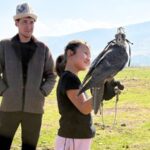
  • 鷹匠による鷹狩デモンストレーション
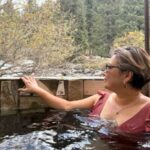
  • アク・スウの温泉
  • アラアルチャ国立公園の入場料・ケーブルカー

Not included

  • 往復航空券
  • 海外旅行保険
  • アルコール代
  • お土産代などの個人的な費用
  • 当日思いついたご希望のアクティビティ(マッサージなど)

Schedule

Tour Price

  • 1 pax $5,700+ pp
  • 2 pax $3,400+ pp
  • 3 pax $2,650+ pp
  • 4 pax $2,250+ pp
* ASHU TRAVEL tours are “shared tours” by default, so they are easy to join even if you travel solo. A shared tour means several travelers share the same itinerary. You can book new dates and let others join you, or join a tour that is already confirmed. The more people join, the lower the price per person, so you save money and meet fellow travelers to explore Central Asia with. The final price is fixed 3 weeks before departure.Learn more

Destinations

  • アルマトイ、チャリン峡谷、サティ村、カインディ湖、コルサイ湖、ケゲン国境、カラコル、アク・スウ温泉、スカスカ峡谷、ボコンバエバ、ソンクル湖、チョンケミン渓谷、ビシュケク、アラアルチャ国立公園

Route

アルマトイ → チャリン峡谷 → サティ村 → カインディ湖・コルサイ湖 → ケゲン国境 → カラコル → スカスカ峡谷 → ボコンバエバ → ソンクル湖 → チョンケミン渓谷 → ビシュケク → アラアルチャ国立公園 → ビシュケク

Day 1
Close
Meals
None
Horse Riding
なし
Elevation
800
Charging
○
wifi
○
Toilet
Flush toilet
Hot shower
Bathroom
Sauna
×
Pool
×
  • Tour photo
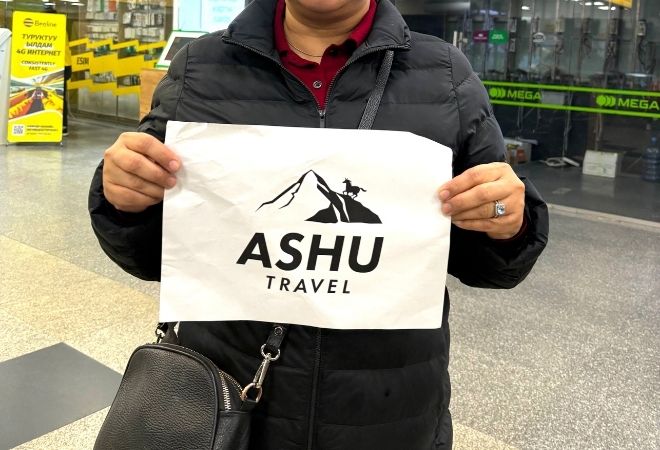
    アルマトイ空港の到着ゲートにて、アシュトラベルの案内を持ったスタッフがお迎えします(お名前を書いた案内になることもあります)。
  • Tour photo
    市内のホテルへご案内します。長いフライトのあとですので、初日はゆっくりお休みください。
    アルマトイ市内のホテルに宿泊
Day 2
Open
Meals
Breakfast, Lunch, Dinner
Horse Riding
なし
Elevation
800
Charging
○
wifi
○
Toilet
Flush toilet
Hot shower
Bathroom
Sauna
×
Pool
×
  • Tour photo
    ホテルへお迎えに上がり、アルマトイ市内へ。天山の山なみを背にした、街路樹の多い落ち着いた街です。
  • Tour photo
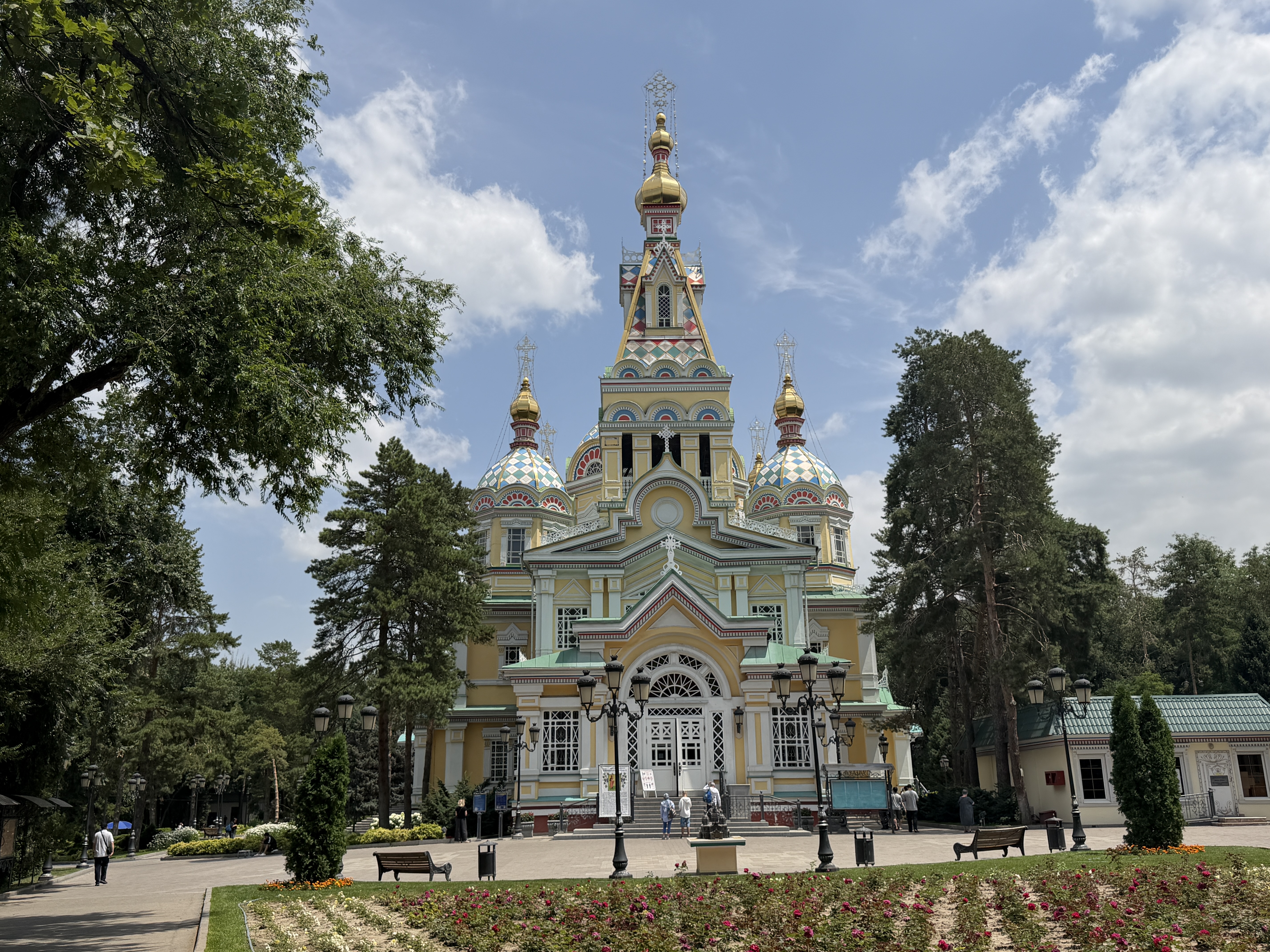
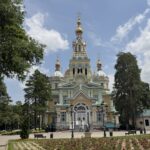
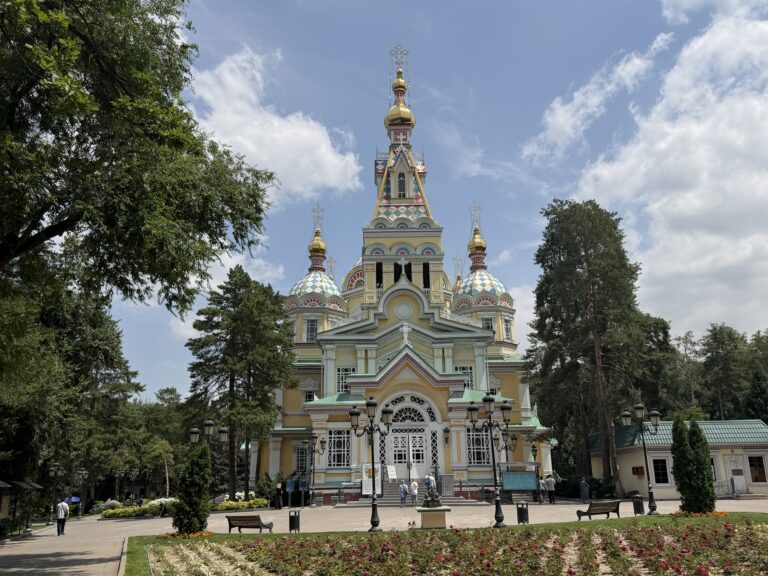
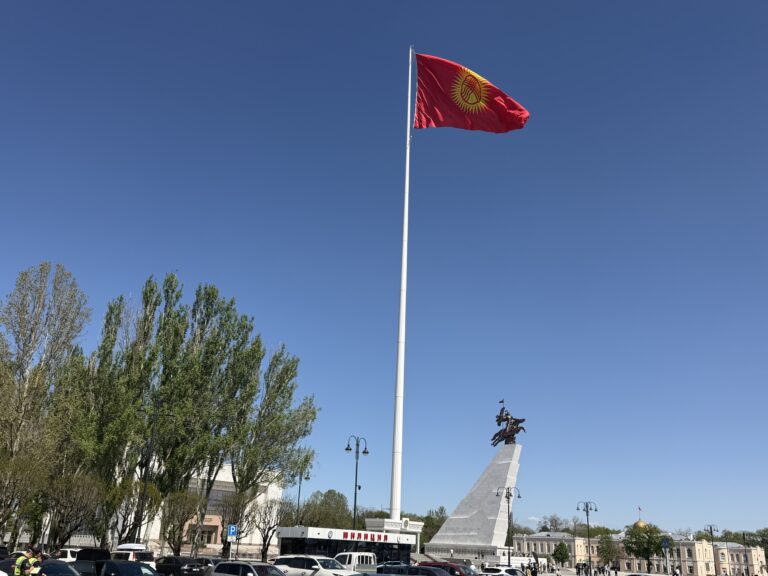
    水色の木造のゼンコフ正教会と、独立の記念碑が立つ共和国広場へ。釘を使わずに建てられた教会は、1911年の大地震にも耐えました。
  • Tour photo
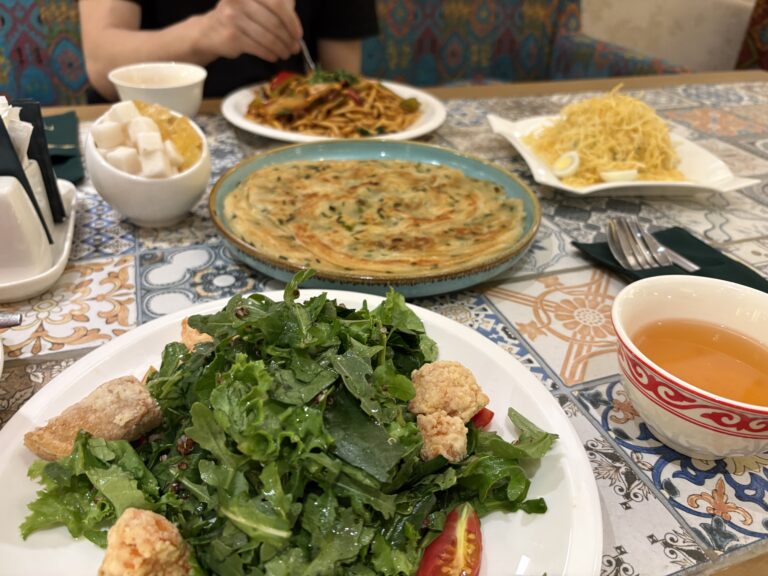
    ガイドおすすめのお店でランチ。ベシュバルマクやラグマンなど、カザフの食卓をお試しください。
  • Tour photo
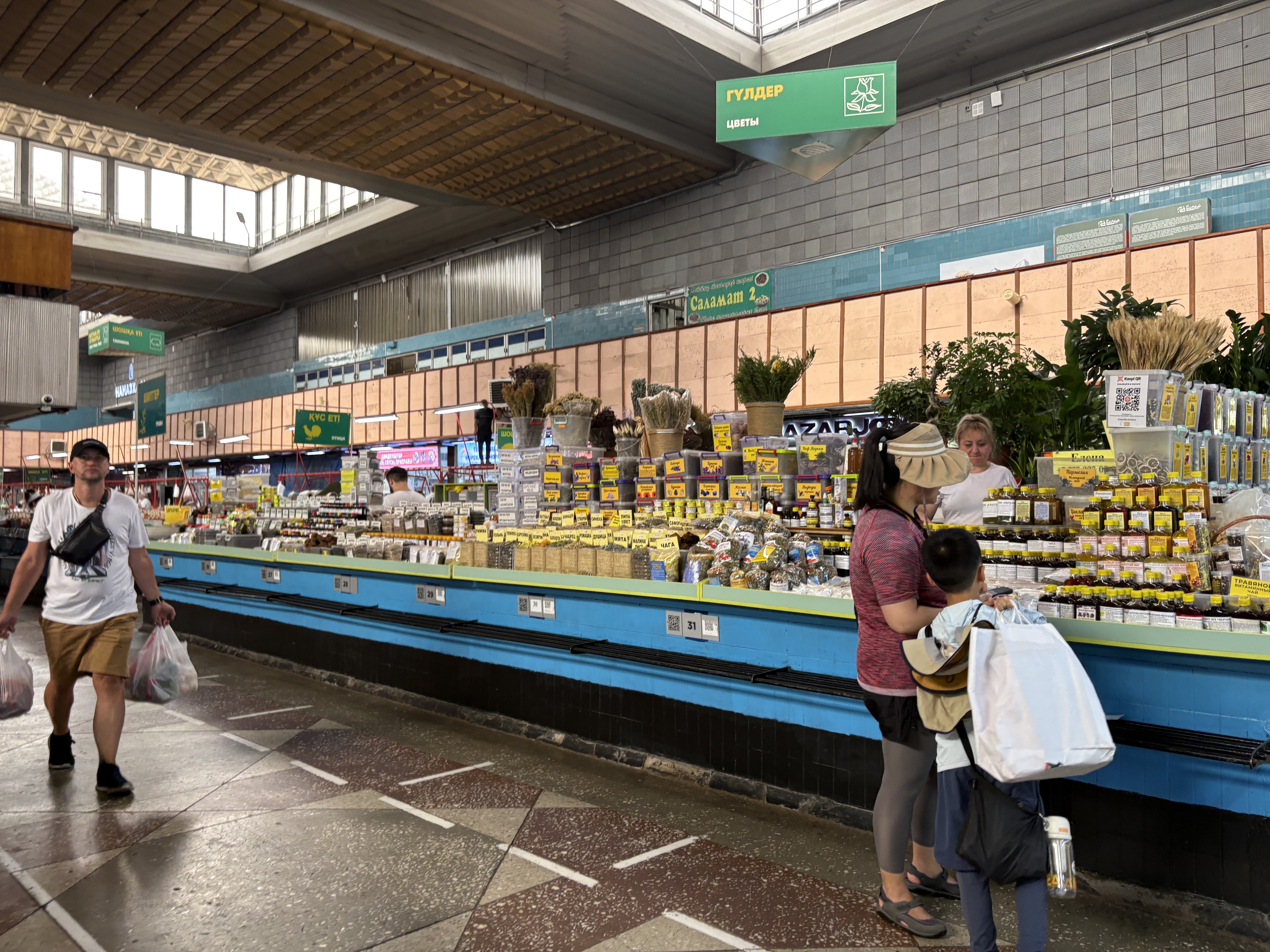
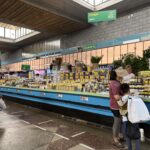
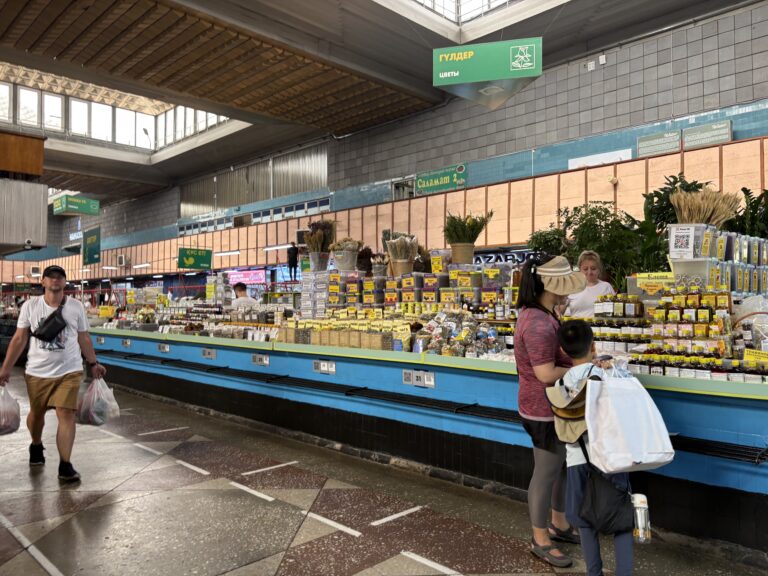
    果物やナッツ、乳製品が山と積まれたグリーンバザールへ。高台のコクトベや、山あいのメデウまで足をのばすこともできます。※観光場所はガイドが天候や状況を見ておすすめの場所へお連れします。
    アルマトイ市内のホテルに宿泊
Day 3
Open
Meals
Breakfast, Lunch, Dinner
Horse Riding
なし
Elevation
1800
Charging
○
wifi
○
Toilet
Flush toilet
Hot shower
Hot shower
Sauna
×
Pool
×
  • Tour photo
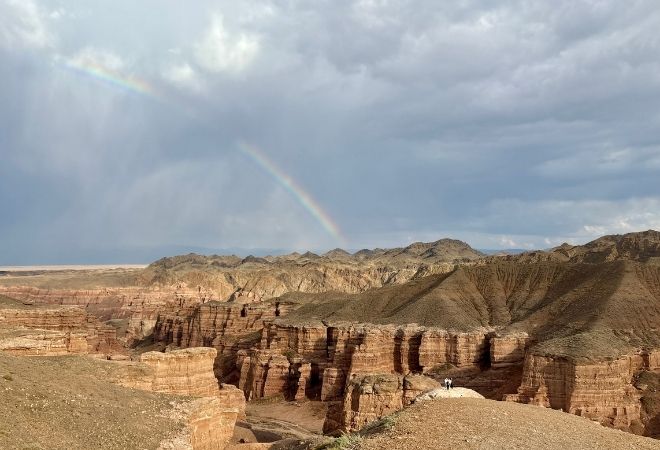
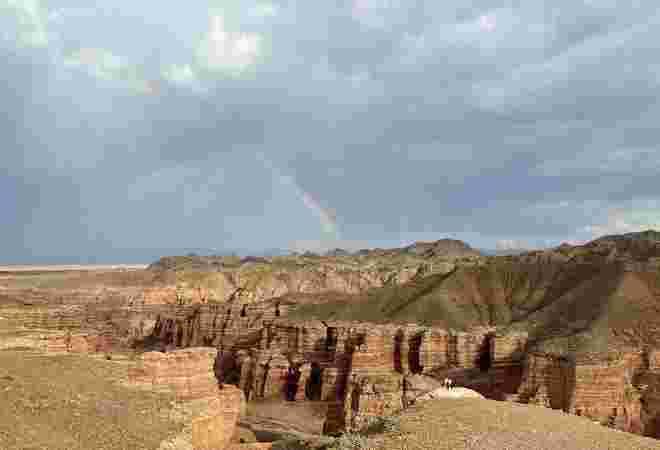
    ホテルを出発して東へ約3時間。乾いた大地のなかに、赤茶けた岩壁が切り立つチャリン峡谷が現れます。
  • Tour photo
    谷底の遊歩道を歩いて「城の谷」へ。塔や城壁のような奇岩のあいだを1時間ほど。歩く距離はその日の体調に合わせて調整できます。
  • Tour photo
    コルサイ湖・カインディ湖への入口となるサティ村のゲストハウスへ。村のコックさんお手製の夕食をお召しあがりください。
    サティ村のゲストハウスに宿泊
Day 4
Open
Meals
Breakfast, Lunch, Dinner
Horse Riding
なし
Elevation
1700
Charging
○
wifi
○
Toilet
Flush toilet
Hot shower
Hot shower
Sauna
×
Pool
×
  • Tour photo
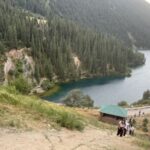
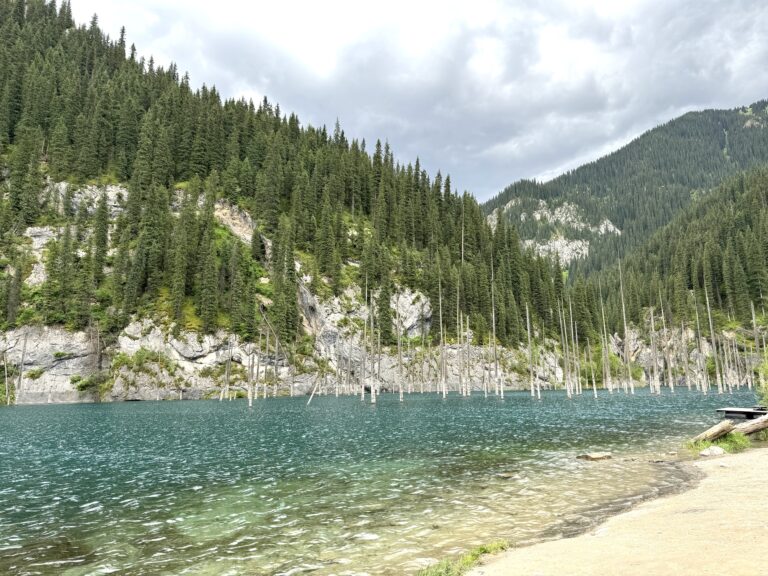
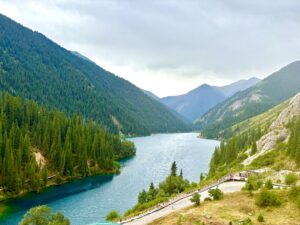
    4WDに乗り換えてカインディ湖へ。地震で水没したトウヒの幹が、エメラルド色の水面からまっすぐ立ちのぼります。
  • Tour photo
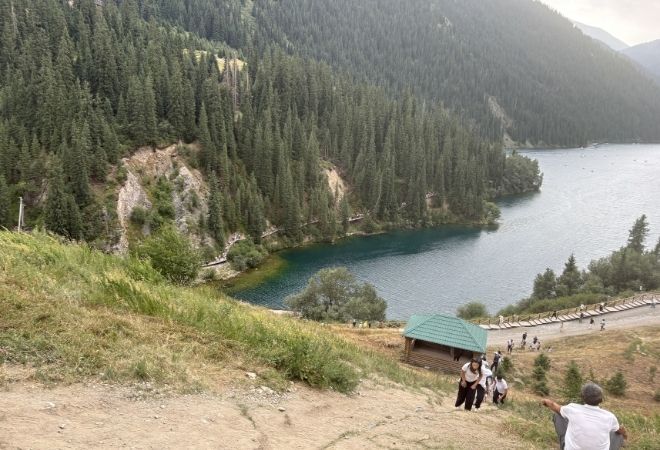
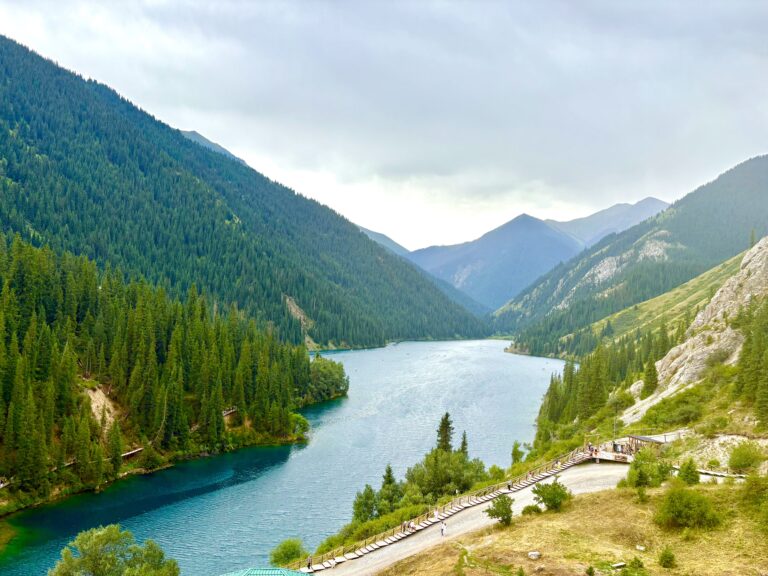
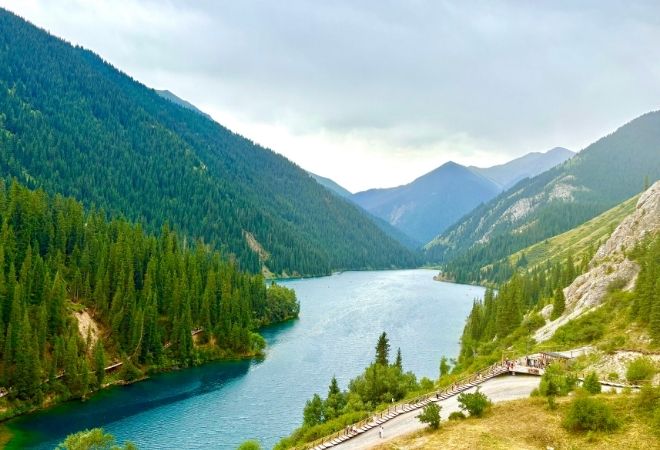
    「カザフのアルプス」とも呼ばれるコルサイ湖へ。針葉樹に囲まれた湖畔を散策します。
  • ケゲン国境へ向かいます。パスポートをお手元にご用意ください。※アルマトイ方向へ戻るコルダイ国境より、ケゲン国境のほうがカラコルへまっすぐ近づけます。
  • Tour photo
    国境を越えてキルギスへ。イシククル湖の東にあるカラコルの街に到着します。
    カラコルのゲストハウスに宿泊
Day 5
Open
Meals
Breakfast, Lunch, Dinner
Horse Riding
なし
Elevation
1700
Charging
○
wifi
○
Toilet
Flush toilet
Hot shower
Hot shower
Sauna
×
Pool
×
  • Tour photo
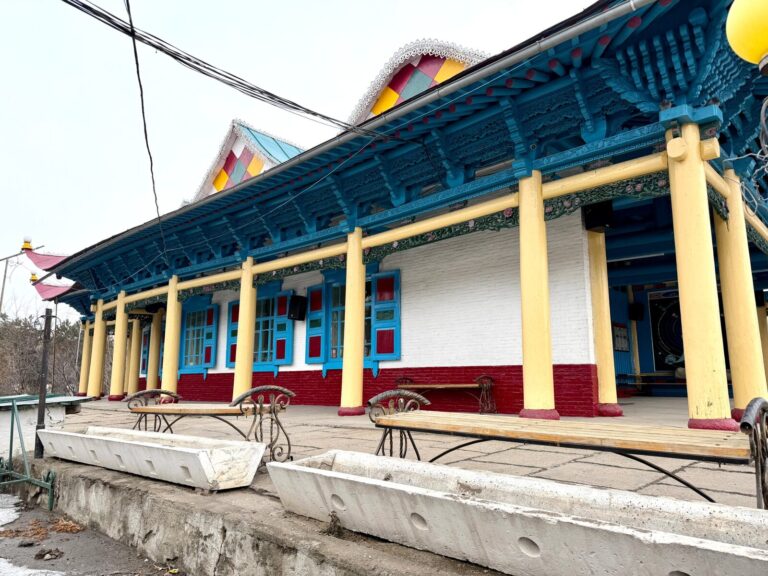
    前日の長い移動のあとですので、この日は無理のない行程にしています。木造のドゥンガン・モスクや、釘を1本も使わずに建てられたロシア正教会をめぐります。
  • Tour photo
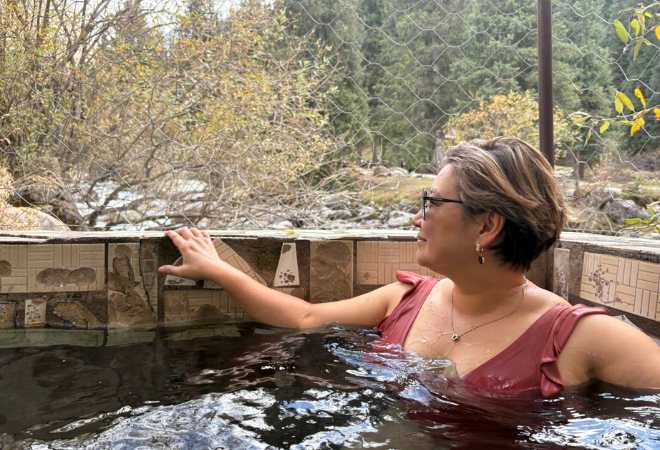
    渓谷沿いのアク・スウへ。山あいの天然温泉でゆっくりと体をほぐしてください。
    カラコルのゲストハウスに宿泊(連泊)
Day 6
Open
Meals
Breakfast, Lunch, Dinner
Horse Riding
なし
Elevation
1650
Charging
△
wifi
×
Toilet
Flush toilet
Hot shower
Hot shower
Sauna
×
Pool
×
  • Tour photo
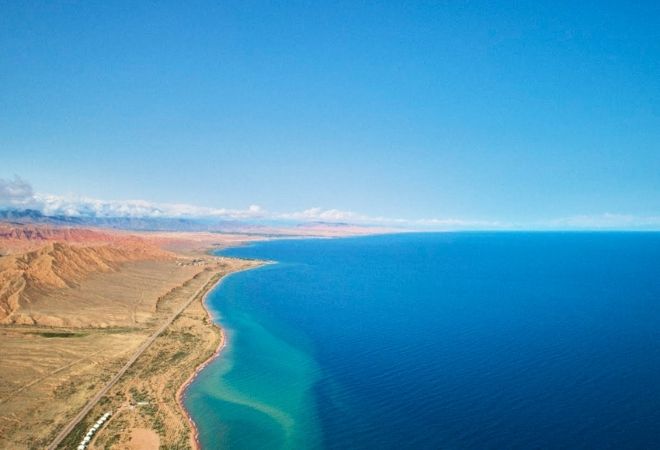
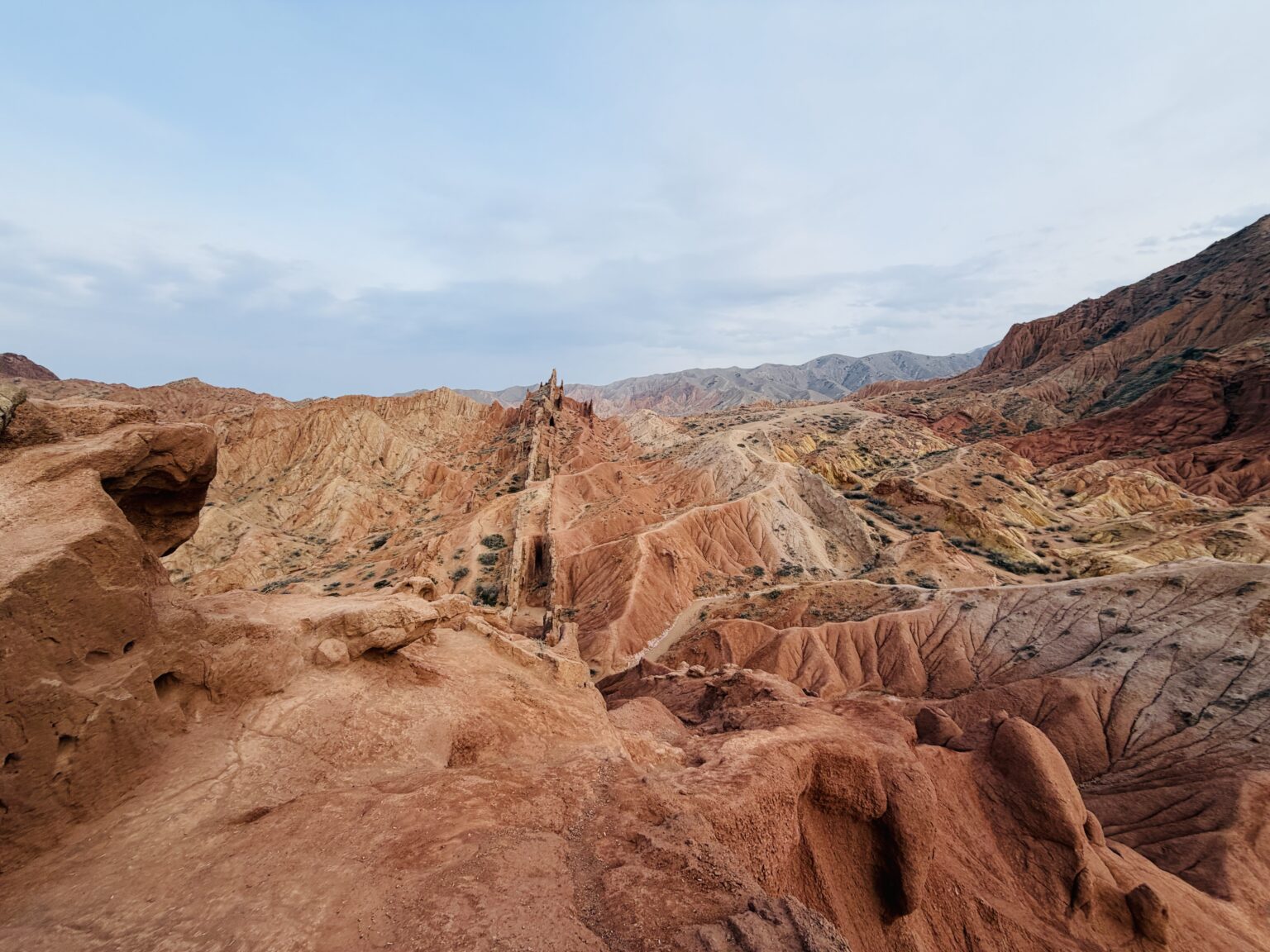
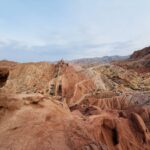
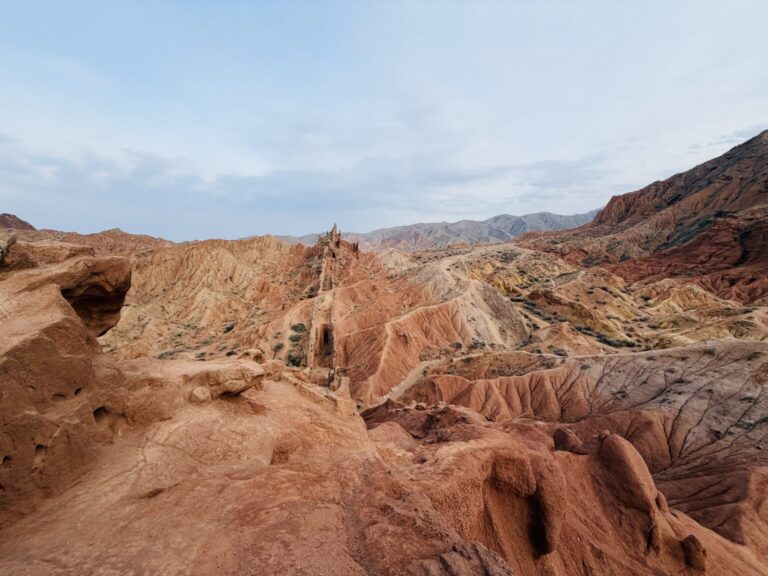
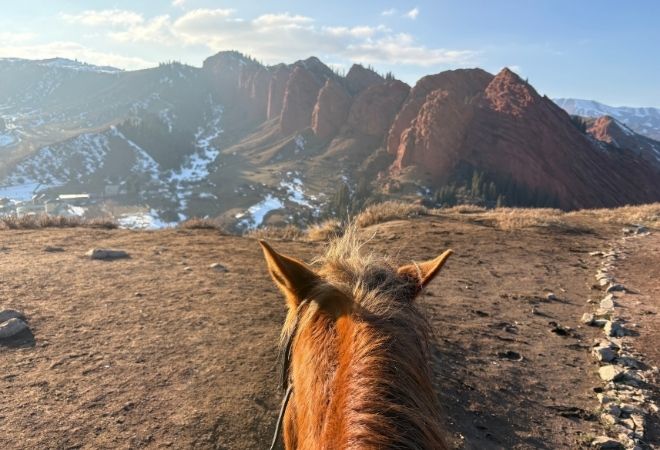
    イシククル湖の南岸を西へ。赤・橙・黄にしま模様を描く砂岩の丘がつづくスカスカ(おとぎ話の谷)を歩きます。丘の上からは湖と対岸の雪山が見えます。
  • Tour photo
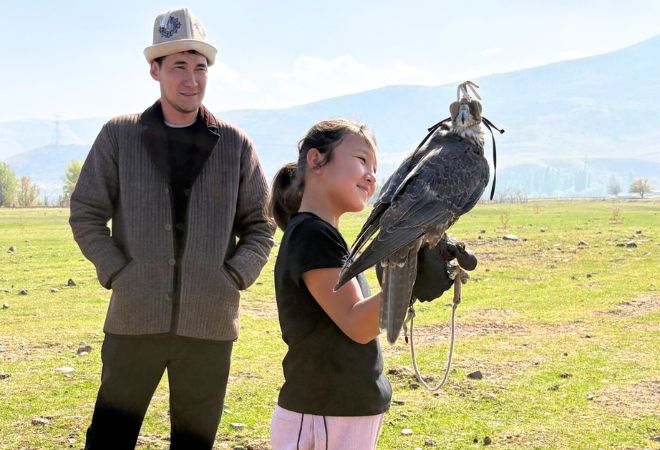
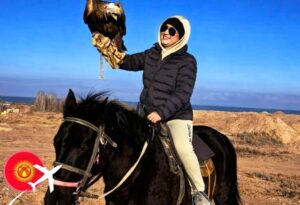
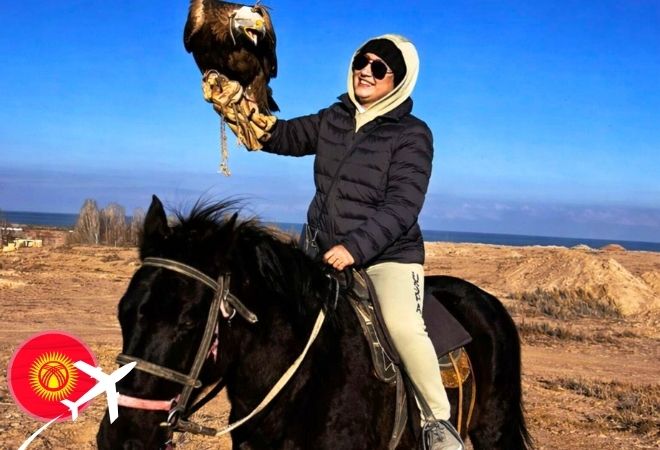
    鷹匠のもとへ。腕にとまらせた鷹が主人のもとへ飛んで戻ってくる、代々受け継がれてきた狩りの技を目の前で見せていただきます。
  • Tour photo
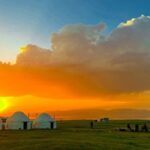
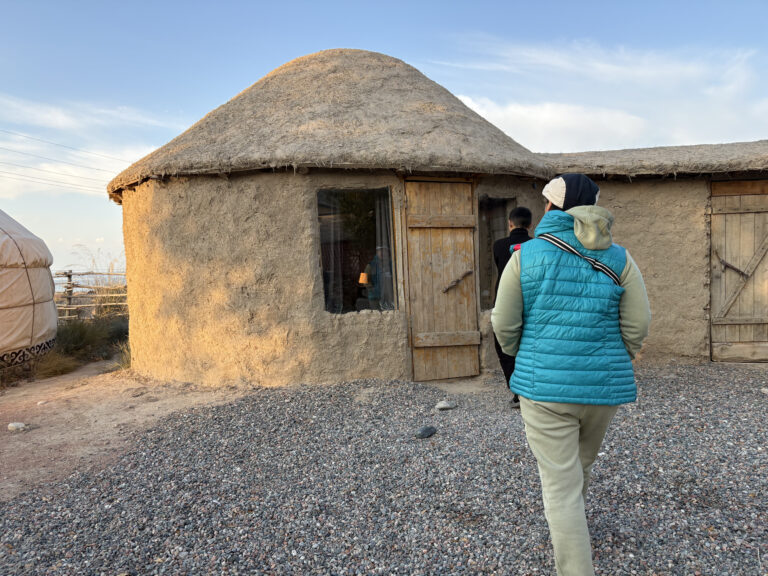
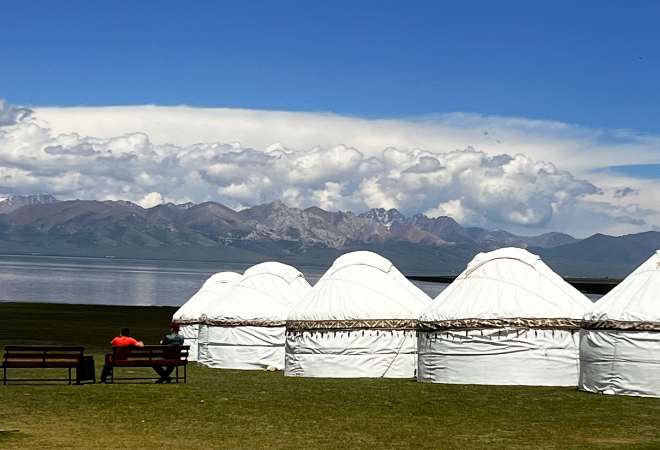
    湖畔のボコンバエバのユルタキャンプへ。晴れた夜は湖の上に星が広がります。
    ボコンバエバのユルタキャンプに宿泊
Day 7
Open
Meals
Breakfast, Lunch, Dinner
Horse Riding
なし
Elevation
3000
Charging
△
wifi
×
Toilet
Pit toilet
Hot shower
Hot shower
Sauna
×
Pool
×
  • Tour photo
    いくつもの峠を越えて標高約3,000mの高原へ。道中は羊や馬の群れ、夏営地のユルタが点々と見えてきます。
  • Tour photo
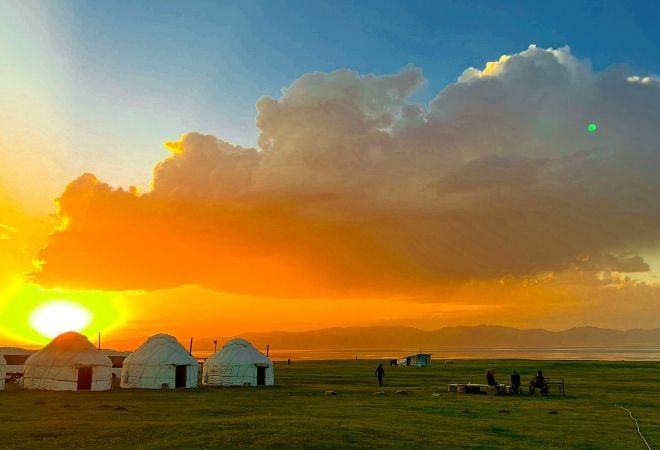
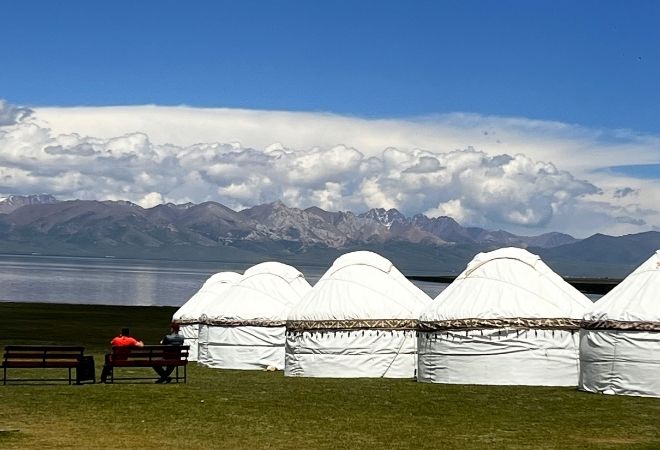
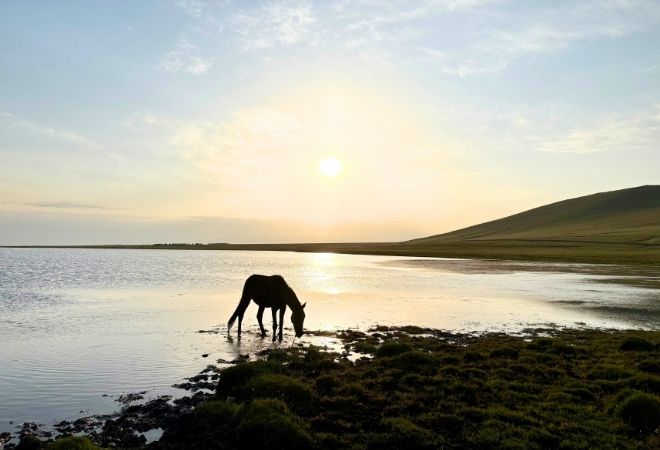
    ソンクル湖に到着。湖畔のユルタに泊まります。※高所のため朝晩は冷え込みます。厚手の上着をお持ちください。
  • Tour photo
    灯りがほとんどないため、晴れた日には星がよく見えます。※充電はレストラン棟のみで、混み合うと使えないことがあります。モバイルバッテリーをご持参ください。
    ソンクル湖畔のユルタに宿泊
Day 8
Open
Meals
Breakfast, Lunch, Dinner
Horse Riding
なし
Elevation
1300
Charging
○
wifi
○
Toilet
Flush toilet
Hot shower
Hot shower
Sauna
○
Pool
○
  • Tour photo
    ソンクル湖に朝の光が差すころ出発。山岳道路を下ってチョンケミン渓谷へ向かいます。
  • Tour photo
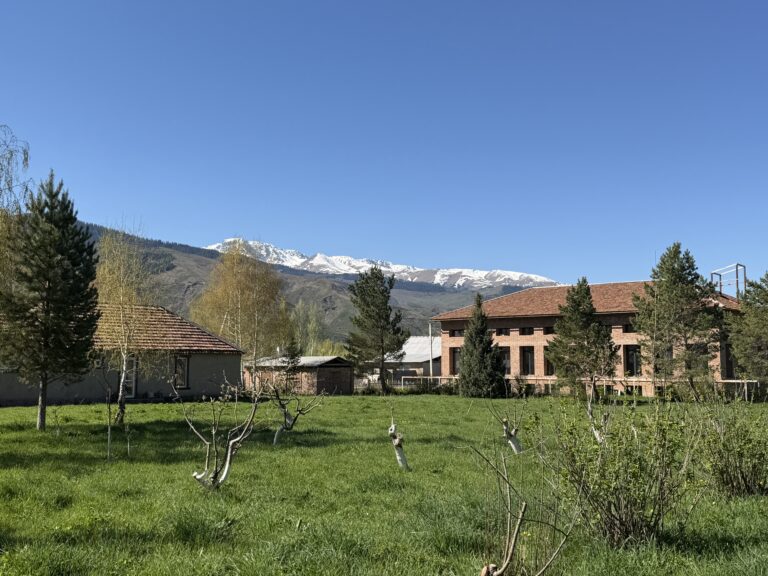
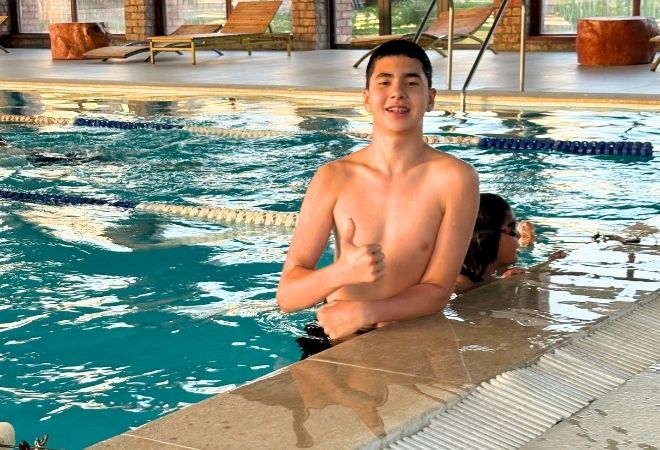
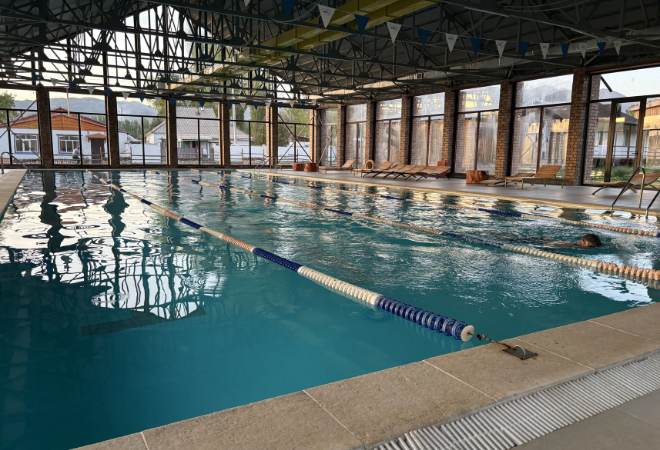
    アシュゲストハウスに到着。プールやサウナ、焚き火があります。残りの行程に備えて、この日はゆっくりお過ごしください。
  • Tour photo
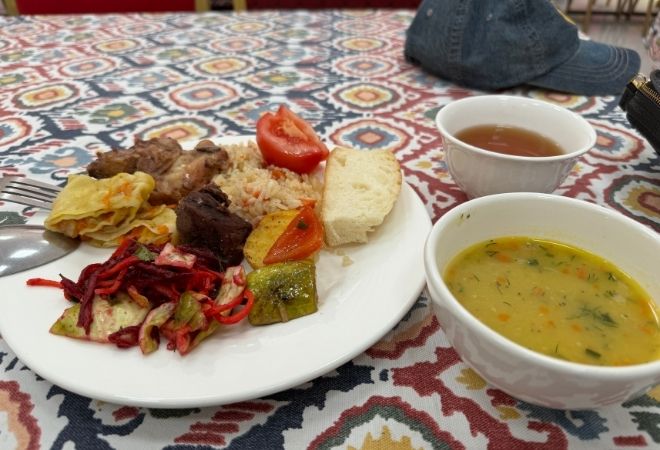
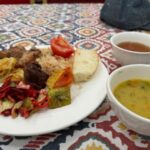
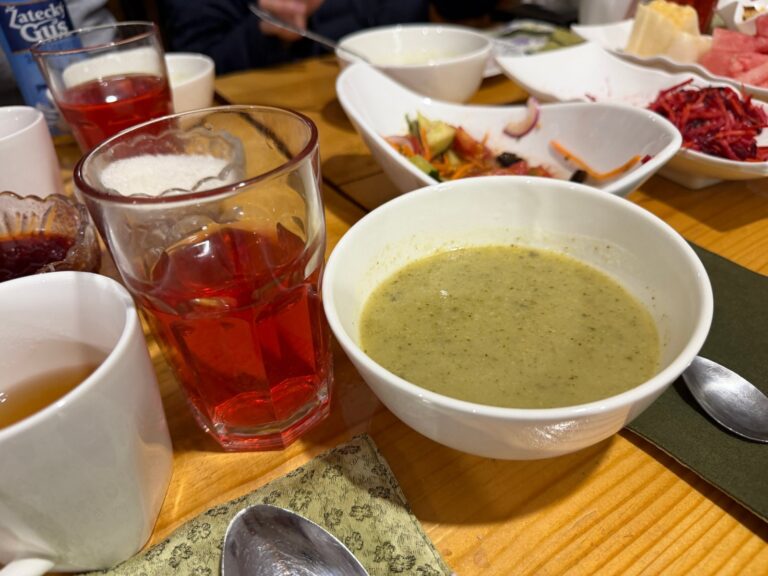
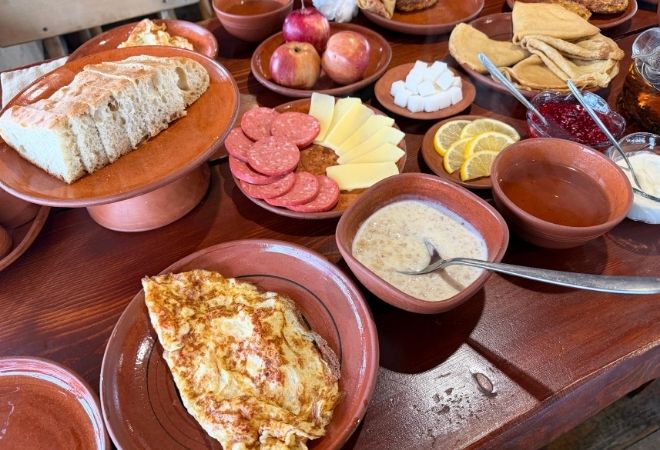
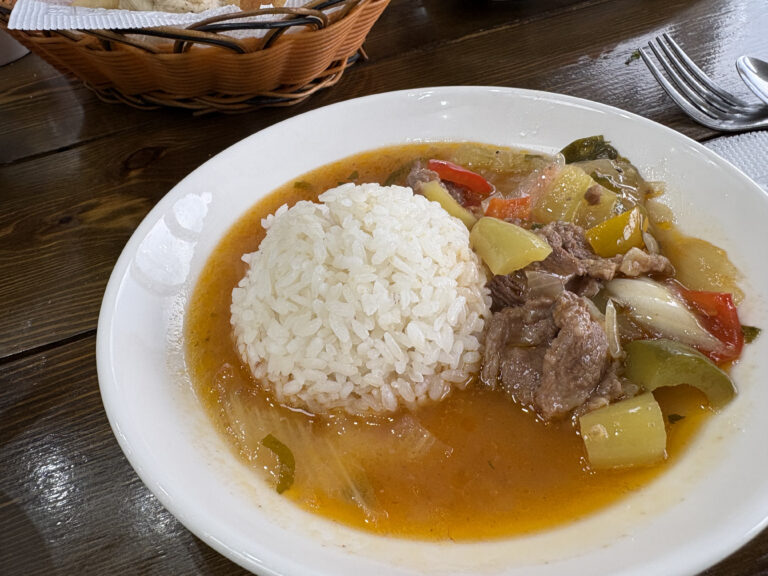
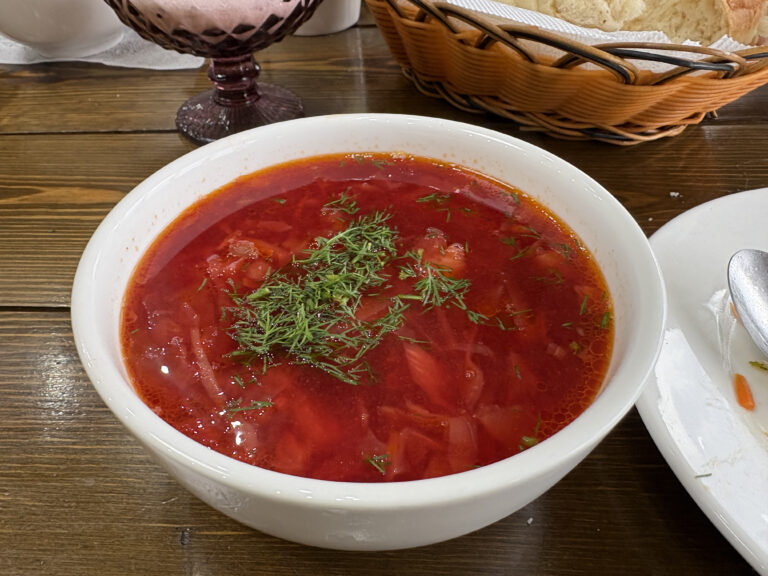
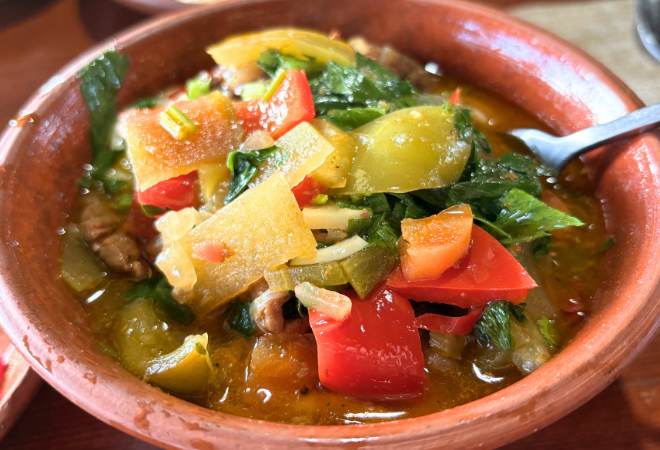
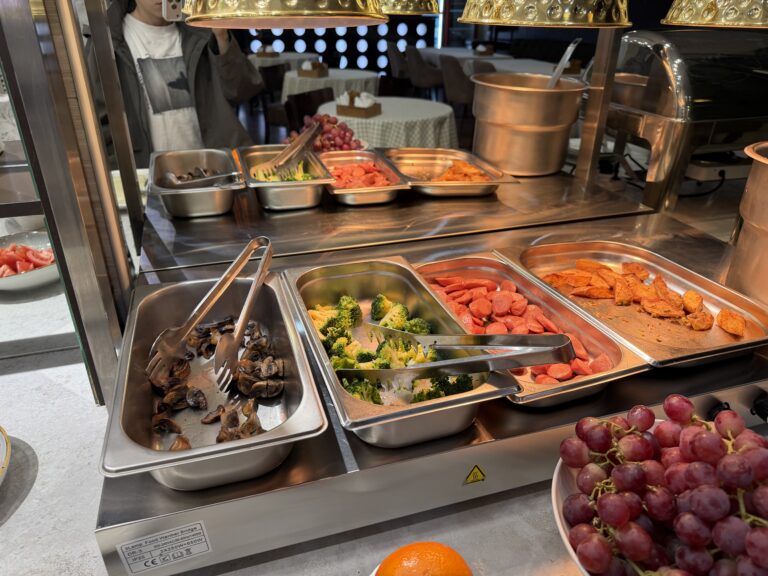
    料理目当てのリピーターさんがいるほど評判のアシュごはんをお召しあがりください。
    チョンケミン渓谷のアシュゲストハウスに宿泊
Day 9
Open
Meals
Breakfast, Lunch, Dinner
Horse Riding
なし
Elevation
800
Charging
○
wifi
○
Toilet
Flush toilet
Hot shower
Bathroom
Sauna
×
Pool
×
  • Tour photo
    渓谷をあとにして首都ビシュケクへ向かいます。山あいの道から平地へ下り、だんだん街らしい景色に変わっていきます。
  • Tour photo
    ビシュケク市内観光。アラトー広場、オシュバザール、歴史博物館など、キルギスの今の暮らしが見える場所をめぐります。※市内は渋滞することがあるため、回る順番はガイドがその日の状況を見て決めます。
    ビシュケク市内のホテルに宿泊
Day 10
Open
Meals
Breakfast, Lunch, Dinner
Horse Riding
なし
Elevation
800
Charging
○
wifi
○
Toilet
Flush toilet
Hot shower
Bathroom
Sauna
×
Pool
×
  • Tour photo
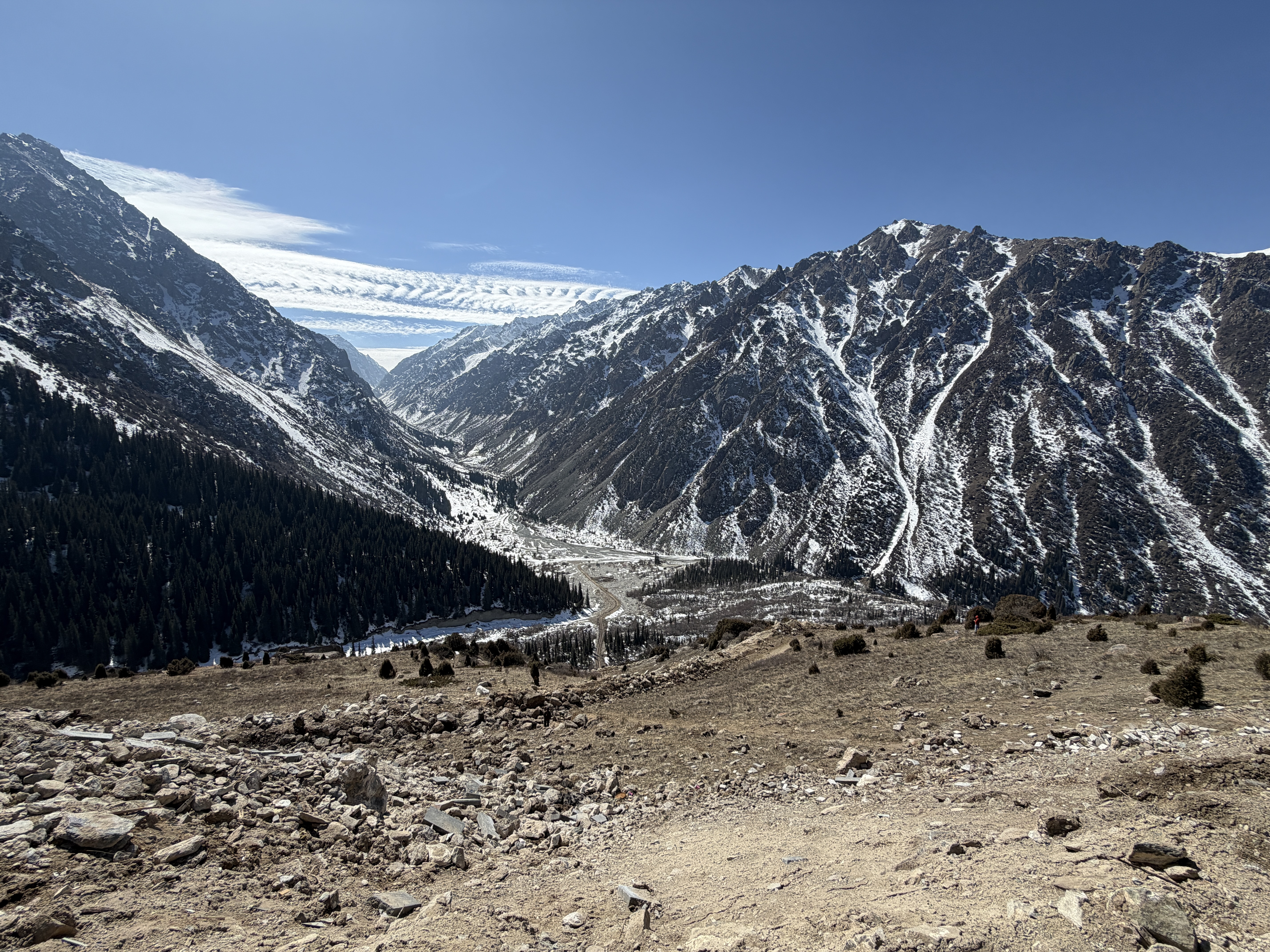
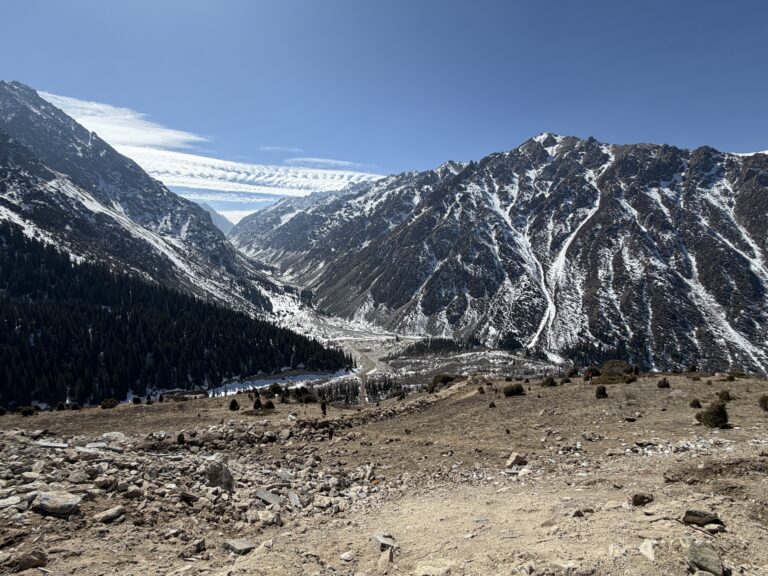
    ビシュケクから車で1時間ほど。4,000m級の峰が連なるアラアルチャ国立公園へ向かいます。
  • Tour photo
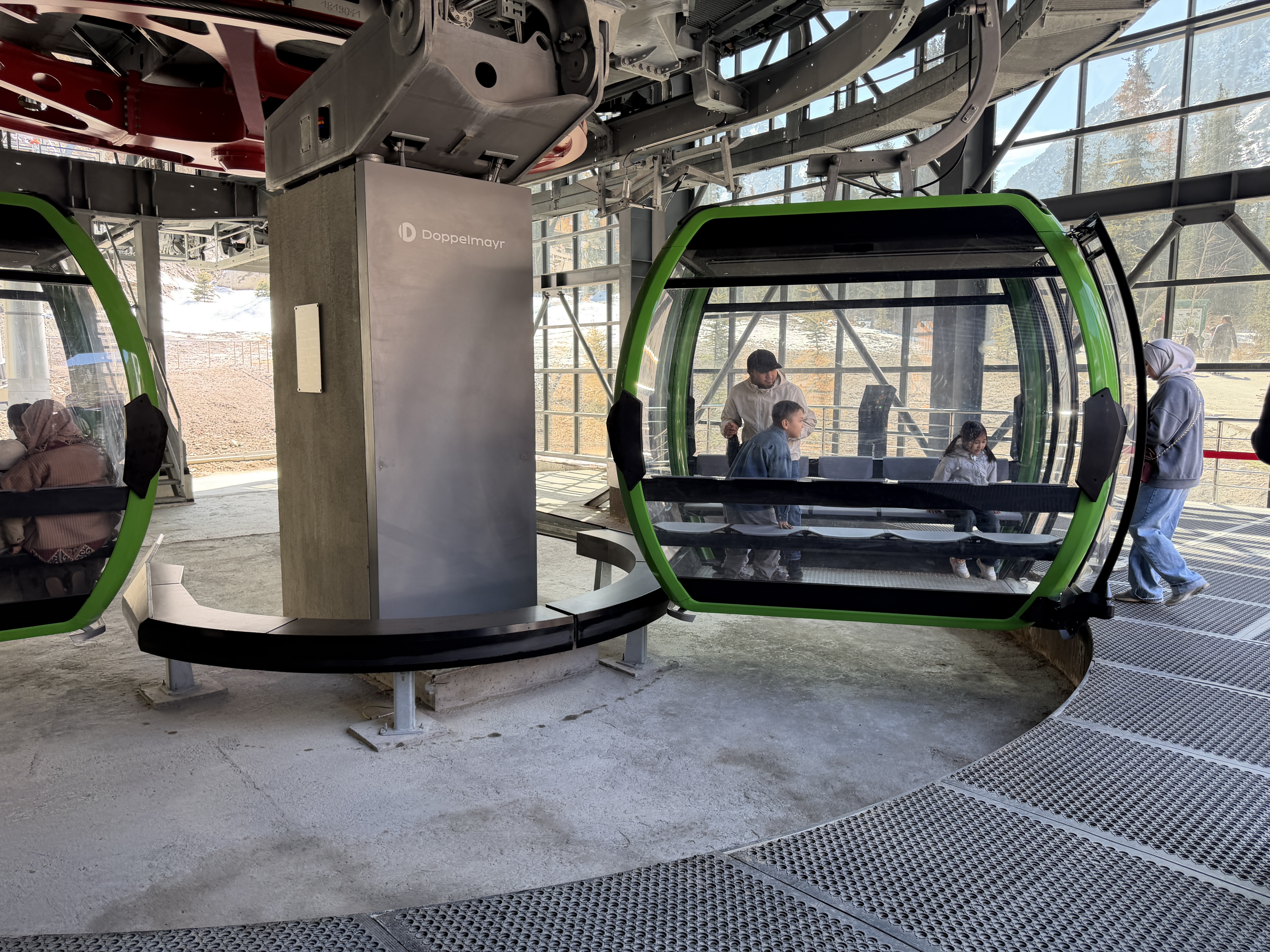
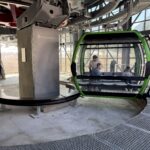
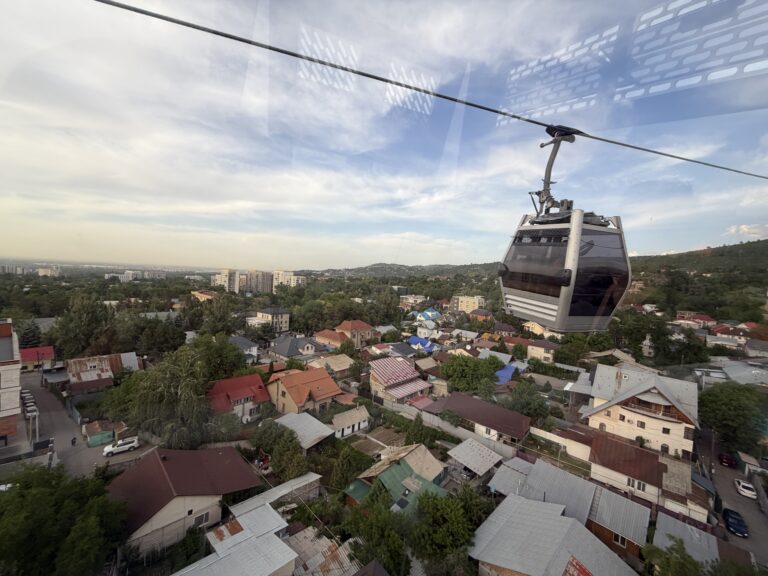
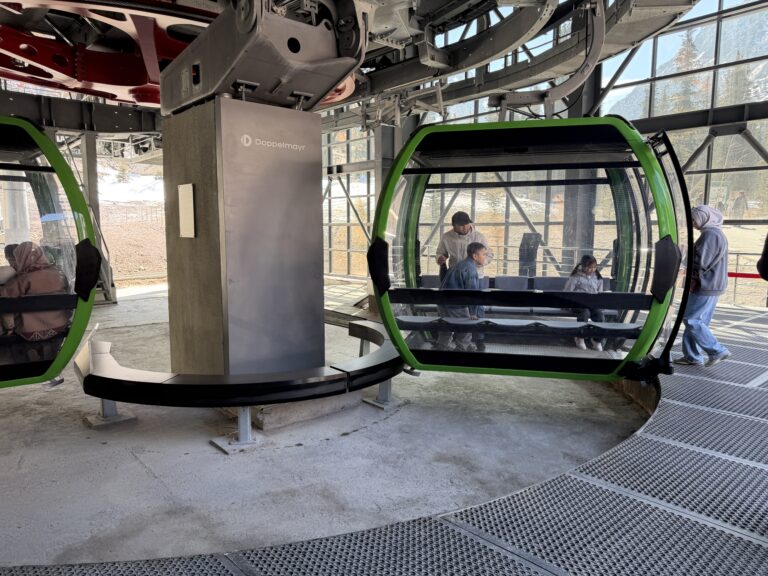
    渓流沿いの道を歩きます。ケーブルカーで一段高い展望地まで上がることもできます。歩く距離や休憩は、その日の体調と天候に合わせて調整します。
  • Tour photo
    ビシュケクへ戻ります。
    ビシュケク市内のホテルに宿泊
Day 11
Open
Meals
Breakfast, Lunch, Dinner
Horse Riding
なし
Elevation
800
Charging
○
wifi
○
Toilet
Flush toilet
Hot shower
Bathroom
Sauna
×
Pool
×
  • Tour photo
    ビシュケクで過ごす最後の丸一日です。アラトゥー広場をもう一度のぞいたり、キルギス各地のはちみつがそろう専門店で味くらべをしたり、博物館をじっくり見たりできます。前日までに行けなかった場所やお土産さがしにも使えます。特定のお店と提携はしていませんので、ご希望をうかがいながらガイドがその方に合った場所をご案内します。
    ※博物館などの入場料は、お客様とガイドの分ともツアー代金に含まれていません。その場でお支払いください。
    ビシュケク市内のホテルに宿泊
Day 12
Open
Meals
Breakfast
Horse Riding
なし
Elevation
800
Charging
×
wifi
×
Toilet
None
Hot shower
None
Sauna
×
Pool
×
  • Tour photo
    出発のお時間に合わせてマナス空港までお送りします。それまでは市内観光やお土産さがしにお使いいただけますので、ご希望をガイドにお伝えください。11泊12日、カザフスタンとキルギスの2か国をめぐる旅にご参加いただき、ありがとうございました。
    ※トリニティ航空の預け荷物は運賃によって異なります(2026年11月現在:イベント運賃はなし/スマート運賃15kg/レギュラー運賃20kg)

Important Notes

ガイドの言語は日本語または英語からお選びいただけます。掲載料金は日本語ガイドの場合です。英語ガイドをご希望の場合は1名様4,150ドル/2名様2,650ドル/3名様2,150ドル/4名様1,900ドルとなります。お申し込み時にご指定ください。
このツアーに乗馬は含まれません。
国境(ケゲン)を越えるため、パスポートは必ずお手元にご用意ください。ガイド・車輌が国境で交代する場合があります。
ソンクル湖は標高約3,000mです。高山病のリスクがありますので、体調に不安がある方は事前に医師にご相談ください。朝晩は冷え込みますので、厚手の上着をお持ちください。
ソンクル湖のユルタでは、トイレは屋外の簡易トイレです。充電は一部レストランを除いて基本的にありませんので、モバイルバッテリーをご持参ください。
ユルタやゲストハウスのシャワーは、混み合う時間帯にお湯がぬるくなることがあります。体拭きシートをお持ちいただくと安心です。
キルギスは国土の94%が山岳地帯です。天候や路面の状況によってガイドが判断し、安全なルートや行き先に調整することがあります。難しいと判断した場合は中止することがあります。
お食事のアレルギーや、召し上がれない食材については、事前にお申し出いただければ対応いたします。
このツアーはパッケージツアーです。行程に含まれるアクティビティはすべて代金に含まれますが、当日に思いついたご希望(マッサージなど)は含まれません。
ご夫婦・ご家族・ご友人は同じお部屋になるよう調整します。お申し込み時にお知らせください。

About the Accommodation

Photos of each place you will stay: facilities, highlights and the food you can enjoy there.

Central hotels, great for city walks

DAY1

DAY2

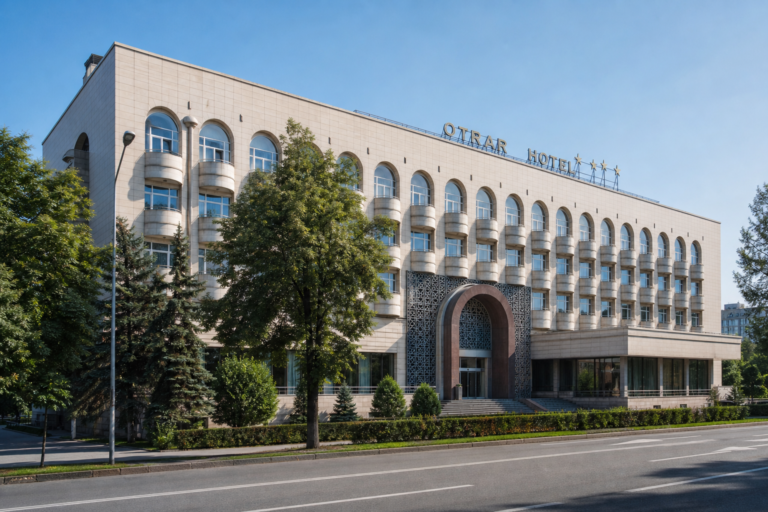
Hotels in Almaty

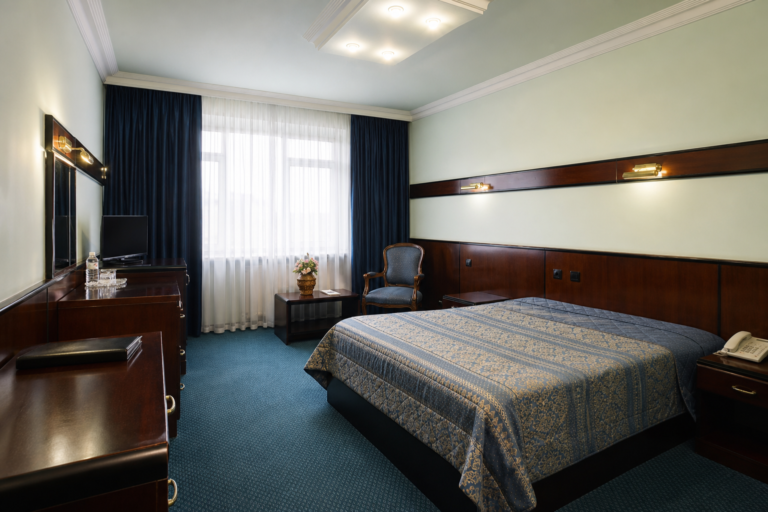
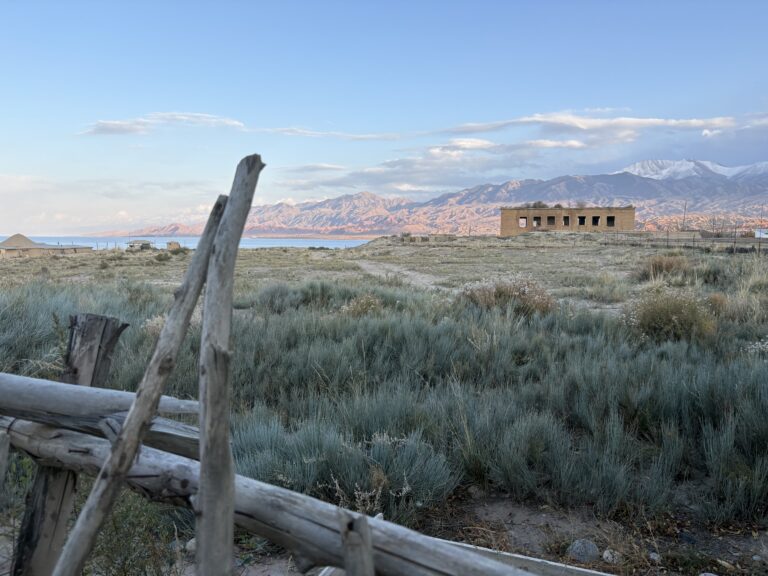
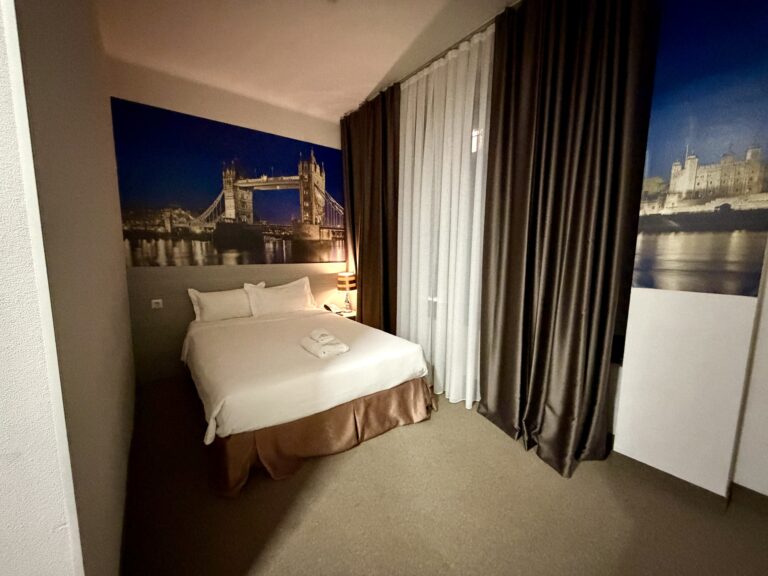
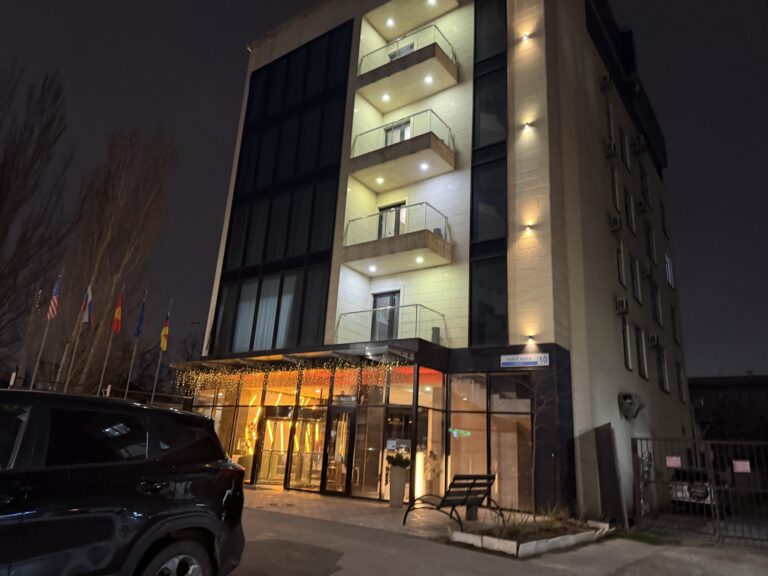
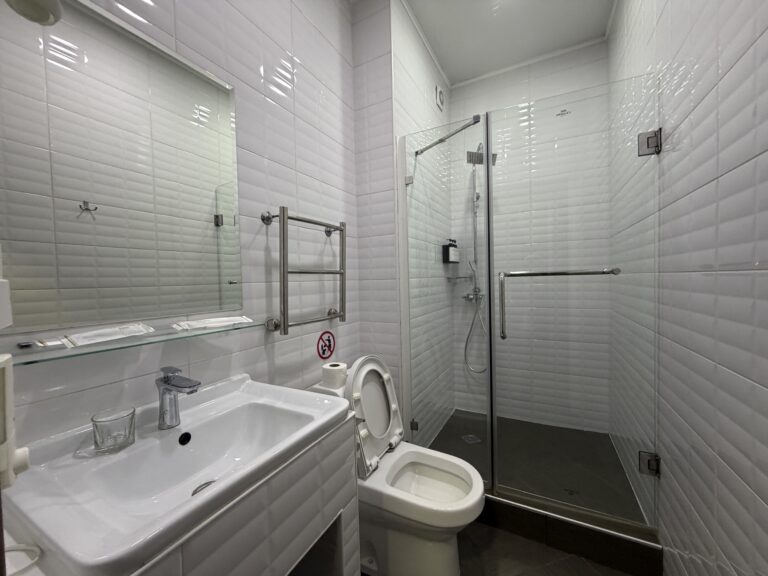
City hotels used on arrival in and before departure from Almaty. We provide 3- to 4-star hotels with Wi-Fi, hot showers, flush toilets and breakfast.

All are centrally located, within walking distance of Panfilov Park, home to Zenkov Cathedral, and the Green Bazaar, with its dried fruit sold by weight and horse-meat sausages. Metro stations are also nearby, so we recommend exploring the city in your free time on arrival day or before departure. The airport is about 20 to 30 minutes away by car.

Charging
○
wifi
○
Toilet
Flush toilet
Hot shower
○
Sauna
×
Pool
×

*The specific hotel is not decided in advance; it depends on hotel availability at the time of your trip.

A base for scenic trips

DAY3

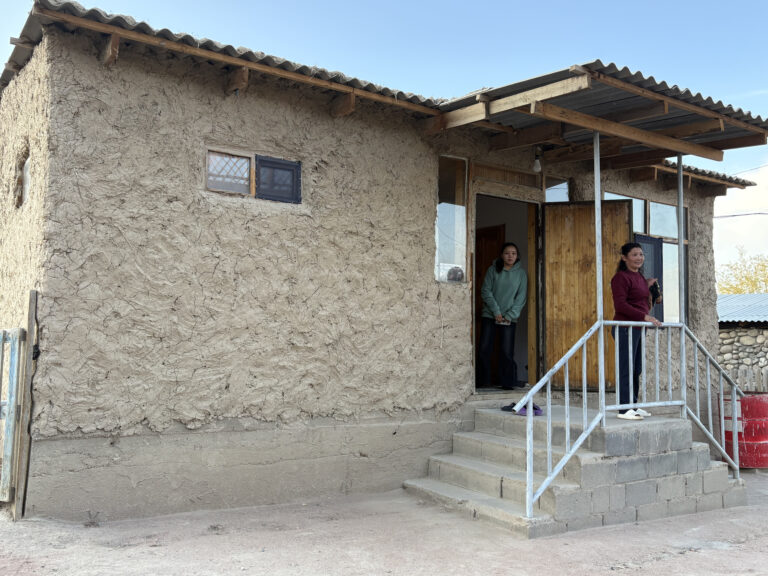
Guesthouse in Saty village

An ideal guesthouse base for a 2 days / 1 night trip to Charyn Canyon, the Kolsai Lakes and Kaindy Lake. It sits in a small village surrounded by nature in eastern Kazakhstan.

Its location makes it a perfect stopover on tours of spectacular natural sights such as Charyn Canyon, the Kolsai Lakes and Kaindy Lake.

Between sightseeing, you'll also have time to stroll around the peaceful village. With its rustic village atmosphere and quiet moments between scenic spots, it's the perfect place for a mid-trip break.

*Hot water comes from a tank, so it may temporarily run out depending on other guests' use (it comes back after a while).

Please note that shower water may be lukewarm at busy times. Hot water is still available, so shifting your shower time a little will make it more comfortable.

Charging
○
wifi
○
Toilet
Flush toilet
Hot shower
○
Sauna
×
Pool
×

Chosen by your guide to suit the season and itinerary

DAY4

DAY5

Guesthouse at Issyk-Kul

Guesthouses on the shore of Lake Issyk-Kul, an alpine lake embraced by the Tian Shan mountains. From several lakeside options, we choose the one that best suits the season and your itinerary.

With stunning views of the clear lake and mountains close at hand, it's a relaxing stay toward the end of your tour. If you have time, enjoy a walk along the beach with the lake breeze and the sound of the water.

Please note that shower water may be lukewarm at busy times. Hot water is still available, so shifting your shower time a little will make it more comfortable.

Charging
○
wifi
△
Toilet
Flush toilet
Hot shower
○
Sauna
×
Pool
×

*Images are examples and include photos of several guesthouses
*On summer tours, we can arrange a stay in a tourist yurt on request

Yurts with Lake Issyk-Kul right in front

DAY6

Yurt camp in Bokonbayevo

A yurt camp on the shore of Lake Issyk-Kul, an alpine lake embraced by the Tian Shan mountains. The grounds have both yurts and a guesthouse, and we choose the best option for the season and your itinerary. Lake Issyk-Kul spreads out right in front of you in this luxurious location. A night by the lake, with views of the clear water and mountains, brings you as close as you can get to nomadic life. If you have time, enjoy a lakeside walk with the sound of the waves and the quiet.

The showers use hot water stored in a tank, so the water may be lukewarm at busy times. On days when we arrive late due to traffic or car trouble, there may be no hot water left and the showers may be unavailable. Bringing body wipes is a good idea.

Hot water sometimes comes back after a while, so please feel free to let your guide know.

Charging
○
wifi
△
Toilet
Flush toilet
Hot shower
○
Sauna
×
Pool
×

*If fully booked, you will stay in the guesthouse on the same grounds
*Wi-Fi may be weak

Tourist yurts at a popular spot

DAY7

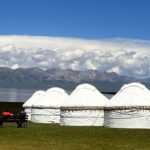
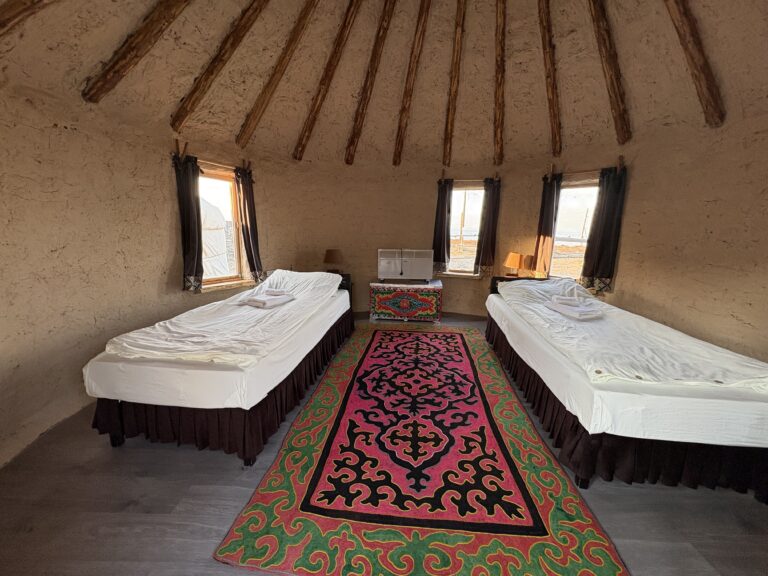
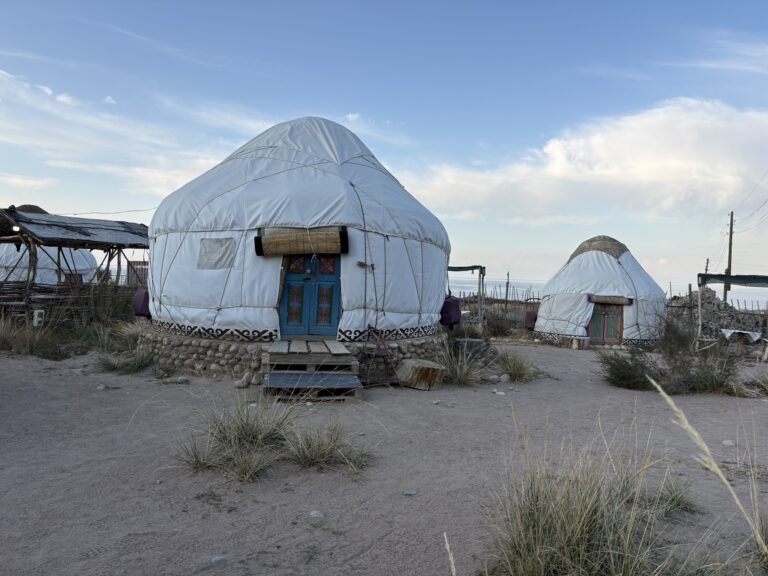
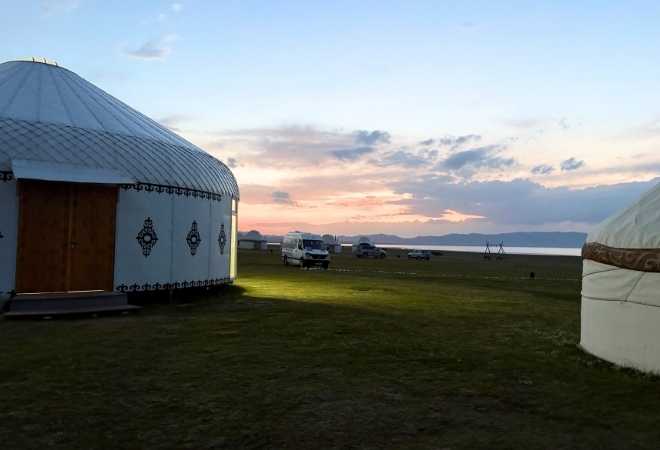
Scenic yurts on the shore of Song-Kul Lake

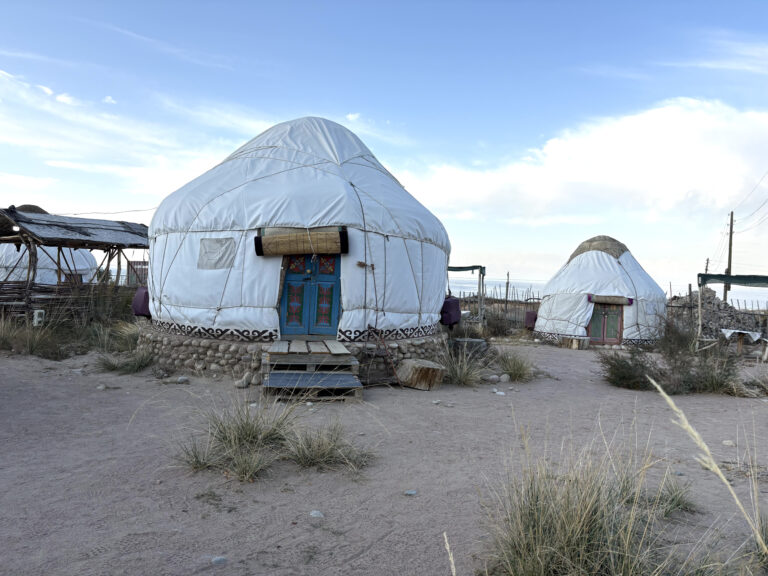
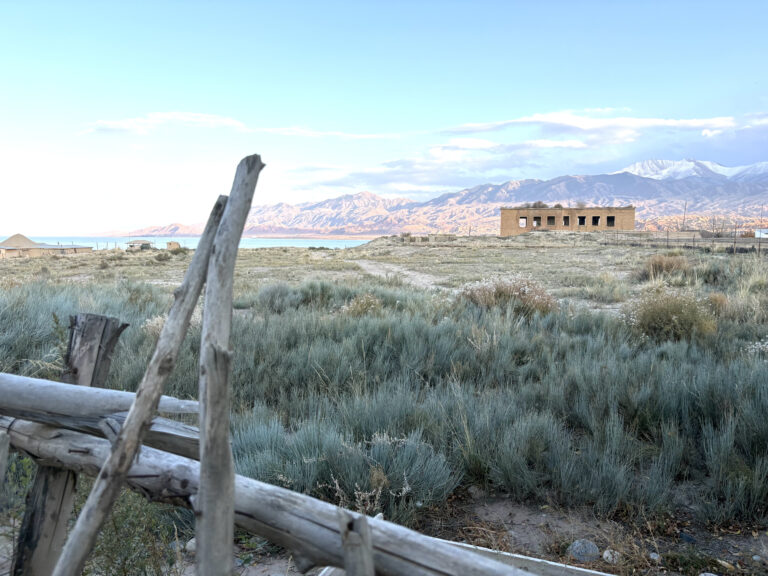
Tourist yurts set up on the shore of Song-Kul Lake (3,016 m), the world's second-largest alpine lake.

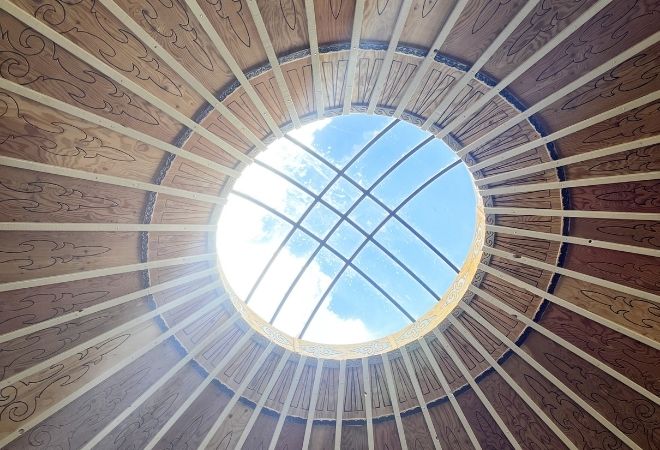
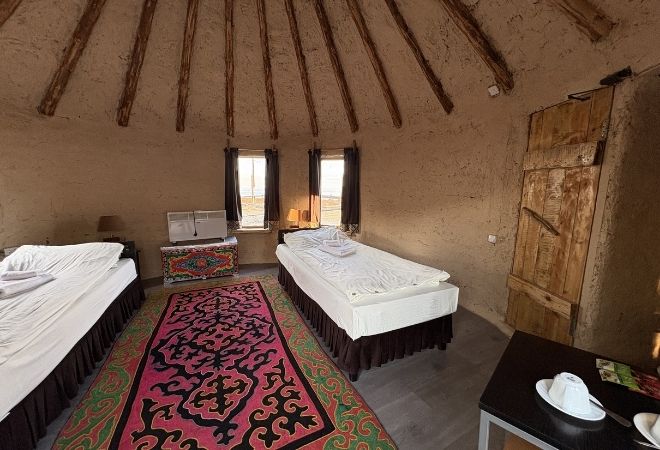
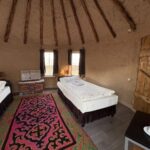
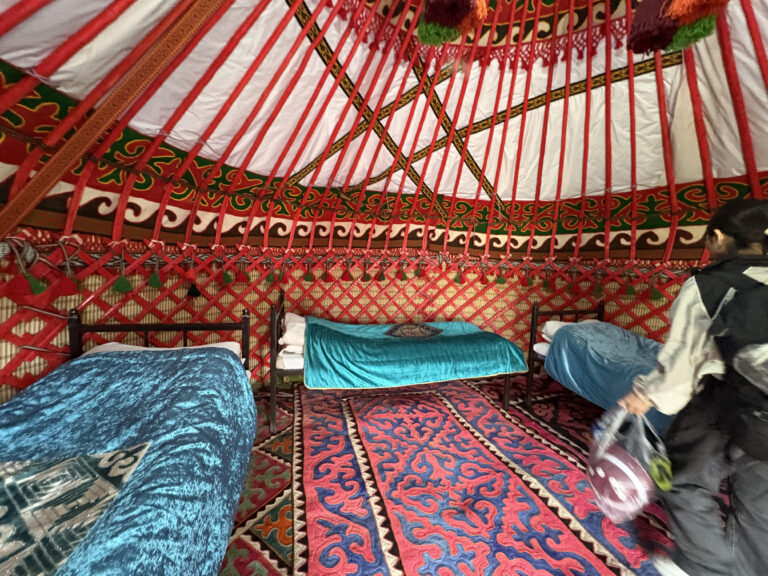
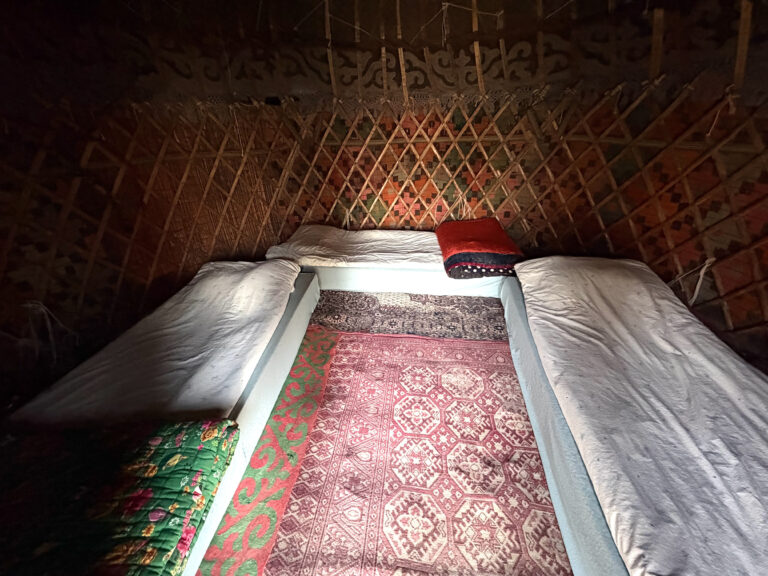
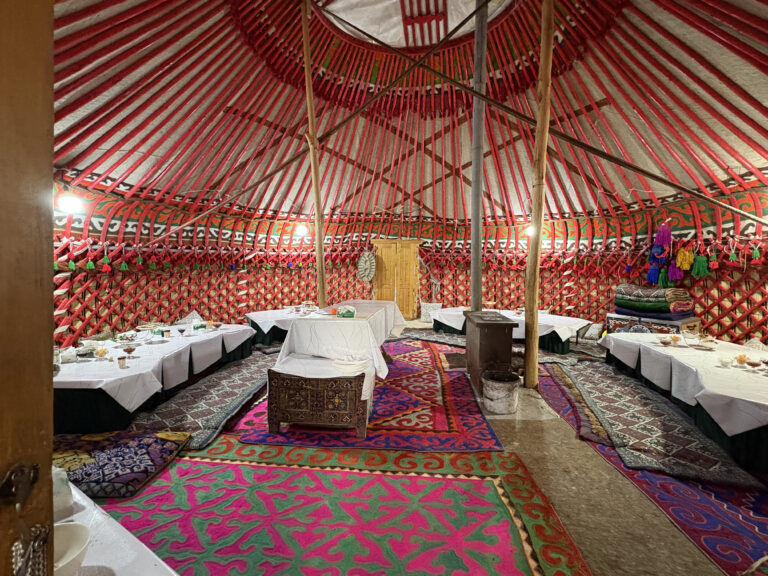
Decorated with colorful traditional Kyrgyz embroidery and felt, the interior feels as warm as visiting a nomad's home.

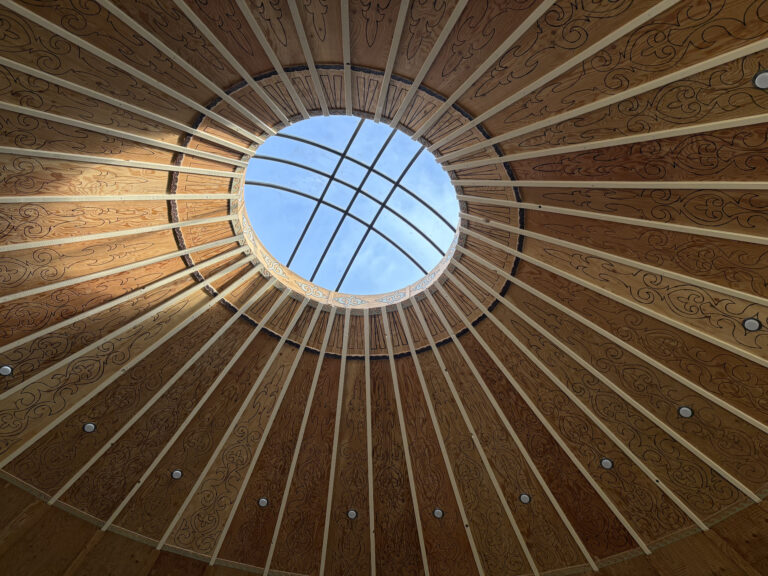
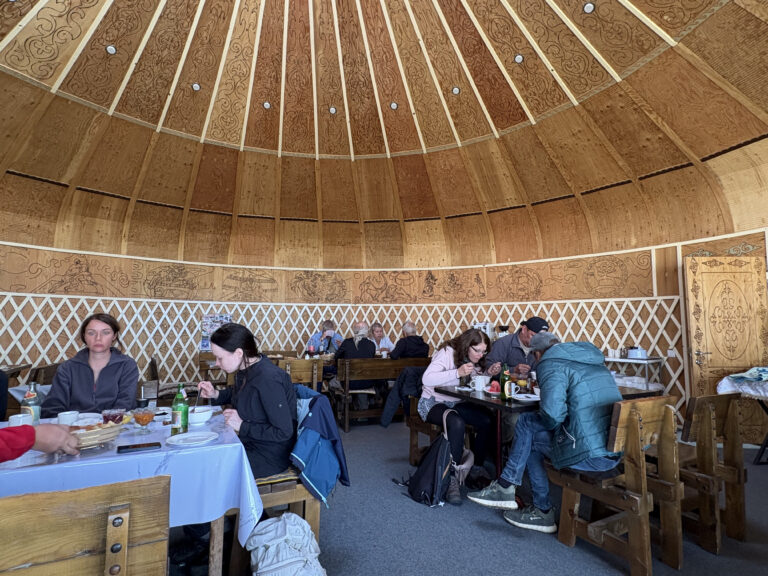
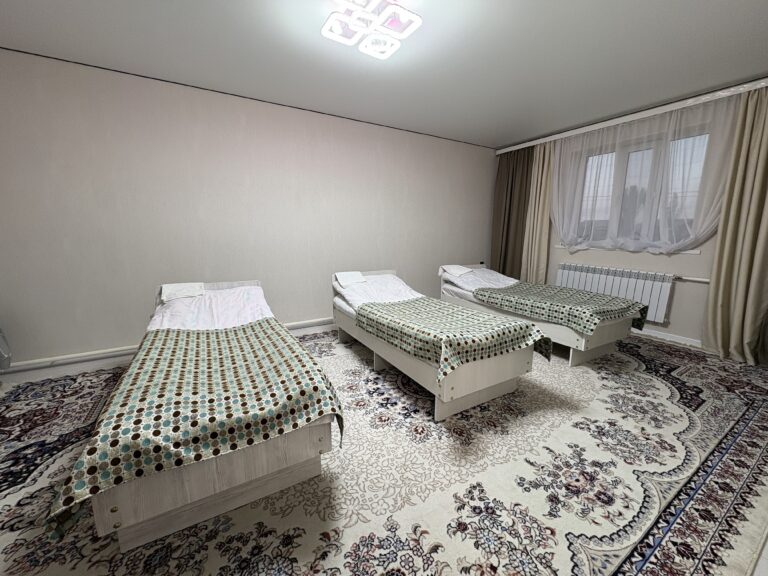
The spacious interior has 3 to 4 beds and is covered in well-insulated felt, so it stays comfortable at night. Hot showers and flush toilets are available outside, so you can enjoy both stunning scenery and comfort

The showers use hot water stored in a tank, so the water may be lukewarm at busy times. On days when we arrive late due to traffic or car trouble, there may be no hot water left and the showers may be unavailable. Bringing body wipes is a good idea.

Hot water sometimes comes back after a while, so please feel free to let your guide know.

Charging
×
wifi
×
Toilet
Outdoor
Hot shower
○
Sauna
×
Pool
×

*Hot showers: The tourist yurt camps at Song-Kul have hot showers, but because the water comes from a storage tank, it can be lukewarm when there are many guests.
*Toilets: The tourist camps at Song-Kul have outdoor flush toilets or pit toilets; nomad family yurts have pit toilets or natural toilets.
*Yurts are limited, so rooms are generally shared, with men and women in separate yurts
*Wi-Fi and charging are available at some restaurants, but this is not guaranteed, so it's best to assume there is none

A comfortable guesthouse amid stunning scenery

DAY8

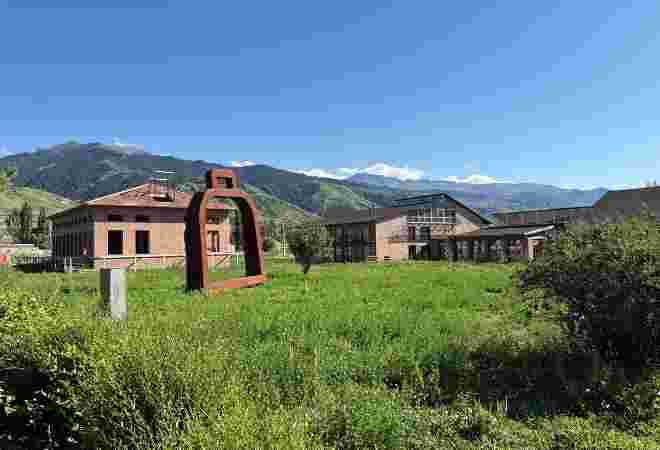
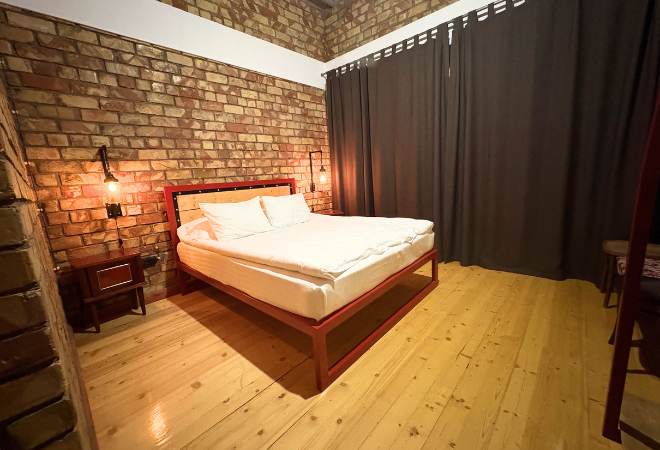
Ashu Guesthouse

Rated 4.5 stars on Google! (*) A guesthouse with stunning views, stylish private rooms and delicious food that keeps guests coming back.

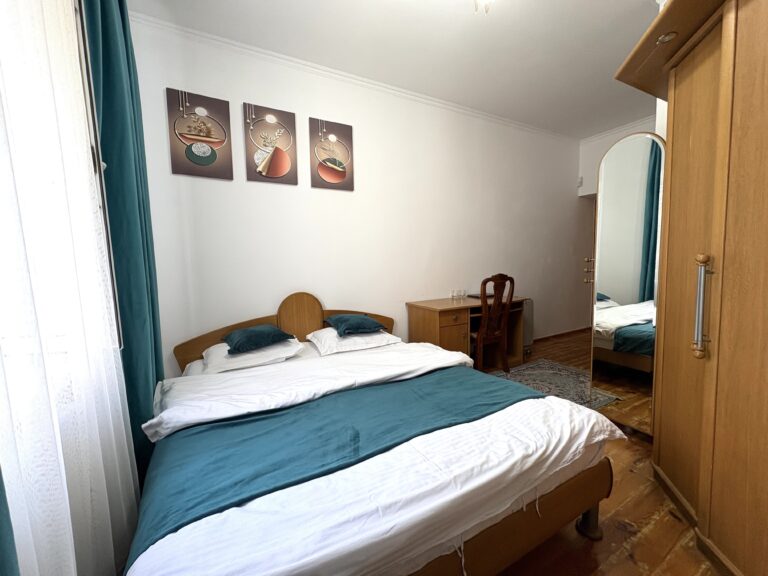
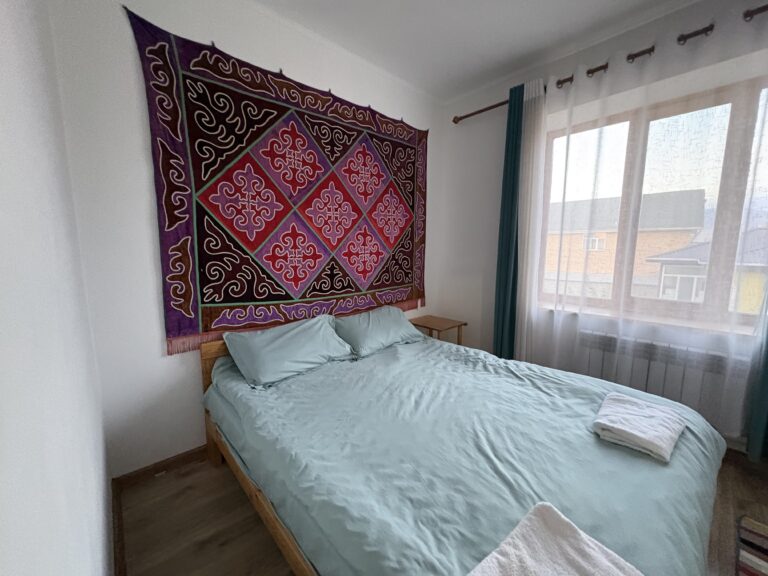
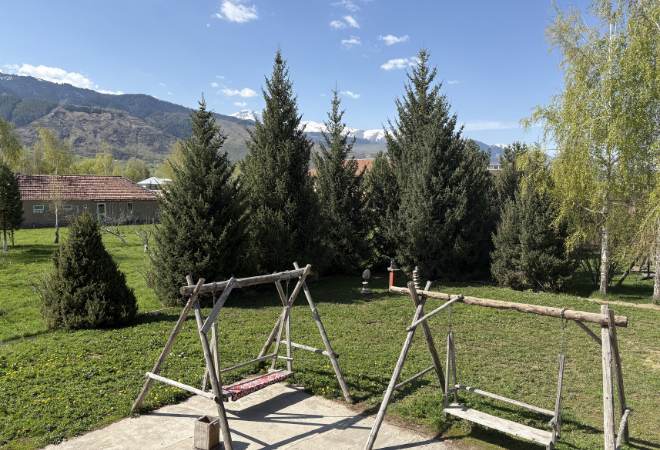
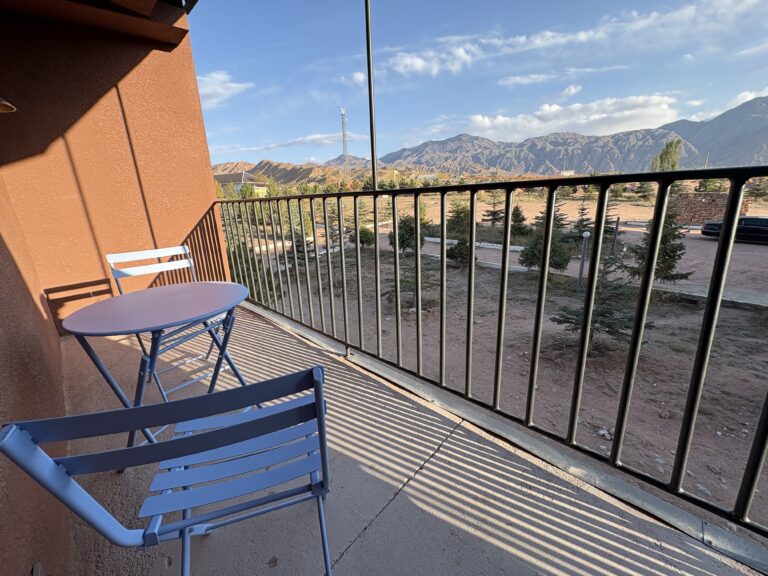
Set in the rich nature of Chon-Kemin National Park, this comfortable guesthouse has heating, a flush toilet and a private shower in every room. With stylish, warm wooden interiors and rooms decorated with charming Kyrgyz patterns, it's a place to truly recover from your travels. There's also a cool pool in summer and a heated pool in winter. Enjoy the luxury of doing nothing in the calm air of the village.
*Google Maps rating based on 412 reviews as of February 2026

Please note that shower water may be lukewarm at busy times. Hot water is still available, so shifting your shower time a little will make it more comfortable.

Charging
○
wifi
○
Toilet
Flush toilet
Hot shower
○
Sauna
×
Pool
○
More details

*A cool pool is available in summer and a heated pool in winter
*Please bring a swimsuit
*The pool may be unavailable during maintenance

Start and end your trip in comfort

DAY9

DAY10

DAY11

Hotels in Bishkek

City hotels used on arrival in Bishkek. With Wi-Fi, hot showers, flush toilets and breakfast, they offer the functional, comfortable setting you'd expect in the city. Facilities and amenities vary by hotel, but we carefully select convenient hotels where you can fully recover from your journey.

So that we can respond quickly in an emergency, we choose hotels as close to our guide's home as possible.

Charging
○
wifi
○
Toilet
Flush toilet
Hot shower
○
Sauna
×
Pool
×
More details

*The specific hotel is not decided in advance; it depends on hotel availability at the time of your trip.

What You Will Experience

Charyn Canyon

Charyn Canyon

数百万年の年月が創り上げた赤い奇岩の迷宮。「中央アジアのグランドキャニオン」とも呼ばれるその大きさは、写真で見るより実物の方がずっと迫力があります。

kaindy lake

水没した森が残るカインディ湖へ

1911年の地震で山の斜面が崩れ、谷がせき止められてできた湖。水没したトウヒの森は、水温が低いため100年以上たったいまも朽ちずに立ったまま残っています。青緑色に澄んだ水面から灰白色の幹が突き出す景色は、ここでしか見られません。

Light hike at the Kolsai Lakes

Light hike at the Kolsai Lakes

「北天山の真珠」と称されるコルサイ湖は、鏡のように澄んだ水面が印象的な高山湖。湖畔を散策したり、ご希望の方は乗馬体験も楽しめます。サティ村のゲストハウスに泊まり、穏やかなローカルの夜を過ごします。

Refresh at a lakeside hot spring

Refresh at a lakeside hot spring

Soothe away the fatigue of your adventure at a hot spring on the shore of Lake Issyk-Kul. Kyrgyz hot springs are heated pools where men and women bathe together in swimsuits. A luxurious moment to unwind from your travels.

Scenic hiking in Skazka Canyon

Scenic hiking in Skazka Canyon

A light hike through one of Central Asia's most stunning landscapes, lined with reddish-brown rock formations. A fantastical scene unfolds, as if you've wandered into a storybook.

Eagle hunter experience at Lake Issyk-Kul

Eagle hunter experience at Lake Issyk-Kul

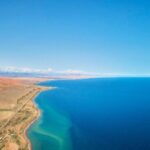
Lake Issyk-Kul is the world's second-largest alpine lake. At 1,609 m above sea level, it doesn't freeze even in winter, and as a "warm lake" it has long been called the "Pearl of Central Asia." On its shore, enjoy a demonstration and photos with a traditional Kyrgyz eagle hunter.

標高3,000mのソンクル湖畔のユルタに泊まる

標高3,000mのソンクル湖畔のユルタに泊まる

いくつもの峠を越えた先に広がる、標高約3,000mの高原の湖ソンクル。湖畔のユルタに泊まります。灯りがほとんどないので、晴れた夜は星がよく見えます。朝晩は冷え込むので厚手の上着をお持ちください。

Ala-Archa cable car to the summit viewpoint

Ala-Archa cable car to the summit viewpoint

Take in the mountain scenery from above on the cable car in Ala-Archa. It gives easy access to scenic viewpoints that would take a long time to reach on foot. The panorama of the Kyrgyz Ala-Too range from the summit observation deck is guaranteed to make great photos.

Options

アルマトイ市内ホテルシングル個室 $50 / night

基本的には相部屋となるので、個室ご希望の場合はこちらをお選びください。

※1人の場合は1、2人で1人1部屋の場合は2とお選びください

※2泊の場合は2なので、2人×2泊の場合は4とお選びください

Single room at a Bishkek hotel $0 / night

Rooms are generally shared, so please select this if you would like a private room.

There is no extra charge.

*Select 1 for one person, or 2 for two people in separate rooms

*For 2 nights select 2, so for 2 people × 2 nights select 4

Single room at the Issyk-Kul guesthouse $50 / night

Rooms are generally shared, so please select this if you would like a private room

*Select 1 for one person, or 2 for two people in separate rooms

*For 2 nights select 2, so for 2 people × 2 nights select 4

Change to a single room at Ashu Guesthouse $20 / night

Rooms are generally shared, so please select this if you would like a private room

*Select 1 for one person, or 2 for two people in separate rooms

*For 2 nights select 2, so for 2 people × 2 nights select 4

Pre- or post-tour stay at an Almaty hotel (2 people per room) $120 / room (2 people) / night

A hotel in central Almaty.
Within walking distance of Panfilov Park, home to Zenkov Cathedral, and the Green Bazaar, with a metro station nearby.
About 20 to 30 minutes from the airport by car.

Breakfast included. Twin room for 2 people. The price is per room and covers 2 people.

*The specific hotel is not decided in advance; it depends on hotel availability at the time of your trip

*Please select the quantity as "number of rooms × number of nights"
Example: 2 people, 1 night (1 room) → 1 / 2 people, 2 nights → 2 / 4 people, 1 night (2 rooms) → 2

Pre- or post-tour stay at an Almaty hotel (1 person per room) $100 / room (1 person) / night

A hotel in central Almaty.
Within walking distance of Panfilov Park, home to Zenkov Cathedral, and the Green Bazaar, with a metro station nearby.
About 20 to 30 minutes from the airport by car.

Breakfast included. Single room for 1 person.

*The specific hotel is not decided in advance; it depends on hotel availability at the time of your trip

*Please select the quantity as "number of rooms × number of nights"
Example: 1 person, 1 night → 1 / 1 person, 2 nights → 2 / 2 people in separate rooms, 1 night → 2

Late-night fee for evening Manas Airport transfers $30 / time

トリニティ航空(旧ティーウェイ航空)の00:30発フライトなど夜の空港送迎ご希望の場合は、こちらを必ずご選択ください。

お客様をスムーズにお送りするため、お客様とガイドの夕食代、深夜料金をいただいております。

(深夜のフライトでも夕方解散の場合は不要です)。

Post-tour transfer: hotel to Manas Airport $70 / time

For your post-tour stay, we arrange a transfer from your hotel in Bishkek to Manas Airport

*Discounted to $40 if others need a transfer at the same time

*We will make the arrangements after you book

Pre-tour transfer | Almaty Airport to hotel $65 / time

For your pre-tour stay, a transfer from Almaty Airport to your self-booked hotel

*Discounted to $40 if others need a transfer at the same time

*We will make the arrangements after you book

Cancellation Policy

Changes or cancellations may incur fees set by our company. For tours we operate, the following fees apply:

  • - From 18:01, 20 days before the tour, until 18:00, 10 days before: 20% of the tour price
  • - From 18:01, 10 days before the tour, until 18:00, 3 days before: 30% of the tour price
  • - From 18:01, 3 days before the tour, until the start time on the tour day: 50% of the tour price
  • - After the start time on the tour day: 100% of the tour price

* Because of the arrangements required for horses and vehicles, if we notify you of a separate cancellation policy at the time of booking, that policy shall take precedence.

Travel Insurance

Insurance Is a Must for Central Asia Horse Riding Tours! How to Choose Coverage for Falls and Emergency Evacuation [Must-Read Before You Travel]

Insurance Is a Must for Central Asia Horse Riding Tours! How to Choose Coverage for Falls and Emergency Evacuation [Must-Read Before You Travel]

Salamatsyzby! This is Sugi from ASHU TRAVEL, scenic horse riding tours in Central Asia. "I want to ride a horse across Central Asia all the way to the horizon!" Many people find ASHU TRAVEL with that dream in mind. But to make sure your dream riding experience becomes a lifelong memory, there's one thing you must never forget... And that is overseas travel insurance. At ASHU TRAVEL, we require everyone joining our horse riding tours to have overseas travel insurance. In this article, we'll explain from our staff's point of view why insurance is essential for a riding trip and how to choose the right one! Why Is Overseas Travel Insurance Essential for a Riding Trip? Our horse riding tours, centered on Kyrgyzstan, call for a different kind of risk management than city sightseeing. Horses are living animals. There's no such thing as 100% safe The horses on our tours are carefully raised by local riding instructors and nomads. Our director, Nuriya, always takes a strict look at how the horses are raised and where they ride whenever she inspects a site. But however well trained they are, horses are living creatures. They can be startled by a barking dog or a small animal darting out and move unexpectedly. Even if you think, "I have riding experience," you never know what might happen in untouched wilderness. That's exactly why being prepared for a possible fall is a must. Evacuation from remote areas can cost an enormous amount Some of our tours visit spectacular spots that can only be reached on horseback. If you get injured there and need to be rescued by a special vehicle, the cost can easily exceed what an individual can pay. Even bigger is the cost of transport back to Japan. For injuries or illnesses that can't be fully treated locally, you'd be flown back to Japan on a chartered plane accompanied by a doctor and nurse. In one case of transport from neighboring Mongolia to Japan, it cost about ¥16 million. There is also a record of ¥10.76 million for transport from Shanghai, China, and there have been cases where insurance payouts involving overseas transport exceeded ¥40 million. Local treatment costs themselves are often cheaper than in Japan, but once you need to be transported, the cost jumps by orders of magnitude. Be well prepared so that, if the worst happens, you can get the best medical care without worrying about the cost. Japan's Ministry of Foreign Affairs also says "¥10 million is far from enough" The ¥30 million figure isn't something ASHU TRAVEL came up with on its own. The Overseas Safety website of Japan's Ministry of Foreign Affairs clearly warns about Kyrgyzstan. There are very few medical facilities that meet adequate standards in terms of hygiene and technology. Even for short stays, it is recommended that you take out overseas travel insurance with sufficient coverage that includes emergency evacuation services (for transport to Japan, a limit of around ¥10 million is far from sufficient, so unlimited coverage is desirable). Ministry of Foreign Affairs of Japan, Overseas Safety website: "Kyrgyzstan: Basic Safety Data" (updated July 17, 2025) It even says "unlimited coverage is desirable." ASHU TRAVEL's requirement of ¥30 million or more is the minimum line based on this. Don't Get It Wrong! 3 Points for Choosing Insurance for a Riding Trip To choose insurance that works even deep in the mountains of Central Asia, check the following criteria. ① "Medical treatment + rescue costs" totaling ¥30 million or more At ASHU TRAVEL, medical treatment and rescue coverage of ¥30 million or more is required. If you're worried, a plan with unlimited coverage gives the most peace of mind. There's one tip for checking this.Depending on the insurance product, the policy document is written in one of two ways. Combined type: "Medical treatment & rescue costs: ¥XX" → judge by that amount Separate type: "Medical treatment costs: ¥XX" and "Rescuer costs: ¥XX" → judge by the sum of the two With many products, the cost of medical transport to Japan falls under "rescuer costs." If you only look at one item and decide "I have ¥10 million, so I'm fine," it won't be enough when you actually need it. Be sure to check both. ② Coverage in the countries you visit Choose insurance that covers you if something happens in the countries you visit, such as Kyrgyzstan, Kazakhstan or Uzbekistan. If the coverage area is set to all of Asia or worldwide, it's usually fine, but check just in case. ③ Japanese-language chat support for emergencies Even if you panic in an emergency, it's reassuring to have a contact point where you can consult in Japanese via LINE or a dedicated app. Even if phone calls don't go through, you may be able to send messages if you have Wi-Fi. How Much More Does ¥30 Million Coverage Cost? Hearing "¥30 million," you might think the premium will be much higher. I thought so too at first. But when I actually got quotes on a comparison site, the difference was tiny. Example: 8 days, 1 person, age 50, sightseeing (as of August 2026) PlanMedical treatment & rescue costsPremiumCompany A, P1Treatment ¥10M / Rescue ¥10M¥2,770Company A, P2Treatment ¥30M / Rescue ¥20M¥3,400Company A, P3Treatment Unlimited / Rescue ¥30M¥4,230 Going from ¥10 million to ¥30 million only costs ¥630 more. Even unlimited coverage is only ¥1,460 more. Since these are different plans, things like death benefits also go up, but that's the difference including all of that. Compared with the tour price, it's about the cost of one or two cups of coffee. I don't think there's any good reason to cut corners here. * Premiums vary by insurance company, age, number of days and destination. Please check the actual amount for your own conditions. Isn't horse riding excluded as a "dangerous sport"? We get this question from time to time. In general overseas travel insurance, we rarely see leisure horse riding listed as a "dangerous activity" in the exclusions. The "dangerous activities" that insurers list as exclusions include, for example: Mountaineering (using ice axes, crampons, ropes, etc.) and rock climbing Skydiving, hang gliding and piloting aircraft Luge, bobsleigh and skeleton Competitions, races or practice using cars, motorcycles, motorboats, etc. Many insurers don't include horse riding on this list, but the scope of exclusions differs by insurer and product. Treatment can also vary depending on conditions, such as competitive riding. To be sure, check the policy terms or key information document before signing up, or ask the insurer. Is credit card travel insurance enough? This is the most common pitfall. Here's a rough guide to the coverage amounts of credit card travel insurance. Coverage itemStandard cardGoldPlatinumInjury treatment costs¥0.5–1 million¥1–3 million¥3–5 million or moreIllness treatment costs¥0.5–1 million¥1–3 million¥3–5 million or moreRescuer costs¥1–2 million¥1.5–3 million¥3–5 million or more Against the ¥30 million standard, that's short by two orders of magnitude. Even with a gold card, a single card almost never meets the requirement. If you have several cards, treatment and rescuer costs can often be combined, so adding up the cards you have is one option (there are also rules such as death and permanent disability benefits not being combined, with only the highest amount applying). For whatever is still lacking, top up with insurance that covers just the shortfall. [Real Story] Insurance Advice from Our Staff Member Sugi I currently live in Kyrgyzstan on a visa, so my travel insurance isn't the usual kind. Here I'll share my experience from when I traveled around Central Asia as a tourist. Check the activation conditions of your gold card's insurance! When I traveled to Kyrgyzstan, I used my gold card's included insurance as a base. However, even with a gold card, treatment coverage is often only around ¥1–3 million, which is nowhere near enough on its own. For tours that included riding, I always added extra coverage. One thing to watch out for is the "usage-based" condition, where the insurance only becomes valid if you pay for things like your plane ticket with that card. I always made sure to pay for things like transportation to the airport with that card so the insurance would be activated. Be sure to check whether your card's insurance is "automatic" (valid just by having the card). Cover the shortfall with top-up insurance Card coverage alone almost never brings medical treatment and rescue costs up to a total of ¥30 million. In that case, top up just the shortfall with online insurance costing a few thousand yen. A little effort multiplies your peace of mind. As for the specifics, I consulted an insurance agent I know and signed up through them. You can sign up cheaply online, but the conditions of top-up insurance are hard to understand and a hassle, so it was easier to get advice (personal experience). Before You Go! Be Sure to Prepare These A credit card with plenty of room on its limit You may need to pay up front at a local hospital, so be sure to carry at least one. A copy of your insurance certificate (both on paper and on your phone) Prepare a paper copy and a screenshot so you can see it even without a signal. Fully Prepared, Off to the Views from Horseback! Insurance is essential for a trip you can truly enjoy. It's the peace of mind of being well prepared that lets you enjoy the winds of Central Asia to the fullest. Prepare in advance and dive into the most amazing scenery with confidence! For horse riding tours in Central Asia, choose ASHU TRAVEL At ASHU TRAVEL, we offer moving, scenic horse riding tours through the magnificent nature of Kyrgyzstan and other parts of Central Asia. A Japanese- or English-speaking guide accompanies you, so there's no need to worry about language Meals, accommodation and transfers are all included, so first-timers can relax Scenery you won't find on ordinary sightseeing tours and deep experiences of nomadic culture https://ashu-travel.com/tour/ Sway on horseback into untouched nature. Your own "map" of the world is sure to be redrawn. 📸 Latest updates on Instagram 📩 We also welcome questions and inquiries on LINE ▶︎ Instagram here → @ashutravel_jp ▶︎ Ask on our official LINE → Add us on LINE here

Terms of Travel

Please read our Terms of Travel.

Flights

How to Book Flights for Central Asia: Choosing the Right Route for Your Tour Itinerary [Latest Edition]

How to Book Flights for Central Asia: Choosing the Right Route for Your Tour Itinerary [Latest Edition]

Salamatsyzby! This is Sugi from ASHU TRAVEL, a travel company specializing in Central Asia. "I want to go to Central Asia, but I don't know how to look for flights." "Where should I even start with my plans?" Many people probably feel this way. In fact, choosing your route is extremely important for a trip to Central Asia. Based on the flight situation as of January 2026, here's how to book flights without regrets, plus tips for putting together a smooth itinerary. Latest Flight Information for Kyrgyzstan, Kazakhstan and Uzbekistan (as of January 2026) To answer the question "How do you get to Central Asia?", let's first go over the typical routes to each country. In 2026, air travel to Central Asia is at a major turning point. By Destination: Typical Ways to Get There Uzbekistan: There's a direct flight from Narita (Tokyo) to the capital, Tashkent (Uzbekistan Airways), so access is excellent. If comfort is your priority, this is the way to go! Kazakhstan: Connections via South Korea, China or Uzbekistan are the norm. However, there are reports that a long-awaited direct Narita–Almaty flight (Air Astana) is scheduled to launch in spring 2026! If this happens, traveling to Kazakhstan from Japan will become much easier. Kyrgyzstan: Unfortunately, there are no direct flights from Japan. The usual way is to connect via South Korea, China, Kazakhstan, Uzbekistan or elsewhere. So for now, the typical style is to fly smartly to Uzbekistan on a direct flight, and to reach Kyrgyzstan or Kazakhstan by combining connecting flights with a bit of an adventurous spirit. Watch Out for Peak-Price Seasons Flights to Central Asia are by far the most expensive in summer (June to August). It's the best season, so if you don't book early, you may go over budget... Winter is the off-season and tends to be cheaper, but keep in mind that there may be fewer flights. Which Should You Choose? "Reliable via Korea" or "Budget via China" When choosing a connecting flight, pay special attention to the difference between routing via South Korea and via China. This is an important point that affects not only your budget but also the comfort of your trip. "Via Korea": Excellent Stability Connecting via South Korea (Incheon) is definitely the convenient choice. The biggest appeal is how comfortable Incheon Airport is and the large number of flights. The airport is clean, Japanese is understood in many places, and enjoying delicious Korean food during your layover is one of the joys of the trip! Using "Trinity Airways (formerly T'way Air)," which has many flights between Japan and Korea, you can get to Central Asia smoothly. "Via China" If Budget Is Your Priority For those who say, "I just want to go as cheaply as possible!", connecting via China is also an option. Depending on the season, you can sometimes find very cheap tickets. However, be careful with transfers at Chinese airports: some flights require you to enter the country first, and some have very short connection times. Plan Your Itinerary Together with Flight Prices and Days of the Week Once you have a rough idea of where you want to go, the next thing to consider is "when, and which flights are operating." Many Central Asia routes don't fly daily, and it's not unusual for flight availability to dictate your travel schedule. Beware of Big Price Swings on LCCs! Take the popular "Trinity Airways (formerly T'way Air)," for example. In the off-season you can sometimes get a round trip for around ¥80,000–150,000, but recently the price differences between seasons have become quite extreme. The other day, when I checked prices for a family member's trip, it showed a whopping ¥230,000 round trip...! Just because it's an LCC doesn't mean it's always cheap, so checking early is essential. Changing Your Route Can Save You Tens of Thousands of Yen Screenshot If flights on your preferred dates are expensive, try looking at things from a slightly different angle. For example, even in the same period, instead of searching for flights straight to Bishkek (Kyrgyzstan), you might find fares of ¥130,000–150,000 by flying via Almaty (Kazakhstan). In that case, you could think, "Why not see Kazakhstan too before heading into Kyrgyzstan!" and build a better-value, richer itinerary around your flights. Smart Ways to Search for Flights and Two Booking Options Where you buy your flights affects the whole trip. There are two main options: ① Search and Book Yourself Use sites like Google Flights or Skyscanner and book with a few clicks yourself. Pros: If you're lucky, you can find really cheap tickets! Cons: If there's a delay or cancellation, you have to handle everything yourself. Budget sites often have no Japanese support, so you may end up negotiating in English... ② Package Tours Including Flights Plans sold by major Japanese travel companies and others that bundle flights and accommodation. Pros: Everything is taken care of, so it's easy. Cons: The downside is limited flexibility. You may not be able to choose your flight times, and itineraries can include stops at souvenir shops you don't want to visit. How to Book a Tour with ASHU TRAVEL You may be wondering, "Should I book flights first or the tour first?" Either way, feel free to consult us first. At ASHU TRAVEL, we flexibly adjust our plans to match your flight schedule. Step ①: Start with a "Booking Request" First, send a booking request (free) through the form on each tour page. It's perfectly fine if you're at the stage of "I haven't booked flights yet, but I'd like to go around this time." Of course, you're welcome to consult us before sending a booking request too! Flights to Central Asia can be a bit tricky, so don't try to figure it all out alone — rely on us. Step ②: Arrange Flights and Adjust the Plan After your booking request, we'll decide which specific flights you'll take. Depending on your flights, such as "arriving late at night" or "return flight moved a day earlier," we fine-tune the length and contents of the tour. Together we'll create the best schedule for you, matched to your flights. Step ③: "Confirmed Booking" Once Everything Is Set Once your flights and tour contents fit together perfectly, your booking becomes a confirmed booking. Enjoying the Journey by Air Is the Central Asian Way Getting gradually closer through connection after connection is one of the joys of traveling abroad. Imagine the scenery waiting for you, and enjoy the views and encounters at each airport along the way. It may be a bit of a detour, but enjoying the whole process is the key to traveling in Central Asia. When you're ready for your adventure, let us know! 📸 Latest flight information and local updates Posting on Instagram ▶︎ Instagram here 📩 Tour booking requests and flight consultations Here ▶︎ Ask us on our official LINE ▶︎ Contact form

Confirmed Departures (Shared Tours)

Choose one of the dates below and there is no single supplement,
even if you travel alone.
On the booking request page, go to “Select dates” → “Confirmed departures”
and pick the matching tour
to join it.

2027

Popular Questions

Who are ASHU TRAVEL's tours best suited for?

  • People who love magnificent nature and animals
  • People looking for real connections with local people and deep cultural experiences, not just sightseeing
  • People who want to see Kyrgyzstan's spectacular scenery with their own eyes
  • People who want to get away from everyday life and have an adventure
  • People who want to leave the detailed arrangements to a guide and travel smoothly and worry-free

Can I apply on my own?

Yes. Solo travelers are very welcome. There is a single-traveler price, but if you'd like to travel for less, after you apply we will also look for other guests who want the same tour to join you on a shared tour.

https://ashu-travel.com/en/news/travel-mate/

What is your cancellation policy?

Cancellation is free for a certain period after you apply, but cancellation fees apply as the departure date approaches.

From 18:01, 20 days before the tour start, to 18:00, 10 days before: 20% of the tour price

From 18:01, 10 days before the tour start, to 18:00, 3 days before: 30% of the tour price

From 18:01, 3 days before the tour start, until the start time on the day: 50% of the tour price

After the start time on the day of the tour: 100% of the tour price

Are tour departure dates fixed? Can I join on my preferred dates?

ASHU TRAVEL basically has no fixed tour dates; we run tours on the dates you choose. However, we also have a “shared tour” system where you join a tour another guest has already booked, and in that case we recruit participants for set dates.

Learn more here:
https://ashu-travel.com/en/news/travel-mate/

Can I book a private tour?

Yes.

At ASHU TRAVEL, we want as many people as possible to enjoy great-value travel, so as a rule, after you apply we look for other travelers to share the tour with you.

If you'd like a private tour, please contact us and we'll discuss it with you individually.

Is there a maximum group size? Can groups join?

It varies by tour, but we generally run tours for about 1–6 people. For groups of friends or family, we may be able to accommodate up to around 12 people. Depending on group size, a group surcharge may apply, so please contact us first and let us know how many people you'd like to bring.

Can a woman traveling alone join safely?

Yes. With support in Japanese and a guide who speaks Japanese or English accompanying you, many female guests travel with us. Lots of our guests are women, and some join on their own and find fellow riders through our shared tour matching.

What is a shared tour?
https://ashu-travel.com/en/news/travel-mate/

Do you have child rates?

Yes, but discounts are offered on a case-by-case basis after you consult with us.

Our tour prices are calculated by dividing costs such as guide and transfer fees by the number of participants, so basically every tour has the same price for adults and children.

However, if a child can share a bed with a parent, for example, we may be able to discount the room charge, so please contact us.

Can I join with children?

Yes. However, for safety reasons, children under 5 cannot join horse riding tours.
When children aged 6 and over join a horse riding tour, the guide keeps an eye on the child's condition and how they get along with the horse, and keeps the pace comfortable for them.
Can people who are not Japanese citizens join?

Yes. As long as you handle any necessary visa and entry procedures yourself, travelers of any nationality are welcome. Kyrgyzstan offers visa-free stays of up to 30 days to citizens of many countries, but requirements differ by nationality, so please check the official information for your country.

What is the process from booking to departure?

First, please submit a booking request from the tour page. Next, arrange your own flights, and once your flights are booked, proceed to the confirmed booking. If you plan to arrive the night before, you can book your own hotel or have us arrange it, and it's fine to decide on the hotel after your booking is confirmed. Your final price is then fixed about 3 weeks before departure.

Can I ask questions before applying?

Of course. Our Japanese staff based in Kyrgyzstan will gladly answer your questions via LINE, email or WhatsApp (Meta's app).

If you'd like to talk by phone, please download WhatsApp and add +996 502 003 600 to your contacts.

(Our Japanese staff member Sugiura will take your call. Our staff are in Kyrgyzstan, so calling through the app means you only pay for mobile data.)

We may not always be able to answer right away, but if so, we will call you back later.

What happens if a shared tour doesn't get other participants?

The tour will run at the single-traveler price. You'll have the guide all to yourself, so enjoy it as a private tour. Date changes and cancellations follow our cancellation policy, so please contact us before any cancellation fees apply.

What is a shared tour?

It's a way to travel at a better price: by sharing the vehicle and guide with other guests, the tour price per person goes down.

For more details, see here:

https://ashu-travel.com/en/news/travel-mate/


How is the price calculated for a shared tour?

The price changes depending on the final number of participants. The more people join, the cheaper it gets, and if someone cancels it may go up. The final price is fixed 3 weeks before departure. So that you can join with peace of mind, the price does not change even if the number of participants goes up or down within those 3 weeks.

For more details, see here:

https://ashu-travel.com/en/news/travel-mate/

What about altitude sickness?

It varies from person to person and with your physical condition, but some people feel unwell at high altitudes. When our Japanese staff first visited Kaindy and Kolsai, combined with the fatigue of the hilly roads, they felt dizzy even on a light hike.

If you're prone to motion sickness or are traveling with young children, it's a good idea to consult your doctor beforehand and get motion sickness or altitude sickness medication prescribed. On the tour we'll go at a comfortable pace, so don't worry.

Can I customize the tour or extend my stay?

Yes. Because we operate locally ourselves, we can flexibly arrange things like extending your stay at a particular place or adding destinations.

Should I choose the Song-Kul Lake tour or the Issyk-Kul Lake tour?

Song-Kul Lake is a summer-only tour where you can fully experience nomadic life and horse riding on a high-altitude plateau. Issyk-Kul Lake can be enjoyed year-round depending on the location, and since it covers a large area, each place—such as Jeti-Oguz and Bokonbaevo—offers different experiences. Let us know how much riding you'd like and when you'd like to travel, and we'll suggest the best tour for you.
Will I be in a group with other people on the tour?

If you choose a shared tour, you will travel with other guests. If you request a private tour, you will not be grouped with anyone else.

Is drinking water provided during the tour?
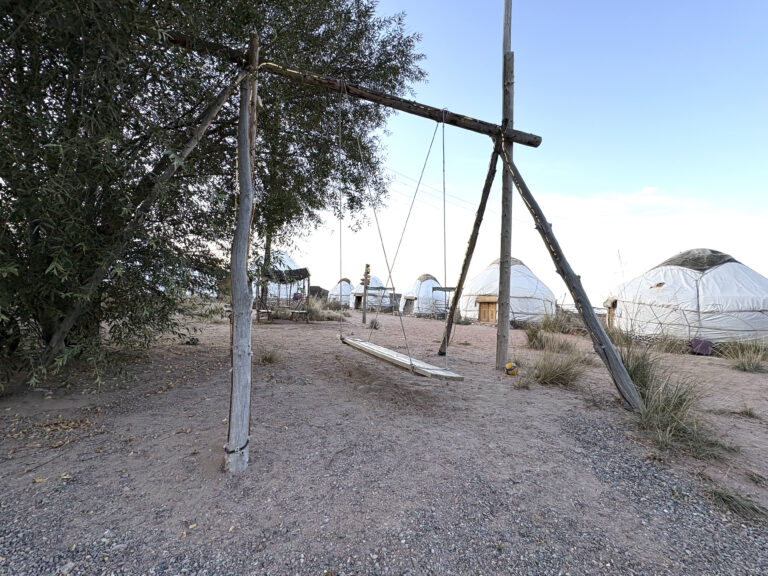
As a rule, we provide about one bottle of water per person per day (this may vary depending on the tour).

If you'd like to drink more, you can buy extra at the guesthouse or a nearby supermarket. ASHU Guesthouse accepts cards, but rural supermarkets are often cash only, so we recommend carrying a small amount of cash (a bottle of water generally costs $1 or less).

Will I get to interact with other participants during the tour?

On shared tours, sharing meals and travel time together often leads naturally to getting to know each other.

Can meals during the tour accommodate allergies or a vegan diet?

Yes. If you let us know in advance, we will adjust as much as possible.

Are there any rules to follow during the tour?

Here are the operational rules we ask you to follow during the tour.

No exchanging contact details with guides or drivers

To prevent problems during and after the tour, exchanging personal contact details with guides or drivers is not allowed. For any inquiries, please contact our director Nuriya or our Japanese staff member Sugi, whose details are in your email.

Drinking with staff: one beer at most

You're welcome to drink during the tour, but for your own health, please limit drinking with local staff to about one beer.

Return transfers

For early-morning transfers to Bishkek or the airport, there may be only a driver and no guide. Please confirm your drop-off location and time with your guide or staff by the day before.

Can the itinerary change during the tour?

Changes may be unavoidable due to weather, road conditions or safety reasons.

Does the tour price include accommodation and meals?

Yes. The basic plan includes accommodation, all meals, transportation and guide fees during the tour (except for meals marked as “on your own”).

What kinds of tours do you offer? Can I choose the length?

We offer a wide variety of plans, from short 4-day/3-night trips to grand tours of two weeks or more, featuring horse riding, spectacular scenery, cultural experiences and more.

Even if the itinerary you want isn't listed, we can customize a tour for you. Feel free to contact us.

I can't eat meat, but I can eat fish and dairy. Will the meals on the tour be OK?

ASHU TRAVEL can accommodate requests for meat-free and vegetarian meals.
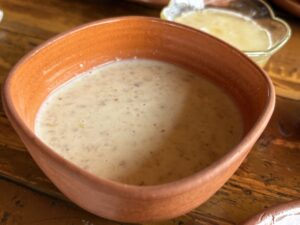
For example, if you only avoid meat but are fine with dairy and eggs, you can enjoy stir-fried vegetables, vegetable soup, milk porridge, cheese, and fish dishes.
Below are some dishes our staff have actually eaten and enjoyed at accommodations and sightseeing spots.
These are just examples and the same dishes may not be served on your tour, but we hope they give you an idea of what to expect.
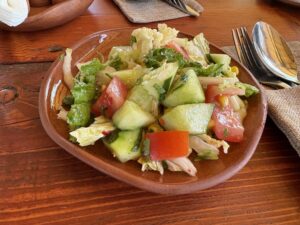
First of all, Kyrgyzstan is an agricultural country, so the vegetable salads and soups are full of flavor and delicious.
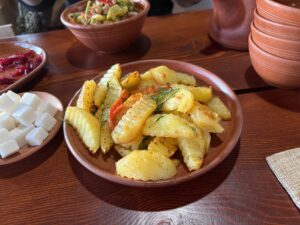
Potatoes are grown widely here, too, and they're wonderfully fluffy.
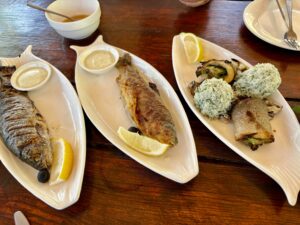
If you eat fish, we can also serve fish dishes!
Kyrgyzstan is landlocked, but fish are farmed in its lakes, and grilled or sautéed fish is delicious.
And if you're fine with eggs and dairy, we highly recommend trying the cheese, cream cheese, and sour cream!
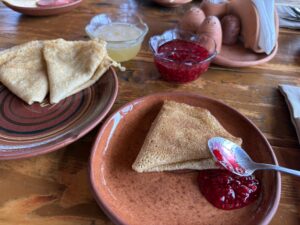
Kyrgyzstan has an abundance of dairy products, and they're delicious with bread or crepes at breakfast.
Milk porridge is also a common breakfast in Kyrgyzstan.
It's tasty on its own or with honey or jam.
We hope you enjoy Central Asian food in a way that suits you!

When is the best time to visit Central Asia?

The best season varies greatly depending on the country you visit.

■ Kyrgyzstan & Kazakhstan
June to September is the most popular season. The cities are hot, but the mountains and lakes are lush and green, and at higher altitudes you can enjoy horse riding, escaping the heat in the highlands, stargazing and more.

Rural Kyrgyzstan in particular has many high-altitude areas, so it stays relatively comfortable even in summer.

In winter you can also enjoy horse trekking through snowy landscapes or skiing, and ASHU TRAVEL runs winter tours as well.

■ Uzbekistan
Spring (March to mid-June) and fall (September to October) are the best seasons.

The weather is mild during these periods, ideal for sightseeing in ancient cities such as Samarkand and Bukhara.

August, on the other hand, is extremely hot, and especially in the central and western regions, where deserts stretch out,

sightseeing can be difficult.

What should I keep in mind to stay healthy while traveling in Central Asia?

Central Asian food is oilier than Japanese food, so avoid drinking cold water after eating meat dishes and drink plenty of hot tea instead.

The food in Tashkent, Uzbekistan, is especially oily.

I'm worried about my stamina. I don't exercise much—will I be OK?

You won't be riding the entire time during the tour; some sections are covered by private vehicle. If you get tired, you can also rest in the vehicle. If you do light physical activity in your daily life, you should be able to enjoy the tour without any problem.

Is it OK if this is my first trip to Central Asia?

Of course. From airport transfers to support throughout the entire trip, everything is set up so that even first-time visitors can relax and enjoy themselves.

I'm heading to another country. Can I leave partway through the last day and go to the airport early?

Yes, that's possible.

For example, if you leave on the morning of the last day, you can either get to the airport on your own using an app like Yandex, or we can arrange a private transfer for an additional fee (about $50).

Please note that because this is a package tour, we can't offer a discount if you skip part of the last day's tour (such as activities) for personal reasons.

This is because it would affect the price for other guests and make it difficult for us to run the tour reliably. Thank you for your understanding.

I'd like to go sightseeing in Almaty or Bishkek before or after my tour. What can I do?

You're welcome to arrive a few days before or stay after the tour and explore freely on your own.

In Almaty, for example, you can ride the city cable car, visit museums, or venture a bit farther to the stunning Charyn Canyon.

We can also suggest optional day trips or 2-day/1-night tours to suit your interests. If you have any questions, feel free to ask.

When is the best season to travel?

The best season varies greatly depending on the country you visit.

■ Kyrgyzstan and Kazakhstan

June to September is the most popular season. The cities are hot, but the mountains and lakes are lush and green, and at high altitudes you can enjoy horse riding, escaping the summer heat in the highlands, stargazing and more.

Rural Kyrgyzstan in particular has many high-altitude areas, so it stays relatively comfortable even in summer.

In winter, you can also enjoy horse trekking through snowy landscapes and skiing, and ASHU TRAVEL runs winter tours as well.

■ Uzbekistan

Spring (March to mid-June) and autumn (September to October) are the best seasons.

The weather is mild at these times, ideal for visiting ancient cities such as Samarkand and Bukhara.

August, on the other hand, is extremely hot, and sightseeing can be difficult, especially in the central and western regions where deserts stretch out.

Will a Japanese-speaking guide accompany us?

Yes. A professional guide fluent in Japanese accompanies you for the entire trip and supports you throughout.

Is there any free time during the trip?

Yes. We include time in Bishkek and at the places you stay when you can relax at your own pace.

Can I drink the tap water? What should I do about drinking water?

In Bishkek, we recommend avoiding tap water and drinking bottled water instead. Mineral water is available at shops, supermarkets, and bazaars in the city.

However, the water at ASHU Guesthouse is clean spring water, so you can drink the water in your room.

On our tours, we provide one bottle of water per person per day.

Note that remote places like Song-Kul Lake have no shops, so we recommend buying a little extra before you travel there.

To stay healthy, it's also a good idea to be careful with ice and raw foods.

What kind of food is served?

You can enjoy local home cooking and traditional dishes such as lagman (noodles), plov (rice pilaf) and shashlik (grilled skewers).

Can I try falconry in Kyrgyzstan?

Yes. We have plans where you can watch and try a traditional Kyrgyz falconry (hunting with birds of prey) demonstration.

How many nights do I need for a trip to Central Asia?

We recommend at least 4 days/3 nights for one country, and 8 days/7 nights or more if you're touring several countries. In 4 days/3 nights you can see the main sights in Kyrgyzstan, such as the area around Bishkek and Issyk-Kul. With a week or more, you can take your time enjoying everything from Kazakhstan's spectacular nature to Uzbekistan's World Heritage sites with their beautiful blue tiles. Depending on your flight schedule, your time on the ground may be shorter, so it's important to choose a schedule with some leeway.

What should I do if I get separated from my guide?

Please call the emergency contact number we share with you in advance, or stay where you are and wait.

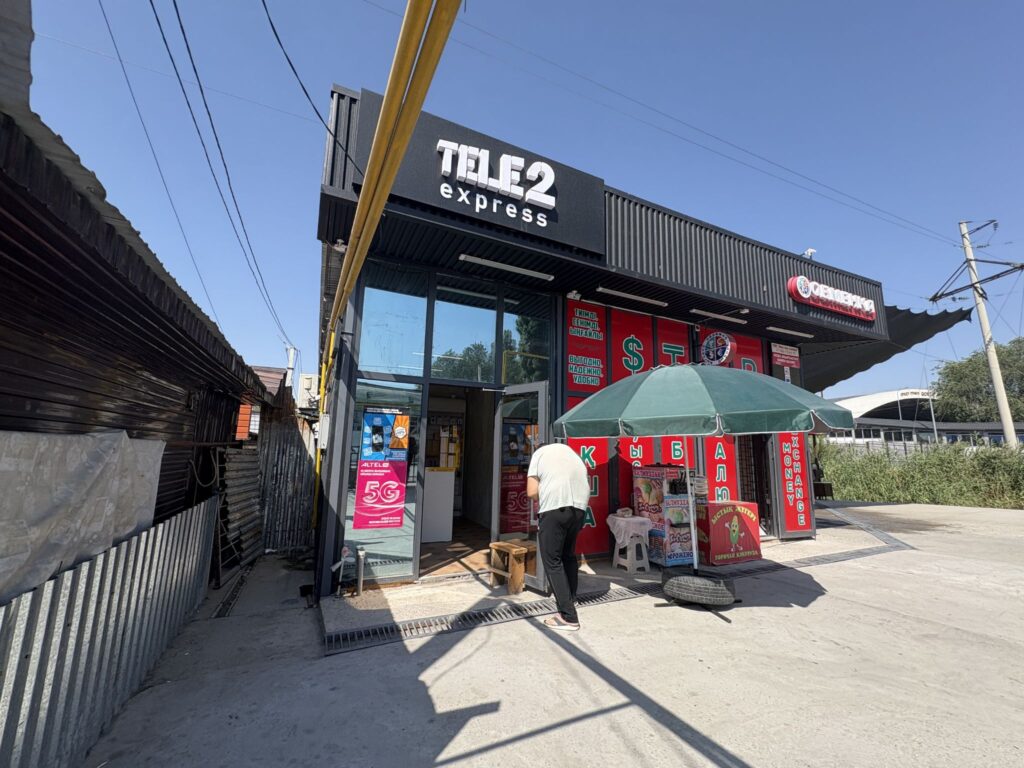
Is there a SIM provider that works in both Kazakhstan and Kyrgyzstan? Do you have any recommendations?

Our staff tested global SIMs (including eSIMs) that can be bought online on location. In short, in Kyrgyzstan they did get a signal, but the speed was far too slow to be practical.
Here's what we found in our tests:
★Kazakhstan: "hofly," which can be bought online, worked. povo was so-so.
★Kyrgyzstan: eSIMs bought online and povo do connect, but they're too slow to be usable. Buying a local SIM is the most reliable option.
*At Song-Kul Lake, there are spots with signal if you use Mega.
If you want internet access in both countries, we recommend a rental pocket Wi-Fi. Past guests have told us that "Global WiFi worked."
*In Kazakhstan, connecting to free Wi-Fi at airports or cafes almost always requires a local phone number. Since you have to enter a verification code sent by SMS, you may not be able to connect with a foreign phone number. Please be aware of this if you're counting on free Wi-Fi.
*If you buy a local SIM in Kyrgyzstan, since April 2024 the law has required a photo of your passport and a photo of your face to be registered at the time of purchase. For details, see "I'd like to buy a SIM when I arrive in Kyrgyzstan. Do I need to pay in cash, or can I use a card?"

I'm worried about crossing the border between Kyrgyzstan and Kazakhstan.

Don't worry — your guide will accompany you and walk you through the procedures.

Is it safe in Kyrgyzstan, Kazakhstan and Uzbekistan?

Tourist areas in Kazakhstan, Kyrgyzstan and Uzbekistan are generally considered relatively safe within Central Asia these days.

In the main cities and tourist sites visited on ASHU TRAVEL tours, there are no major problems as long as you take normal precautions.
In fact, where our local staff live, the sun sets late in summer, and you can see neighborhood children playing outside until around 10 p.m.

In winter, the streets are sometimes lively until late at night with people enjoying the Christmas lights, and in everyday life there are few situations that feel overly tense.

That said, please be aware of the following:

• Some border areas: There have been incidents in the past in some border regions of Kyrgyzstan. ASHU TRAVEL avoids these areas and uses only routes confirmed to be safe.
• Bazaars and crowds: As in other cities around the world, pickpocketing and bag snatching can occur in crowded places such as bazaars. Please keep a close eye on your valuables.

ASHU TRAVEL shares information with local staff, guides and authorities,

adjusts itineraries to the situation at the time, and runs every tour with safety as our top priority.


■ Before you travel
For the latest safety information, please also check the official pages below (from the Ministry of Foreign Affairs of Japan and the Embassy of Japan in Kyrgyzstan; in Japanese).

• Ministry of Foreign Affairs of Japan, Overseas Safety Information | Kazakhstan
https://www.anzen.mofa.go.jp/info/pchazardspecificinfo_2025T020.html#ad-image-0

• Ministry of Foreign Affairs of Japan, Overseas Safety Information | Kyrgyzstan
 https://www.anzen.mofa.go.jp/info/pcinfectionspothazardinfo_265.html#ad-image-0

• Ministry of Foreign Affairs of Japan, Overseas Safety Information | Uzbekistan
https://www.anzen.mofa.go.jp/info/pcinfectionspothazardinfo_183.html#ad-image-0

• Kyrgyzstan Safety Guide (Embassy of Japan)

https://www.kg.emb-japan.go.jp/information/anzen_tebiki.pdf

Do I need a visa to enter Kyrgyzstan or Kazakhstan?

Japanese nationals can enter visa-free for short tourist stays. Visa requirements depend on your nationality, so please check the rules for your passport.

How safe is Central Asia?

It is generally safe, but watch out for pickpockets in bazaars and other crowded places. Please avoid going out alone at night.

What should I say if immigration asks where I'm staying?

Please give the name and address of your first accommodation, such as the ASHU Guesthouse.

Is there anything I should be careful about at immigration?

It's not particularly strict, but please check your passport's expiration date (remaining validity).

Should I get travel insurance?

Yes, please be sure to purchase travel insurance before departure. ASHU TRAVEL requires a plan with combined coverage of at least ¥30 million (30,000,000 yen) for medical expenses and rescue/evacuation expenses. If your policy lists "medical and rescue expenses" as a single amount, please check that figure.
Also note that coverage for injuries sustained while horse riding may vary by insurance company and plan, so if you're concerned, please check before you buy. We explain how to choose a policy and what to watch out for in detail in this article:
Travel insurance for horse riding trips in Central Asia

The travel advisory is currently Level 1. Is it safe?

Level 1 in the Japanese Ministry of Foreign Affairs' travel advisories means “exercise caution.” Normal sightseeing is possible, and we always check the latest information and put safety first.

What is the voltage? Do I need a transformer for Japanese electronics?

The voltage in Kyrgyzstan and Kazakhstan is 220V (50Hz). Japan uses 100V, so the voltage is different.

Most smartphone and laptop chargers support "100–240V" (check the label on the device or AC adapter). In that case, you can use them without a transformer—you'll only need a plug adapter.

On the other hand, 100V-only appliances (such as some hair dryers and hair straighteners) may break or overheat if plugged in directly, so you'll need a transformer.

Type C and Type F plugs are standard, so please bring a plug adapter as well.

I've booked an ASHU TRAVEL tour covering Kyrgyzstan and Kazakhstan. How does the border crossing work?

It depends on whether the same guide accompanies you in both countries or the guide changes between the two. Either way, we'll support you through the border crossing, so there's nothing to worry about.

If the same guide accompanies you

Your guide will accompany you all the way: Kyrgyzstan → Ak-Zhol → border crossing → Korday → Almaty. No need to worry about the language at all.

If the guide changes partway

On some tours, the guide changes between Kyrgyzstan and Kazakhstan.

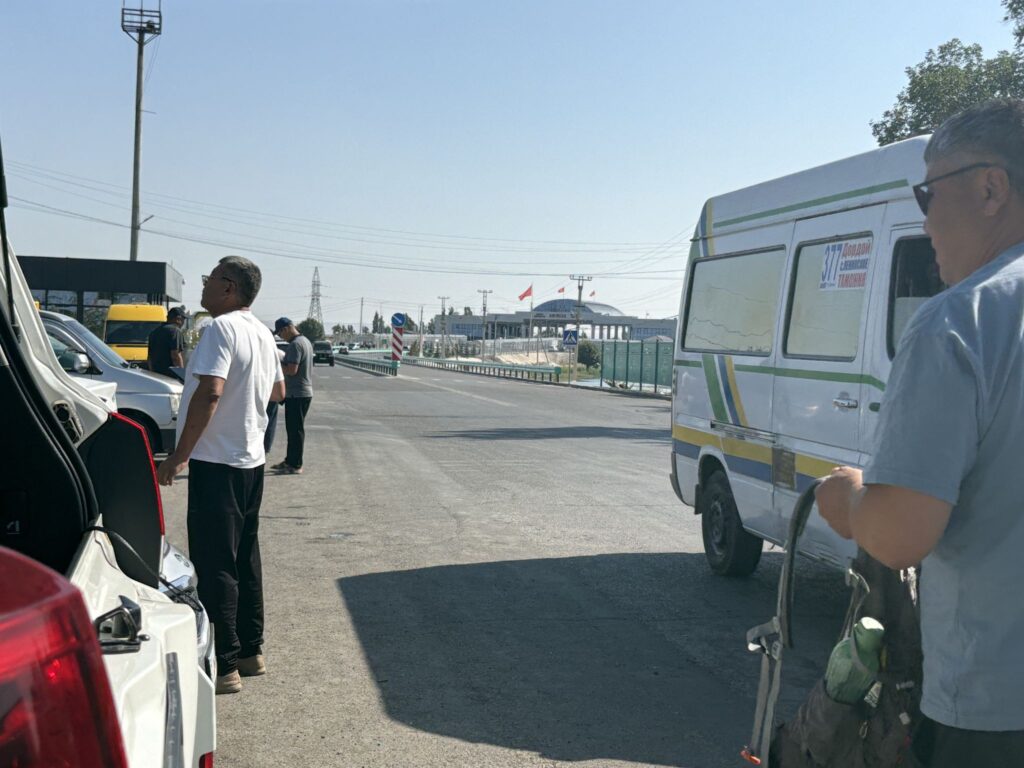
On the Kyrgyz side, our private vehicle will take you to the Kyrgyz border post at Ak-Zhol. Once you've crossed, a Kazakh driver will meet you at the Kazakh border post at Korday and take you to Almaty.

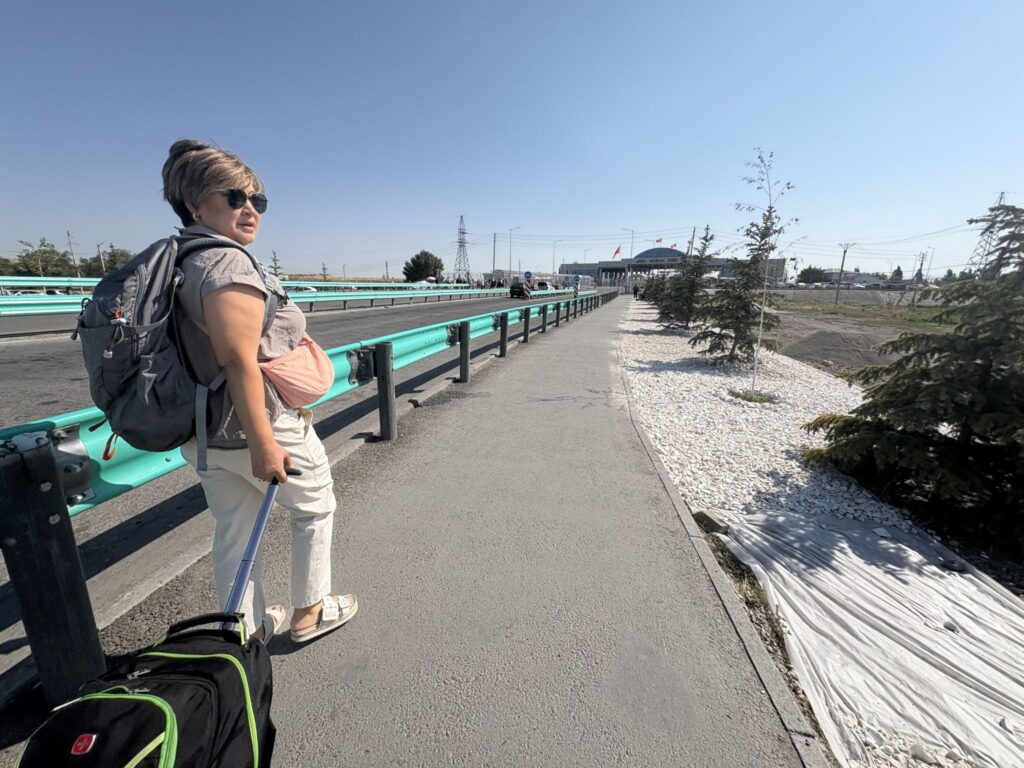
You'll walk through the border crossing itself on your own, but with private vehicles on both sides, it goes smoothly!

What should I keep in mind when crossing the land border between Kazakhstan and Kyrgyzstan?

① Don't photograph the border buildings

Photography is prohibited in the border area and you may be fined, so keep your camera and phone put away.

*The photos used in this column were taken well before reaching the border.

② Stay close to the person in front of you in line

Many people cross the border for business and carry lots of goods, and if there's a gap in the line, people may keep cutting in.

It's fine to let elderly people or families with children go ahead, but they inevitably take time, and people keep cutting in with large loads of luggage.

It's different from what you might be used to at home, so don't leave gaps—stay close to the person in front of you while you wait.

③ Plan ahead around Kyrgyz and Kazakh holidays

From around May 1 to May 10, Kyrgyzstan has a long holiday period, similar to Golden Week in Japan.

There have even been reports of border crossings taking over 2 hours during this time. When holidays or long weekends fall during your trip, allow plenty of extra time.

I've booked a combined Kyrgyzstan and Kazakhstan tour. If the guide changes between Kazakhstan and Kyrgyzstan during the tour, where do I meet the driver?

A. From Kyrgyzstan to Kazakhstan

Right after crossing the border, turn right and you'll find a waiting area with currency exchange and SIM card sellers. Please wait there.

From Kazakhstan to Kyrgyzstan

We'll be waiting for you in the parking-lot-like area just past the border.

In either case, we inform the driver or guide about you in advance, and just in case, we'll also give you the driver's or guide's vehicle number and WhatsApp number.

How long does it take from Manas Airport to my accommodation?

It takes about 45 minutes to 1 hour by car to central Bishkek.

How do I get to Central Asia?

From Japan you can fly direct or with a connection, and the route depends on your destination.
Here are the typical options:
• Uzbekistan: direct flights between Narita and Tashkent (the easiest to reach)
• Kazakhstan: usually via Korea, China or Uzbekistan *Direct flights are planned on some routes
• Kyrgyzstan: no direct flights; most travelers connect via Korea, China, Kazakhstan or Uzbekistan
See our blog post for more details.

When transferring at Incheon Airport to Kyrgyzstan or Japan, will my checked baggage be transferred? Do I need to enter Korea?

Generally, you don't need to enter Korea and collect your baggage at Incheon Airport. Your checked baggage will be sent through to your final destination. If you have a layover of a few hours, you'll have plenty of time to make your connection without going through immigration.

However, flight rules can change, so please also check your airline's or the airport's official website and the notes on your ticket, just to be sure.

Although you don't need to enter the country, after leaving the plane you'll pass through a "transfer-only security checkpoint." Your carry-on baggage will be screened again here, so please note that any liquids (such as bottled drinks) bought on board or in the restricted area of your departure airport may be confiscated.

On tours without dinner, should I bring snacks for the arrival day or long travel days? Can I get food along the way?

We can stop at the airport or along the way at places such as gas stations with attached supermarkets, where you can buy snacks and drinks.

Depending on your flight's arrival time, mealtimes may shift, so if you're concerned, bringing something light to snack on is a good idea.

Can you provide transfers for late-night or early-morning flights?

Yes. We pick you up and drop you off 24 hours a day to match your flight.

Can you pick me up from a hotel I booked myself, instead of the airport?

Yes. We'll pick you up wherever you specify.

Do you provide airport transfers?

It depends on the plan, but most tours include transfers by private vehicle timed to your arrival and departure.

For plans with hotel transfers, we can also arrange airport transfers as an option if you stay an extra night before or after the tour.

Is it OK to bring large luggage such as a suitcase?

Yes. It fits in the car. However, a smaller bag is handy for getting around during riding.

I'm worried about car sickness. Any tips?

Roads to remote areas such as Song-Kul Lake include rough, unpaved sections where the vehicle can be bumpy. If you're prone to motion sickness, we recommend bringing a motion-sickness medicine you're used to.

Can I choose which airport the transfer uses?

Yes. In addition to Manas airport in Kyrgyzstan, we also offer transfers to and from Almaty airport and others.

If a delay shortens my trip, can the schedule be shifted?

We'll check the local situation and adjust as much as possible, but in some cases the itinerary may need to be shortened.

What happens with my pickup if my flight is delayed?

We track your flight information, so we will wait for you according to the delay.

Can you accommodate changes in my flight arrival or departure time?

Yes. We're flexible, so please let us know as soon as you find out.

Can you book my flights as well?

We ask guests to book their own flights, but we're happy to advise on recommended flights and routes.

Is there anything I should watch out for with taxis in Central Asia?

Yes, there are a few things to keep in mind.

First, at airports in every country, quite a few people will persistently approach you offering a taxi. If you don't intend to take one, it's best not to engage.

There have also been reports of touts at Manas Airport in Kyrgyzstan falsely claiming to be “Yandex,” and of drivers around Bukhara Station in Uzbekistan charging very high fares after you get in. Our Japanese staff have experienced this themselves, and guests traveling independently have reported the same.

Also, Yandex Go requires a SIM with a phone number; you can't register with a data-only SIM. When using Yandex Go locally, always book through the app and be sure to check the license plate before getting in.

If you use shared taxis, generally only the local language is spoken. We recommend having a translation app ready in advance.

I'm nervous about taking local buses or taxis.

During the tour you'll travel in a private vehicle, so there's no need to use public transportation on your own.

Is there anything to watch out for when using the Yandex Go app?

There are three things.

First, you need a phone number to register for Yandex. Please buy a SIM card that comes with a phone number—you can't register with a data-only SIM.

Second, when entering your destination, it's best to copy and paste the place name in Russian. Once, we typed a destination in English, chose one of the suggested results, and called a taxi—only to be taken somewhere completely different.

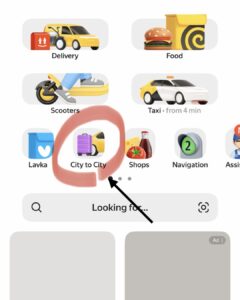
Finally, when traveling to another city, book through "City to city" rather than the usual "Where to go." For example, Almaty and Korday (at the border) are different cities, so if you're heading to Almaty, the ride may not be available unless you use "City to city."

Should I exchange some money into local currency?

Some bazaars and rural supermarkets accept cash only, so we recommend bringing about $50 to exchange. You can exchange it yourself, or your guide can help you exchange what you need at the airport or in town.

Can I use a credit card for shopping, such as for souvenirs?

Cards are generally accepted in cities, but some places in rural areas and bazaars are cash only. We recommend bringing about $50. Your guide will help you exchange money.

Can I use credit cards?

Credit cards can't be used to pay the tour price, but you can use them for shopping locally. However, many bazaars and rural supermarkets accept cash only. We recommend bringing about $50 in cash for souvenirs and water (we'll help you exchange it into local currency).

Do I need to tip?

Tipping isn't mandatory in Central Asia, but there is a culture of tipping as a token of appreciation.

Restaurants & cafes : More and more places now include a service charge, and prices are rising. If you receive excellent service, about 5–10% of the total is a good guideline. Some cafes have a jar for leaving coins. Even just leaving some coins on the table is appreciated.

In Uzbekistan, service charges are often not included at lunch but may already be included at dinner. We recommend checking the receipt when you pay. A translation app comes in handy.

Meals are generally included on ASHU TRAVEL tours, so you don't need to worry about this individually.

Hotels : For a porter carrying your luggage or for room service, about $1–2 is a good guideline.

Guides & drivers : Many guests give a tip at the end of the tour as thanks. About $10 per day is a guideline, but the thought counts more than the amount.

Taxis : With Yandex Go, you can choose a tip in the app right before getting out (10 som, 20 som, etc.). Tipping isn't customary in shared taxis.


How do I pay for the tour?

ASHU TRAVEL tour prices are generally paid in US dollars cash locally.

Please pay the tour price to your guide in US dollars cash at the hotel on Day 1 or at breakfast on Day 2. We currently don't accept credit card payments (so that you don't have to bear the card fees).

If you would like to pay in advance by international transfer or Wise

You can also pay by international transfer to our bank account.
Please note the following.

Fees: The withdrawal fee on the Kyrgyz side ($30) and the transfer fees are paid by you. If a refund is needed, the transfer fees for the refund are also paid by you.

Time: It takes about 2 weeks or more for the transfer to arrive. Please send the transfer within a few days of receiving our email 3 weeks before departure.

Risk: In rare cases, the bank cancels a transfer, and the refund can take about 3 weeks. If we cannot confirm receipt, you will need to pay in cash locally (with a later refund), so you may temporarily pay twice.

Paying earlier: If you need to pay earlier for your own reasons, you can transfer in advance the price that applies when the shared tour has the maximum number of participants. If the shared tour ends up with the maximum number of participants, there is no difference to pay. If the shared tour does not go ahead, or goes ahead without reaching the maximum number of participants, please pay the difference locally. If you would like to do this, please contact us.

About Wise: You can use Wise, but Wise is not common in Central Asia, so even if you use your Wise account, the payment is made to our bank account.

Besides the tour price, how much cash should I bring?

As a guide, about $50 is enough if you plan to buy a few souvenirs and snacks, and about $100 if you enjoy shopping (for food and drinks, tips, and souvenirs). Cards are accepted in the city and at hotels, but bazaars, small shops in rural areas, and supermarkets are cash only, so please bring US dollars in cash.

Where can I exchange money?

You can exchange money in Almaty and Bishkek.

You can exchange it yourself at the airport or during your stay, or we can stop at an exchange office while traveling.

Please note that since you'll be traveling with other guests on the tour, we can't take individual guests to exchange offices with the best rates.

What is the total budget for a trip to Central Asia?

For a 4-day/3-night trip to Central Asia, budget tours including flights can cost as little as around ¥150,000 (150,000 yen) per person. At ASHU TRAVEL, we offer a Kyrgyz nomad homestay tour as a land-only plan (flights not included) starting from about $850 per person for 4 days/3 nights. Our Kazakhstan retreat horse riding tour is also available from $800 per person for 4 days/3 nights. You may be able to keep airfare down by using connecting flights via South Korea or China. Prices vary depending on the season and number of travelers. See our blog post for more details.

Can I exchange Japanese yen near the border?

Unfortunately, exchange offices near the Kazakhstan and Kyrgyzstan borders generally don't exchange Japanese yen.

It's difficult not only near the border but in town as well…. Once, when I forgot to bring dollars from Japan, I managed to exchange yen after a lot of pleading, but the rate was so bad that I lost quite a bit.

When you come to Central Asia, be sure to bring US dollars! You can exchange Kyrgyz som and Kazakh tenge at exchange offices near the border too.

When I travel abroad, I usually withdraw local currency from ATMs. Can I rely on ATMs?

Typical ATMs in Kyrgyzstan have a daily withdrawal limit of roughly the equivalent of $200. Some machines only limit each withdrawal to $200 and let you withdraw multiple times, but you'll be charged a fee each time.
For this reason, we don't recommend withdrawing the full tour price (in US dollars) from local ATMs—it's both inconvenient and risky. Please be sure to bring the tour price in US dollar cash from home.
Withdrawing spending money from ATMs is fine, but depending on the tour, it may be hard to get to an ATM (for example, at Song-Kul Lake, where there's nothing around).
So it's more reliable to bring US dollars in cash and exchange what you need as you go.

Is there anything to keep in mind when bringing US dollars?

Please bring US dollar bills that are crisp and clean, with no wrinkles or stains!

Light folds are fine, but badly wrinkled or dirty bills may be refused for exchange locally (how strict they are varies a lot from shop to shop). We appreciate your cooperation.

What is the temperature like at Song-Kul Lake in June, and what should I wear?

Bishkek can reach nearly 30°C (86°F) during the day, but Song-Kul sits at a high altitude, and even in June nights can drop close to freezing. Warm clothing is a must.

Is Wi-Fi available?

Wi-Fi is available at the ASHU Guesthouse and at hotels in the cities, but not when camping in tents or staying in yurts in the mountains.

At the tourist yurt camps at Song-Kul, Wi-Fi may be available in the shared restaurant, but some camps have it and some don't.

What are the shower and toilet facilities like at the ASHU Guesthouse?

Every private room has its own flush toilet and hot shower.

There is also a pool in a separate building, which has showers as well. In winter it becomes a heated pool.

At busy times the water can get lukewarm. Showering a little earlier or later usually solves this, so if it bothers you, just let your guide know.

I snore, so I'm not sure whether sharing a room will be OK.

If you're concerned about snoring, one option is to bring anti-snoring products such as nasal strips.

We also recommend saying a quick word to your roommates in advance when you enter the room.

What type of power plug is used?

Type C (two round pins). Please bring a plug adapter.

Can I use a hair dryer?

Some places allow it, but you may not be able to use one if there isn't enough power. It's best to assume that you "may not be able to use one."

Some accommodations have hair dryers and some don't.

Hotels in Bishkek usually have them, but yurts may or may not.

What facilities do the yurts have?

It depends on the location.

[Tourist yurt camps at Song-Kul, Issyk-Kul, etc.]

Inside, there are basically just beds, but shared hot showers, toilets and a restaurant are usually set up outside. In colder places such as Jeti-Oguz, yurts sometimes have a stove.

In most cases the toilets are about a one-minute walk from the yurt.

In all cases the showers are simple ones. During peak season there are many travelers, so when lots of people shower, the water pressure can be weak and the water lukewarm.

Also, on days when we arrive late because of traffic or vehicle trouble, the hot water in the tank may have run out and the showers may be unavailable. The hot water sometimes comes back after a while, so please don't hesitate to ask your guide. Bringing body wipes is a good idea, just in case.

[Nomad yurts]

In yurts that nomads actually live in, there is often no shower outside, and the toilet is usually a “nature” toilet or a pit toilet.

Yurts are covered with sheep's wool felt, so they are well insulated.

Think of a yurt as a much more luxurious version of a camping tent. The real charm of staying in one is experiencing local life just as it is.


Is there a toilet in the yurt?

There isn't one inside the yurt, but shared toilets are within walking distance. The type varies: at Song-Kul there are flush toilets or pit toilets (a dug pit with a simple enclosure), while nomad families use pit toilets.

How many people stay in one yurt?

Each yurt is shared by 3–4 people.

Do we stay in hotels?

Accommodation varies: hotels and guesthouses in the cities, and the ASHU Guesthouse, yurts or tents in the countryside. Please see each tour page for details.

If rooms are shared, can I room with the friend or companion I'm booking with?

Yes, absolutely. On days with shared rooms, such as yurt stays, we'll arrange for you to share a room with the friend or companion you booked with.

If you'd like this, please let us know when you book or in advance. We're also happy to discuss requests for a private (single) room at hotels or guesthouses.

Should I bring my own towel and shampoo for tourist yurt stays?

We recommend bringing your own.

Some yurt camps provide shampoo in the showers, but during the busy high season it can run out. Bringing your own travel set (towel, shampoo, etc.) is the safest option.

Are rooms shared? Can I have a private room?

  • Hotels (in the city): Single (private) rooms are available at no extra charge.
  • Guesthouses: Private rooms can be arranged for an additional fee (per day; the fee varies by tour).
  • Yurts (nomad tents): Because the number of yurts is limited, they are generally shared by 3–4 people of the same gender. Private yurts are not available.

Can I stay in a yurt instead of a room at the ASHU Guesthouse?

Yes. You can switch to a yurt on the guesthouse grounds ($200 per group; advance reservation required). You can also enjoy the experience of putting up the yurt yourself. A yurt sleeps about 3 people.

What's the weather like in Kyrgyzstan in May? What should I wear?

In May, temperatures in Kyrgyzstan vary a lot depending on where you are.

Around Bishkek (about 800 m above sea level), daytime temperatures reach around 20℃, with pleasant spring weather. But once you get to areas above 1,600 m, such as Issyk-Kul, the air changes completely: even if days are warm, it's not unusual for mornings and evenings to drop below 10℃. Mornings can even be as cold as 2–4℃.

Start with what you'd wear in spring in Japan, and bring something you can quickly throw on in the mornings and evenings, such as a fleece, a light down jacket or a windbreaker. We recommend layering so you can adjust to the temperature.

Is it cold in Kyrgyzstan?

It varies greatly by location and altitude.

Summers in Bishkek (about 800 m above sea level) are dry, and last year temperatures rose to nearly 40℃. There's little of the muggy humidity you get in Japan, so even when it's hot it's relatively comfortable.

On the other hand, Song-Kul Lake, at over 3,000 m, gets quite cold even in summer. Here's a guide for August:

  • Daytime: around 16–18℃
  • Mornings and evenings: below 10℃ (sometimes dropping close to freezing)

For reference, on April 10, when Bishkek's high was 19℃, it was only 1℃ at Song-Kul Lake.

When our staff visited last July, a single thin down jacket wasn't enough against the morning and evening cold. We recommend gear you can layer, such as a light outdoor down jacket, a fleece and an inner down layer.

Can I do laundry during the tour?

It's possible, but it can be difficult depending on the tour.
Song-Kul Lake stays: You move to a different yurt every day, so even if you hand-wash your clothes, they very likely won't dry before you move on. Around Song-Kul Lake there is truly nothing but nature and yurts…
Hotels in Bishkek: You can ask the hotel to do your laundry, but if you check in at night and leave early the next morning, it likely won't be ready in time.
ASHU Guesthouse: Laundry service is available for a fee. However, if your stay is short, it may not be ready in time.
★By the way, coin laundries like those in Japan aren't very common in Kyrgyzstan; the shops you'll find in town are mostly dry cleaners specializing in carpets and delicate clothing. So, to be safe, we recommend bringing enough changes of clothes for the whole trip so you won't need to do laundry.

What kinds of insects is the insect repellent on the packing list for?

In summer (mainly July–August), there can be mosquitoes (though not as many as in Japan). There are also flies, so bringing an insect repellent spray you're used to will make your trip more comfortable.

What are the basic things to pack and wear?

Basic packing checklist

  • Warm clothes: Mornings and evenings get cold in the highlands
  • Rain gear: A poncho, a folding umbrella, etc.
  • Sun protection: Sunglasses, sunscreen, lip balm
  • Riding gear: Long pants, sneakers, gloves
  • Personal medications: Altitude sickness medication, motion sickness medication, pain-relief patches, etc.
  • Power bank (carry-on recommended)
  • Insect repellent (July–August)
  • Body wipes: Handy because the shower water may be lukewarm or unavailable at busy times or on days when you arrive late
  • Swimsuit: You can use the pool at ASHU Guesthouse for free. You'll also need one if your stay includes hot springs.

*The sauna equipment is currently being repaired, so it may not be available during your stay. Thank you for your understanding

What to wear

It depends on when and where you go, but layering is the key. Temperatures differ greatly between the highlands and lowlands, so be ready to adjust by adding or removing layers.

Spring T-shirt + an outer layer such as a hoodie; in the highlands, add a light down jacket or fleece

Summer T-shirt + an outer layer such as a hoodie; in the highlands, add a light down jacket or fleece

Fall Long-sleeve shirt + an outer layer such as a hoodie; in the highlands, add a down jacket or fleece

Winter Long-sleeve shirt + thermal underwear + a sweater or jacket + a down jacket or equivalent outerwear

Bottoms Long pants for riding or hiking; in winter, thick hiking pants with thermal underwear underneath

Footwear Sneakers are generally fine. In winter, snow boots with smooth soles are recommended. Please avoid shoes with high heels or hiking boots, as they can catch in the stirrups and are dangerous

*A thick down jacket can make it hard to move while riding. If so, we can keep it in the car for you

Is there anything I should keep in mind when preparing for the trip?

The air is very dry and the sun is strong, so we recommend bringing moisturizer, lip balm, sunglasses and a hat.

It's also a good idea to prepare the following:

  • Altitude sickness / motion sickness medication: The tour passes through high-altitude areas, so if you have any health concerns, please consult your doctor in advance
  • Power bank: There are few places to charge in highland areas such as Song-Kul Lake. Please bring one that can be taken in carry-on luggage
  • Translation app: In shared taxis or when exploring on your own, sometimes only the local language is spoken
  • Personal medications: Pain-relief patches and painkillers also help with sore muscles after riding
  • Insect repellent: July and August are the buggiest months
  • Cash (US dollars): Tour prices are generally paid in US dollars cash locally. You can exchange money at the airports and in town in Almaty and Bishkek
  • Check your passport's remaining validity: At least 6 months of validity is required for entry

Do you rent out warm outerwear (jackets)?

As a rule, we don't rent out warm outerwear such as down jackets or heavy coats. Sizes vary so much from person to person that we can't guarantee something that will fit you properly. We lend half chaps and helmets free of charge, but we recommend bringing your own warm jacket.

Do many people buy a SIM card?

It depends on the tour.

On tours to remote areas (such as Kol-Ukok Lake), there is often no signal in the mountains even with a local SIM, and once you come down you can use the Wi-Fi at guesthouses and hotels, so many guests don't buy one.

On tours to Song-Kul Lake, a local Kyrgyz SIM usually gets a signal even around the lake, so more guests tend to buy one.

You can buy a local SIM at the airports or shops in Bishkek and Almaty. You'll need your passport, and setup takes about 15 minutes.

If you have any questions, feel free to ask us.

Can I buy souvenirs at ASHU Guesthouse?

Yes. We sell local favorites such as felt products and honey.

Do I need to wear a hijab?

Tourists are not required to wear one. However, please dress modestly when visiting mosques and similar places.

Where can I buy souvenirs?

You can buy them at TSUM department store and Osh Bazaar in Bishkek, and at workshops in various regions.

What languages are spoken in Kazakhstan?

Kazakh and Russian.

Is English spoken in Kazakhstan?

In cities (such as Almaty) you can often get by in English, but Russian is the main language.

Can I buy heated tobacco products (such as Ploom) in Kazakhstan?

Yes, heated tobacco products such as Ploom TECH and IQOS are widely sold in Kazakhstan. In cities like Almaty, you should be able to find your usual brand easily in shopping malls and supermarkets.

They are also sold in some shopping malls and supermarkets in Kyrgyzstan, but fewer stores carry them than in Kazakhstan. If you use a specific type of stick (tobacco refill), we recommend stocking up a little extra in Kazakhstan.

What languages are spoken in Kyrgyzstan?

Kyrgyz and Russian.

Is English spoken in Kyrgyzstan?

Not much, except at hotels in the cities. During the tour, your guide will interpret for you.

Which SIM or eSIM do you recommend for Kyrgyzstan?

Below is what our staff have researched and actually tested.

Mega👉 Well-balanced. Good coverage in both cities and rural areas. There are spots with signal even at Song-Kul. ⚠️ It is officially said to have coverage in Kel-Suu in Naryn Region, but some Instagram comments say they couldn't get a signal there.

Beeline👉 Best for cities. Coverage is weak in rural areas.

O!👉 Good coverage in rural areas. It also works fine in the city, but with more users recently, the connection can sometimes be poor (similar to docomo in Tokyo).

All of them can be bought at the airport.

I'd like to buy a SIM when I arrive in Kyrgyzstan. Do I need to pay in cash, or can I use a card?

At the airport or in Bishkek, you can generally buy a SIM card with a credit card.

If you arrive at night and no SIM shops are open in Bishkek, you'll need to buy one somewhere else, and in rural areas you'll need cash. In that case, don't worry—we'll take you to a currency exchange office in Bishkek beforehand.

[Where you can buy a SIM]

Depending on your tour itinerary, the only place to buy a Kyrgyz SIM may be one spot near the border (for example, Song-Kul Lake tours starting and ending in Almaty).

In this case, you'll buy it at an outdoor booth rather than at a store counter. This is a common way of selling SIMs in Kyrgyzstan, and it's handled by vendors authorized by the mobile carrier. Several sellers may gather when foreign customers arrive, but this is also perfectly normal.

[What you need to buy a SIM]

A law that took effect in Kyrgyzstan in April 2024 requires SIM cards to be registered in the buyer's own name. Wherever you buy one, the following steps are required:

  • A photo of the front and back of your (physical) passport
  • A photo of your face while holding your passport
  • An on-the-spot registration application to the mobile carrier

The procedure is carried out by authorized vendors using designated devices and a dedicated app. This is the method set by the government.

[What we do and don't handle]

We will take you to a place where you can buy a SIM. Whether or not to buy one is entirely up to you. If you feel uneasy about having your passport or face photographed, you're welcome not to buy one.

⚠️Because the procedure is done outdoors, occasionally the photos can't be taken properly and the SIM can't be issued. This is especially likely after dark, when the app has a harder time reading your passport and face. Please keep this in mind if your itinerary crosses the border at night.

If you have concerns about the photo data, please ask the vendor on the spot. If you'd rather not ask yourself, just tell your guide and we'll ask for you.

If you'd prefer not to have your passport photographed, another option is to arrange a rental pocket Wi-Fi before you leave home (eSIMs sold online do connect in Kyrgyzstan, but they're far too slow to be practical).

Is there anything I should know about using the toilets?

In many places you can't flush toilet paper (please put it in the bin provided), so please be careful.

Is it safe to walk around Bishkek at night?

The main streets are well lit, but many side streets are dark. We don't recommend walking alone at night.

Do people take off their shoes when entering a home in Central Asia?

Yes. In many homes and guesthouses, it's customary to take off your shoes before entering, just like in Japan.

I'm a small eater. Is it OK to leave food if I can't finish it?

Yes. There's no need to force yourself to finish. Simply saying “I'm full” is not considered rude.

Will a SIM bought online in Japan work? Or is it better to buy one locally?

It works in some countries, but if you want a reliable connection, we recommend buying a local SIM.

Here's what we've found based on our staff's actual experience (updated May 2026).

[Kazakhstan & Uzbekistan]

In cities such as Almaty and Tashkent, major eSIMs bought online in Japan worked.

In rural mountain areas and on some stretches between Almaty and the border, there is simply no signal in places.

[Kyrgyzstan]

We've tried eSIMs bought in Japan (such as povo and Holafly) in many places, and many times, even when the phone showed a connection, the speed was so slow that pages wouldn't load.

A local SIM connects without problems, although there are places in rural mountain areas with no signal at all.

Song-Kul has had mobile coverage since 2025, and you can now connect there with a local SIM.

[Things to note when buying a SIM]

• eSIMs differ by country, so if you're touring several countries over a long period, you'll need to buy one in each country. Alternatively, you can buy a global eSIM for Kazakhstan and Uzbekistan and buy a local SIM in Kyrgyzstan.

• Yandex Go requires a SIM with a phone number; you can't register with a data-only SIM.

Can I buy a SIM card or eSIM locally?

Yes, you can buy one at the airport or at SIM shops in town.

At the airport, every country has SIM booths right after immigration, and the staff will set it up on the spot, so you can use the internet as soon as you leave the airport. Prices are around $10–20 depending on the plan. At the airport in Kyrgyzstan, staff will approach you in English.

In town, you'll find shops such as “O!”, “MEGA” and “Beeline” in shopping malls and department stores. They can be a little cheaper than at the airport.

Wherever you buy, you'll need your passport, and the process takes about 15 minutes.

On independent trips or private tours, your guide can help. However, on tours with several guests, if many people want to buy a SIM it can squeeze the itinerary, so we recommend buying one yourself at the airport.

Note that if you plan to use Yandex Go, you can't register with a data-only SIM. Please buy a SIM that comes with a phone number.

Is there a local emergency contact?

Nuriya, our local representative, is available on WhatsApp and can assist you in Japanese (we'll share her contact details after you book). We recommend setting up WhatsApp before you leave.

Can I buy a SIM or eSIM at the airport?

Yes. In Kyrgyzstan, Kazakhstan and Uzbekistan alike, there are mobile carrier counters right after immigration.

They're marked “SIM,” so they're easy to spot.

Many staff speak basic English and will set it up for you. You'll need your passport, and setup takes about 15 minutes.

Is there Wi-Fi at the airports?

Yes, at Manas Airport, Tashkent Airport, Almaty Airport and others.

However, the connection can be unstable.

Also, in Kazakhstan you need a local phone number to connect to Wi-Fi, whether at the airport or in cafes.

Popular Tour Ranking

Scenic Winter Riding in Kyrgyzstan: Snow-White Chon-Kemin | Departing Locally, 4 Days / 3 Nights and Up [For Riders Who Have Cantered]
Winter horse riding across the snowfields of Kyrgyzstan

Scenic Winter Riding in Kyrgyzstan: Snow-White Chon-Kemin | Departing Locally, 4 Days / 3 Nights and Up [For Riders Who Have Cantered]

Destinations
Bishkek, Chon-Kemin Valley
Season
12/1〜2/28
Riding distance
5~ km/day, 20~ km total
Tour price (party of 5)

$1,400+ pp

View details
Eagle Hunters & Scenic Horse Riding at Lake Issyk-Kul | From Bishkek, 4 Days / 3 Nights or Longer [No Experience Needed]
Riding & eagle hunters by a stunning lake, 5 days

Eagle Hunters & Scenic Horse Riding at Lake Issyk-Kul | From Bishkek, 4 Days / 3 Nights or Longer [No Experience Needed]

Destinations
Lake Issyk-Kul, Chon-Kemin Valley, Bishkek
Season
Year-round
Riding distance
5-20 km/day, 65-75 km total
Tour price (party of 9)

$1,200+ pp

View details
Jeti-Oguz Rock Formations & Riding with Nomads in Kyrgyzstan | From Bishkek, 6 Days / 5 Nights [Beginners Welcome]
Featured on TV!

Jeti-Oguz Rock Formations & Riding with Nomads in Kyrgyzstan | From Bishkek, 6 Days / 5 Nights [Beginners Welcome]

Destinations
Bishkek, Jeti-Oguz area, Burana Tower
Season
Year-round
Riding distance
10~20 km/day, 30~60 km total
Tour price (party of 9)

$1,400+ pp

View details

From Booking
to Tour Day

  • Computer illustration

    Booking request

    Send a booking request from the tour page. There is no charge.
    Please arrange your flights before your booking is confirmed.

  • Document illustration

    Confirmed booking

    Check the tour details on My Page.
    If everything looks good, confirm your booking from My Page to complete your application.
    * The cancellation policy applies from this point.

  • Money bag illustration

    Payment

    You can pay on arrival or by international bank transfer. We will send you the details by email.
    You can check your tour details on My Page at any time.

  • Airplane illustration

    Tour day

    We will pick you up at the pick-up point you chose when booking.
    Let’s enjoy Central Asia together!